
It was one of those mornings when everything felt off—the grind size was uneven, the shot pulled too fast, and for a moment, I questioned if I was doomed to chase perfect espresso forever. That frustrating experience was a lightbulb moment for me, realizing that even with top-tier equipment, my grind consistency was slipping through my fingers. If you’ve ever faced similar struggles with your single dose grinder or are tired of inconsistent results, you’re not alone. I’ve been there, and over time, I discovered that a few strategic tweaks can make all the difference.
Why Your 2026 Grind Inconsistency is Holding You Back
Despite advancements in grinder technology, many enthusiasts still grapple with inconsistent grinds that sabotage their espresso shots. The truth is, grind uniformity isn’t just about having high-end gear; it’s about understanding the nuances and applying proven tactics to dial in your grinder. Inconsistent grind sizes lead to over-extraction or under-extraction, which means bitter or sour shots—neither of which makes for a satisfying espresso.
According to a recent study by Coffee Research Institute, uniform particle size in grounds improves extraction efficiency by up to 30%. That’s a game-changer! Yet, so many still miss the mark because of common mistakes like misaligned burrs or static build-up.
If you’ve experienced frustration from channeling, boulders, or static, I get it. I used to blame my grinder’s age or cheap parts, but the real fix was understanding how to optimize my setup. Fixing these issues not only improved my shot quality but also made the entire brewing process more enjoyable.
Are you tired of tossing beans to fix grind problems? Do you feel like you’re chasing an elusive perfect shot every morning? If so, the good news is that with the right knowledge, you can master your grinder and achieve consistency that will impress both yourself and anyone lucky enough to taste your brew.
In the next sections, I’ll walk you through five pro tactics that transformed my espresso routine. We’ll cover everything from burr calibration to workflow adjustments, ensuring you’re not just chasing the ideal grind but actually grasping how to maintain it. Ready to finally tame your 2026 grinder and brew shots that are consistently fantastic? Let’s dive into the keys to grind mastery.
Calibrate Your Burrs for Uniformity
Start by turning off your grinder and removing the hopper or chamber. Use a calibration tool or a simple paper shim to check for burr alignment—think of it as tuning the strings on a guitar for perfect harmony. For example, I once placed a thin piece of paper between the burrs and gently tested the contact; if the paper slipped too easily, I knew I needed to tighten or realign the burrs. Proper calibration ensures each burr rotates precisely, delivering consistent particle sizes each time, which directly impacts shot quality.
Adjust Grind Settings Step-by-Step
Instead of guesswork, make incremental adjustments—about a click at a time. For instance, when I was dialing in my shot, I adjusted the grind size by a single click, brewed a shot, and observed the extraction time. This micro-adjustment approach prevents large swings that can disrupt your grind consistency. Remember, it’s about fine-tuning your grinder like a chef refines a sauce, aiming for balance and precision.
Manage Static and Coffee Retention
Static buildup and retention are silent enemies of consistency. To combat static, try using a damp cloth to wipe the burrs and hopper regularly, which reduces static electricity—making grounds flow smoother. For example, after cleaning, I noticed my grinder was less prone to static causing fine grounds to cling, which improved uniformity. Additionally, consider installing static reduction accessories or upgrading to a grinder with anti-static features, like those discussed in this resource.
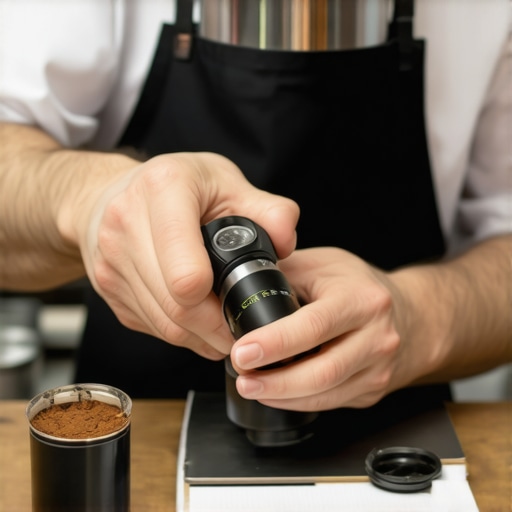
Limit Bean Static and Build-up
Drain static and particle build-up by regularly cleaning your burrs and using anti-static devices. As a micro-story, I once neglected to clear static buildup and noticed uneven grounds; after a thorough cleaning and static neutralization, my shots became noticeably more consistent.
Optimize Your Workflow and Grinding Technique
Work in a stable environment, free from drafts and humidity swings, to prevent grind variability. Use a scale to weigh beans before grinding, ensuring you consistently dose the same amount—similar to a baker measuring flour for each loaf. I adopted this method after realizing that slight variations in bean weight could throw off grind size and shot consistency, especially when dialed in for delicate light roasts. Combining precise dosing with a routine approach standardizes your process, making it easier to replicate results.
Keep Your Grinder Clean and Well-Maintained
Regular cleaning removes old coffee oils and grounds that can clog or alter burr spacing. For example, I scheduled weekly cleanings—dismantling the grinder, brushing off residual particles, and applying food-safe lubricant to moving parts. A well-maintained grinder operates more smoothly, reduces static, and maintains burr alignment—leading to more predictable grind sizes.
Many coffee enthusiasts mistakenly believe that owning the latest espresso grinder or a high-priced burr grinder guarantees perfect consistency. However, the real challenge lies in understanding the nuanced factors that influence grind uniformity. One common myth is that static electricity and grinder retention are purely unavoidable nuisances; in reality, these issues often stem from overlooked calibration errors or improper adjustment techniques. Advanced users know that even subtle burr misalignments or inconsistent dosing can lead to significant variability in particle sizes, ultimately compromising shot quality—a trap many fall into without realizing.
Let’s consider static build-up, a frequent culprit behind inconsistent grounds. While some suggest RDT (Ross Droplet Technique) as the magic fix, recent insights indicate that maintaining precise burr alignment and regular cleaning are more effective strategies. Regularly calibrating your burrs and applying micro-adjustments to your grind size—after thorough cleaning—can make a substantial difference, as supported by industry experts.
Are your static issues truly random, or is there an underlying calibration flaw? If you’re tired of inconsistent shots despite investing in a quality grinder, it’s worth experimenting with burr alignment and calibration. Remember, even the best single dose grinder won’t perform optimally without proper maintenance and a deep understanding of its mechanics.
Experienced baristas emphasize that grind consistency isn’t just about gear; it’s an ongoing process involving calibration, workflow, and ambient factors. For a comprehensive approach, review our detailed guide on mastering grind precision and avoid the common pitfalls that sabotage your efforts. Want to uncover more advanced secrets? Check out our post on mastering grind consistency, where pros share their trade tricks.
Remember: consistent grind size is a pillar of great espresso, but only when combined with proper calibration, maintenance, and technique. Have you ever fallen into this trap? Let me know in the comments.Maintaining your espresso grinder, especially a dedicated burr grinder or single dose setup, is crucial for achieving long-term grind consistency and flavor quality. Regular checkups, precise calibration, and the right tools can extend your equipment’s lifespan and ensure each shot hits the mark. I personally rely on a combination of calibration gauges and routine cleaning to keep my grinder performing optimally. For example, I use a burr gauge to verify alignment periodically, preventing misalignments that cause uneven grounds. Investing in high-quality calibration tools, such as a dial indicator or a dedicated burr alignment kit, is a game-changer—accuracy here can make or break your shot consistency.
Predicting the future, I believe advancements in smart grinders equipped with digital calibration reminders and auto-tuning features will become standard. These innovations will make maintenance more intuitive, helping baristas and enthusiasts sustain optimal performance effortlessly.
How do I maintain my grinder over time? I set a weekly routine: dismantling the burrs for a thorough cleaning, checking burr alignment with a simple feeler gauge, and applying minimal lubrication to moving parts as recommended in industry standards like those outlined by this resource. Additionally, upgrading static reduction accessories or opting for grinders with anti-static features helps preserve grind uniformity without static cling or residual build-up.
Beyond maintenance, tools like precise calibration kits are invaluable. I personally use a burr alignment gauge to eliminate burr wobble, which directly improves grind consistency. Regular calibration isn’t just a one-time task; it should be part of your ongoing routine. For example, the importance of this becomes clear when static and retention issues surface unexpectedly—these often trace back to subtle misalignments or wear. Keeping tools handy ensures you catch these signs early and avoid costly repairs or inconsistent shots.
Looking ahead, I predict that sensor-equipped grinders capable of real-time adjustments will transform our approach to maintenance, automating some of these tasks and minimizing human error. Until then, I recommend integrating a routine calibration check into your weekly maintenance. Try measuring your burrs with a simple dial indicator to verify alignment—this small step can dramatically stabilize your grind quality. For detailed guidance, check out our mastering grind consistency article or contact us for personalized tips.
The Hidden Traps That Sabotaged My Coffee Journey
One of the most valuable lessons I learned was that grind consistency isn’t just about high-quality equipment—it’s about the mindset and habits we develop. I used to believe that owning the latest burr grinder would magically improve my shots, but I quickly realized that even top-tier gear needs proper calibration and routine maintenance. My lightbulb moment came when I noticed subtle fluctuations in my grind size despite frequent adjustments, leading me to uncover overlooked alignment and static issues that were eroding my consistency.
My Revelation: Small Tweaks Make a Big Difference
It was the micro-adjustments—minute turns of the grind setting and meticulous burr alignment—that truly transformed my espresso. I discovered that regularly checking burr alignment with a simple feeler gauge or calibration tool could prevent those frustrating boulders or fines. Managing static through wiping and static-reducing accessories also played a bigger role than I initially thought, emphasizing that precision and cleanliness go hand in hand to achieve uniform grounds. These lessons taught me that mastery involves ongoing vigilance, not just initial setup.
Continuous Improvement Over Quick Fixes
One of the hardest lessons was abandoning the myth of instant perfection. Instead, I adopted a routine: weekly cleaning, consistent bean dosing, and incremental grind adjustments. This mindset shift reframed my approach—seeing each shot as a step in a process rather than a one-time fix. I found that tracking my adjustments and results helped identify patterns and prevent drift. Embracing this discipline meant that, over time, I could dial in and maintain my grind with confidence, turning brewing from frustration into an art I genuinely enjoyed.
Curated Resources for Genuine Mastery
My go-to tools include a precision burr gauge, which ensures perfect alignment—essential for consistent particle size—and a calibration kit that saves me time and guesswork. For deeper insights, I frequently visit this comprehensive guide, gaining tips from seasoned baristas who emphasize calibration and routine. Additionally, I rely on quality static reduction accessories and periodic professional maintenance, which collectively uphold the long-term health of my grinder and the quality of my espresso shots.
Believe in Your Possibilities: Your Next Shot Awaits
Every successful grinder calibration and adjustment builds confidence, pushing you closer to the perfect grind. It’s clear that consistent grind is about integrating small, deliberate actions into your routine—an ongoing journey rather than a one-and-done fix. Remember, even if your gear isn’t the latest model, meticulous care and a curious mindset can unlock extraordinary results. Take this as a sign to reexamine your setup, embrace routine maintenance, and trust in your ability to master your espresso notes. Your next great shot is just a routine tweak away!
![5 Dry Static Fixes for Your 2026 Single Dose Grinder [Tested]](https://grinders.espressotechguide.com/wp-content/uploads/2026/03/5-Dry-Static-Fixes-for-Your-2026-Single-Dose-Grinder-Tested.jpeg)