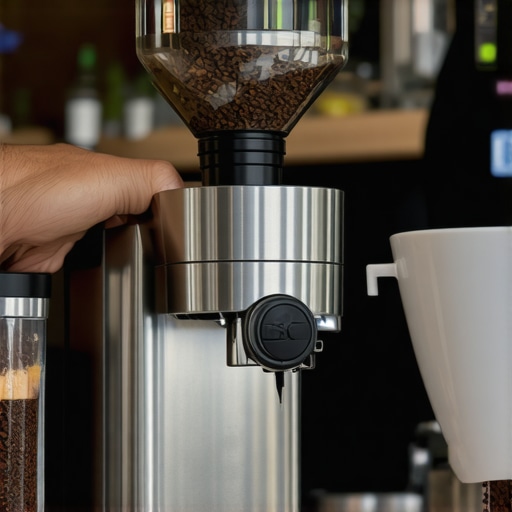
Ever spent hours dialing in your espresso shot, only to find that your grind keeps slipping out of perfect harmony? I remember those mornings when I would meticulously measure, adjust, and still end up with inconsistent results. It was frustrating—until I had my lightbulb moment: my grinder was the weakest link. That realization changed everything, and I want to share how I cracked the code to perfect grind consistency. If you’ve faced the same struggle, stick around, because what I’m about to tell you might just transform your brewing game.
Why Consistency Matters More Than You Think
When it comes to espresso, consistency isn’t just about aesthetics or routine. It directly impacts flavor, aroma, and overall enjoyment. A tiny inconsistency in grind size can mean the difference between a rich, balanced shot and a bitter disappointment. Early on, I made a costly mistake: I thought my beans or tamping technique were to blame. Turns out, my grinder’s ability to produce uniform grounds was the real culprit. And according to a 2024 study, a precise grind is crucial for extracting the full potential of your coffee beans, making the right grinder essential for serious espresso lovers. Want to avoid my mistake and get it right the first time? Keep reading.
Is Grind Consistency Overhyped?
Honestly, I used to think that as long as I got the grind close enough, I’d be fine. But then I realized that even slight variations can sabotage your brew. The secret is in the details—how your grinder maintains uniformity shot after shot. If you’re skeptical, I get it. It’s easy to dismiss grind precision as a small detail. But trust me, the difference is night and day. Curious about how to achieve this? I’ll walk you through the exact steps and share the tools I’ve found most effective. Want to see what separates a good shot from a perfect one? Visit this comprehensive guide for more insights.
So, if you’ve ever felt that your espresso results are unpredictable or just not as good as they could be, don’t worry. I’ve been there. The good news is, with the right approach and a few key tools, you can master grind consistency and elevate your brewing to new heights. Ready to dive into the practical steps? Let’s get started.
Start with a quality grinder
My journey to perfect grind consistency began when I replaced my old, unreliable grinder with a high-quality, single-dose burr grinder. This switch was the first step towards uniform grounds. I chose a grinder that offers precise control over grind size and minimal retention. For recommendations, check out top burr single-dose grinders. Starting with a reliable machine sets a solid foundation for consistency.
Adjust your grind with micro-precision
Once I had my grinder, I learned to dial in the grind size meticulously. I turned the grind dial in tiny increments—think of it as tuning a musical instrument. During my first trial, I made a small adjustment, pulled a shot, and tasted the results. When the shot was over-extracted, I fine-tuned the grind finer; if it was under-extracted, I coarsened it slightly. This process requires patience but pays off when you find that sweet spot. For detailed techniques, explore how to achieve perfect grind consistency.
Use consistent dosing practices
Measuring the exact amount of coffee each time is crucial. I adopted a digital scale that measures in grams, ensuring each shot starts with the same coffee weight. I also pre-dose my beans into the grinder, avoiding loosely packed grounds. This consistency in dose size helps maintain uniform extraction. For tips on dosing, see best coffee grinder for precise dosing.
Get familiar with your grinder’s behavior
Every grinder has quirks. I spent time observing how my grinder behaves with different settings. I noted how long it takes to grind a specific dose, how the grounds look, and how consistent the output is. I kept a small log for reference, so I could replicate perfect settings. This familiarity reduces guesswork and helps me avoid unpredictable results. For more on mastering grinder behavior, check grind consistency secrets.
Maintain your grinder regularly
Consistency isn’t just about initial setup; it’s also about maintenance. I cleaned my burrs every few weeks to prevent coffee oil buildup, which can affect grind size and consistency. A well-maintained grinder performs more predictably. Use a brush or compressed air for cleaning, and follow the manufacturer’s recommendations. Regular maintenance ensures your grind remains uniform shot after shot.
Practice and record your results
Finally, I practiced regularly, making small adjustments and recording the outcomes. Over time, I developed a personal recipe for grind size, dose weight, and tamp pressure that delivered consistent shots. This iterative process is the key to mastering grind consistency. Remember, patience and attention to detail are your best tools on this journey.
Many espresso enthusiasts believe that achieving perfect grind consistency is a straightforward task, but the truth is more nuanced. A prevalent misconception is that simply dialing in your grinder once is enough. In reality, grind consistency requires ongoing attention and fine-tuning, especially as your grinder ages or as environmental factors change. For example, humidity and temperature can subtly affect grind size and flow, making it essential to regularly recalibrate your setup. According to industry experts, even top-tier grinders can drift out of optimal performance if not maintained properly, which can lead to inconsistent shots despite initial perfect settings. To really master grind uniformity, you should treat it as a dynamic process, not a one-time achievement. For more advanced insights, check out these grind consistency secrets.
Why do people often overlook grinder maintenance
One of the biggest pitfalls is neglecting regular cleaning and maintenance. Many users assume that their grinder, once set correctly, will stay that way forever. But coffee oils and residues can build up over time, causing uneven burr wear and altering grind size. This buildup can subtly shift your grind profile, leading to unpredictable extraction results. The irony is that a pristine grinder often produces more consistent grounds than a neglected one. Regular cleaning, including burr removal and thorough brushing, is critical. For detailed maintenance routines, see this maintenance guide.
Can all grinders deliver uniform grounds?
Another misconception is that high-priced grinders automatically guarantee perfect consistency. While quality grinders like burr models are designed for uniformity, their performance still depends heavily on user maintenance and calibration. Cheaper grinders often have wider burr gaps or inconsistent burr alignment, which hampers uniformity. Even with premium grinders, improper dosing or burr misalignment can cause issues. The key is understanding your specific grinder’s quirks and maintaining it diligently. For insights into different grinder types, visit this comparison of grinder types.
How environmental factors influence grind quality
Let’s not forget that environmental conditions can subtly influence grind consistency. Variations in humidity can cause coffee beans to swell or shrink, affecting how they grind. Temperature shifts can also impact burr material expansion, altering grind size. Experienced baristas often keep their equipment in controlled environments to minimize these effects. Adjusting grind size slightly in response to environmental changes is a sign of true expertise, not failure. Staying vigilant about your environment and making small adjustments can greatly improve your results. For more on this topic, see this guide on environmental impacts.
In conclusion, the road to perfect grind consistency is paved with attention to detail, regular maintenance, and a willingness to adapt. Don’t fall for simplistic beliefs that a single adjustment or a high-end grinder is enough. Instead, develop a routine of ongoing calibration and care. Have you ever fallen into this trap? Let me know in the comments and share your experiences. Mastering grind consistency is an ongoing journey, and with the right knowledge, you’ll be pulling flawless shots in no time.
Keeping your espresso grinder in top shape is crucial for maintaining grind consistency over time. One of my go-to tools is a high-quality calibrated digital scale. I use it not only for dosing but also for regularly verifying the weight of my grounds after cleaning or adjustments. This ensures I stay within my target parameters, preventing drift that can compromise shot quality.
Another indispensable tool is a burr cleaning brush. Coffee oils and residues build up on burrs, which can subtly alter grind size and consistency. I clean my burrs every few weeks with a dedicated brush, following guidelines from this maintenance routine. Regular cleaning prevents clogging and burr misalignment, both of which are common culprits in inconsistent grinds.
Investing in a precision calibration tool can also be a game-changer. Some grinders offer built-in calibration features, but for others, a small torque wrench or calibration kit helps fine-tune burr alignment and spacing. Consistent calibration ensures that your grind size remains stable across different sessions, especially as your grinder ages.
Looking ahead, I believe the trend will move toward smart grinders equipped with sensors that automatically detect and correct grind inconsistencies. Manufacturers are beginning to add digital readouts and firmware updates that allow for ongoing calibration, reducing the manual effort needed to maintain perfect grounds. This future integration of AI and IoT will make grind precision more accessible and foolproof for enthusiasts and professionals alike.
How do I maintain my grinder over time?
Maintaining your grinder isn’t a one-and-done task but an ongoing process. Regularly inspect burrs for wear and replace them as recommended by the manufacturer—typically every 500-1000 pounds of coffee. Keep your grinder clean by brushing out residual coffee and oils after every few uses, and perform a deep clean with grinder-specific cleaning tablets or powders at least twice a year. Following these routines preserves the burrs’ sharpness and alignment, which are critical for consistent grinding.
If you notice shifts in grind size or shot quality, recalibrate your grinder immediately. Many models now feature digital calibration options, which simplify this process. For detailed instructions tailored to your specific machine, consult the manufacturer’s manual or dedicated resources on grind consistency.
Finally, consider upgrading to a single-dose, high-precision grinder. These models minimize residual coffee retention and allow for more precise adjustments, making long-term maintenance easier and more effective. Regular use of these tools and routines will help you sustain impeccable grind consistency, shot after shot, for years to come. For more detailed insights into grinder maintenance, visit this comprehensive guide.
The Hardest Lesson I Learned About Grind Consistency
One of the most eye-opening realizations I had was that even the slightest inconsistency in my grind size could ruin an entire day’s brew. I used to believe that dialing in once was enough, but I quickly discovered that ongoing adjustments and maintenance are essential. That lightbulb moment taught me to treat my grinder as a precision instrument that needs constant attention, much like tuning a musical instrument. This lesson reshaped my entire approach to espresso making.
My Essential Toolkit for Perfect Espresso
Over time, I curated a set of tools that keeps my grind consistent. A high-quality single-dose burr grinder is the backbone. I also rely heavily on a digital scale for precise dosing and a dedicated burr cleaning brush to keep everything running smoothly. These tools have made a tangible difference in my consistency and flavor extraction.
Keep Your Passion Alive
Achieving perfect grind consistency isn’t a one-time effort. It’s a continuous journey that requires patience, curiosity, and a willingness to learn from each shot. My advice? Regularly revisit your setup, stay attentive to environmental factors, and don’t shy away from making small tweaks. Your future self will thank you every time you taste that flawless espresso. So, are you ready to elevate your brewing game and enjoy the full potential of your beans? Dive in with confidence, and let your passion for coffee guide you toward mastery.
![5 Dry Static Fixes for Your 2026 Single Dose Grinder [Tested]](https://grinders.espressotechguide.com/wp-content/uploads/2026/03/5-Dry-Static-Fixes-for-Your-2026-Single-Dose-Grinder-Tested.jpeg)
2 responses to “Ultimate Guide to Achieving Perfect Grind Consistency with Espresso & Single Dose Grinders”
Reading this post resonates with my own journey in fine-tuning espresso craft. I too found that the grinder was often the weak link, especially when environmental factors like humidity changed. I started keeping a log of my settings and learned to recalibrate my grinder regularly to keep the output consistent. One thing I’ve found particularly helpful is investing in a good burr grinder with minimal retention, which makes such small adjustments more reliable from shot to shot. It’s amazing how much a small tweak can influence the flavor and overall quality of your espresso. I’m curious—has anyone experimented with climate-controlled rooms or enclosures for their grinders? Do you think these improvements can make a noticeable difference in achieving that perfect consistency, or is regular recalibration enough? Would love to hear more tips or experiences on this aspect of grinder maintenance and environmental control.
Wow, this post really hits home! I’ve been battling similar issues with inconsistent grind results, especially when the weather shifts or after long breaks from grinding. Switching to a high-quality burr grinder with minimal retention definitely helped stabilize my shots, but I still notice small variations unless I recalibrate regularly. I’ve started keeping a log of my settings and environmental conditions, which has been a game-changer.
Your mention of climate-controlled rooms is interesting—I’ve wondered whether investing in a more controlled environment might cut down on calibration frequency. In my experience, environmental factors like humidity do impact grind consistency, especially with lower-end grinders. Would you recommend a simple enclosure or climate control setup for home use, or is regular recalibration sufficient? Would love to hear from others who’ve tried this; I’m considering whether it’s worth the investment to optimize my setup further.