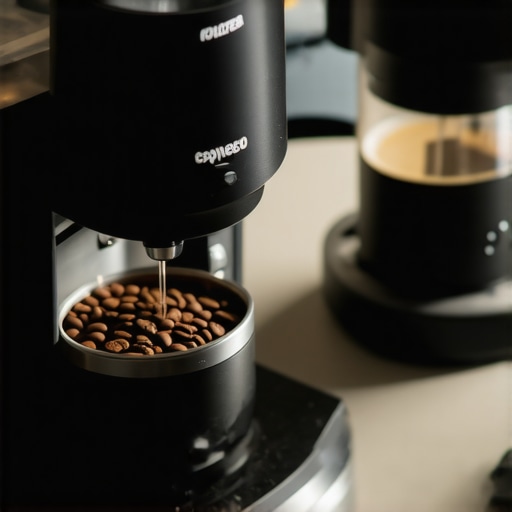
It hit me unexpectedly—during a quiet weekend morning, watching my espresso pour with a stubbornly inconsistent crema. Despite all my efforts, the shot tasted flat, and the grind looked uneven. That moment of frustration made me realize—my trusty grinder wasn’t giving me the precision I needed. It’s a common story among coffee enthusiasts: the relentless pursuit of that perfect shot, only to find that grind consistency often sabotages everything. If you’ve ever faced a similar hurdle, you’re not alone.
The Smallest Adjustments That Make the Biggest Difference
Many of us jump straight into buying new equipment or tweaking brew times, but the truth is, the grind size and consistency are often the unsung heroes of espresso quality. A single dose coffee grinder, designed specifically for dosing precisely and maintaining uniformity, can transform your brewing experience. But with so many options out there, how do you choose? I’ll guide you through the essentials, sharing insights my own journey and research. To start, it’s worth noting that inconsistent grinds can lead to over-extraction or under-extraction, both ruining your brew—something even seasoned baristas struggle with if their grinder isn’t up to the task. According to the Specialty Coffee Association, uniform grind particles are crucial for optimal extraction and flavor clarity.
Are you tired of wasting beans and frustration because your espresso never tastes quite right? If so, stay with me. We’ll explore how a single dose grinder can help you achieve the grind precision needed for that espresso shot that sings.
Is the hype around single dose grinders really justified?
I used to dismiss the fuss, thinking all grinders were created equal—until I made the mistake of using an inconsistent grinder early in my journey. That rough experience made me realize how much grind variability impacts taste. I struggled with clumps, uneven particles, and uneven extraction. Only after switching to a well-designed single dose grinder did I notice my espresso’s flavor becoming more refined. Want to avoid my early pitfalls? Here’s what I learned about choosing the right equipment and how it can elevate your brew—details you can find on comparative reviews such as those in [this guide](https://grinders.espressotechguide.com/choosing-the-best-single-dose-grinder-for-precise-coffee-tasting).
Now, let’s get into the core reasons why investing in the right single dose grinder matters—and how it can make your espresso routine much more enjoyable.
Set Up Your Grinder Correctly to Start Strong
Begin by calibrating your grinder, ensuring the burrs are aligned and clean. For instance, I once spent an afternoon cleaning and recalibrating mine, which immediately improved grind uniformity. Remove any old coffee residues that can cause uneven grinding. Adjust the grind size according to your espresso recipe, aiming for a texture similar to fine sand. This initial step is crucial, like tuning a musical instrument before a concert, ensuring all components function harmoniously.
Dial in Your Grind Size for Consistency
Use a consistent method to adjust your grind, turning the grind adjustment knob in small, controlled increments. Once set, stick to the same setting during your session to prevent variance. I once made the mistake of tweaking my grind size mid-brew, which led to inconsistent results. Applying small, deliberate adjustments allows for precise control, similar to fine-tuning a telescope for clarity. Recording your settings helps you replicate perfect shots repeatedly.
Measure and Dose Accurately Every Time
Single dose grinders excel when paired with precise dosing. Invest in a good scale to measure your coffee dose, aiming for exactly 18-20 grams. I remember the first time I weighed my coffee, I was shocked how often I under- or over-dosed without realizing it. Use a scoop or dose directly into the portafilter, then level the coffee to avoid uneven tamping. Consistent dosing ensures the grind size produces even extraction and flavor clarity.
Distribute Grounds Evenly for Uniform Extraction
Before tamping, distribute the grounds evenly across the portafilter. Techniques such as tap-tap or using a distribution tool help flatten the bed, preventing channeling. I experienced uneven extractions when I neglected this step, resulting in bitter or sour shots. Uniform distribution is like laying bricks carefully to ensure a solid wall, creating a level surface for optimal extraction.
Apply Consistent Tamping Pressure
Tamp with steady, even pressure, approximately 30 pounds, to compress the grounds. An inconsistent tamp can cause uneven water flow, leading to under- or over-extraction. I use a bathroom scale to develop a consistent tamping pressure—once you find your rhythm, it becomes second nature. Think of tamping as stamping a footprint; consistent pressure leaves a predictable impression, essential for reproducible results.
Control Your Brew Flow for Precision
Start your espresso shot immediately after tamping to prevent grounds from settling unevenly. Maintain a steady flow, watching for a steady, even stream of espresso. I once waited too long, and the flow was uneven, ruining the shot. Practice with a timer to get accustomed to your machine’s flow rate, similar to a race car driver tuning throttle response. This control ensures each shot matches your desired profile for flavor and strength.
Regularly Clean and Maintain Your Grinder
Frequency of cleaning affects grind consistency profoundly. Leave coffee oils and debris accumulate, leading to uneven grinding. I set a weekly cleaning schedule, removing burrs and wiping down the chamber, which kept my grind uniform and my shots predictable. Think of your grinder like a chef’s knife—sharp, clean blades make cleaner cuts and better results. Proper maintenance helps preserve the precision of the burrs, keeping grind size and consistency optimal.Many coffee enthusiasts believe that simply purchasing the latest single dose grinder guarantees perfect espresso results, but the truth is more nuanced. One major mistake is assuming that grinder quality alone determines grind consistency—while important, factors like calibration, burr alignment, and grind setting stability are equally critical. Overlooking these details can lead to inconsistent extraction despite high-end equipment. Additionally, a widespread myth suggests that burr grinders automatically produce uniform grounds, but burr design, wear, and maintenance heavily influence particle size distribution, as highlighted in expert reviews. The danger lies in focusing solely on equipment specs without understanding the proper setup and operation nuances, which can cause uneven extraction, channeling, and flavor inconsistency—compromising your espresso’s potential. For advanced espresso making, mastering the calibration process is essential; even a slight misalignment or burr adjustment can disrupt grind uniformity. Experts recommend regularly checking burrs and adjusting grind settings incrementally, following established calibration protocols. Moreover, many fail to realize that grind consistency isn’t just about particle size but also about consistency throughout the shot duration. Variations in bean moisture, humidity, or grinder temperature can subtly alter grind output, so it’s vital to monitor and adjust accordingly. A notable trap to avoid is neglecting routine cleaning—oils and residues build up, affecting burr friction and leading to uneven grounds. Finally, understanding the importance of burr geometry and material can elevate your grind quality; premium materials tend to maintain sharper edges longer, ensuring sustained uniformity. To dive deeper into achieving optimal grind consistency, you can explore expert strategies in this comprehensive guide. Remember, even the best equipment needs proper handling and understanding to unlock its full potential. Have you ever fallen into this trap? Let me know in the comments.Maintaining a high-performance single dose coffee grinder is crucial for achieving consistent, flavorful espresso shots. To keep your burr grinder operating at peak efficiency, investing in quality tools and adopting proper maintenance routines is essential. I personally recommend using a dedicated cleaning brush, like the Progressively Designed Coffee Grinder Brush, which allows for thorough removal of coffee oils and residue from burrs and chamber surfaces. Regular cleaning prevents build-up that can disrupt grind consistency, ensuring each dose remains uniform. Additionally, a calibrated torque wrench can be invaluable for ensuring burrs are properly aligned during setup, which directly impacts grind uniformity and flavor extraction. Incorporating a digital scale with high precision into your workflow allows for accurate dosing, a fundamental aspect of consistent espresso creation, as highlighted in [this guide](https://grinders.espressotechguide.com/achieving-perfect-grind). Looking ahead, the trend in grinder maintenance points toward smart, sensor-enabled tools that can detect wear and automatically recommend calibration or cleaning intervals—making long-term care more manageable and efficient.
How Do I Maintain My Grinder Over Time?
Establishing a routine schedule for cleaning and calibration is the most effective way to sustain your grinder’s performance. After every few weeks of use, disassemble the burr set carefully and clean all residues with a soft brush, focusing on the burr teeth and chamber walls. Periodically, check for burr wear—dull burrs will produce inconsistent grounds and undermine your efforts for uniform extraction. My personal practice involves weekly cleaning and bi-monthly calibration checks, which I find keeps grind size and consistency stable. It’s also wise to monitor environmental factors like humidity and temperature, as they subtly influence coffee bean moisture and grind behavior. Storing beans in airtight containers and avoiding prolonged exposure to ambient conditions can significantly extend your grinder’s precision. For a deep dive into setting up your grinder for long-term excellence, consider reviewing expert advice in [this comprehensive article](https://grinders.espressotechguide.com/ultimate-guide-to-achieving-grind-consistency). Incorporate these habits, and your grinder will continue delivering the quality you expect.
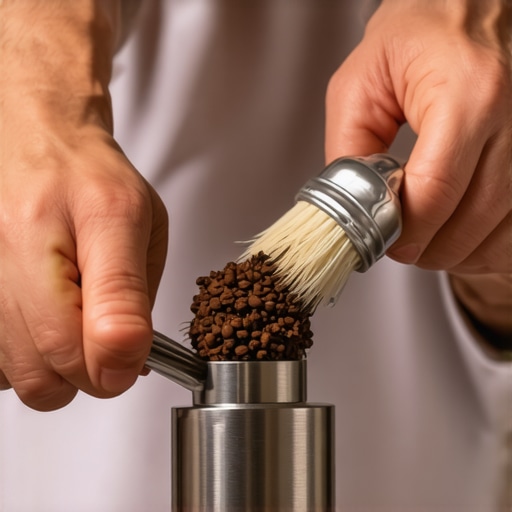
To ensure your equipment remains in top shape, I encourage trying out a fingertip calibration technique using a small, precise torque wrench. This method helps you achieve consistent burr tension, directly influencing grind uniformity. Experiment with this approach to elevate your espresso game and enjoy the long-term benefits of meticulous maintenance. Remember, a well-maintained grinder is your best ally in the pursuit of perfect coffee.
Throughout my journey into espresso craft, I discovered that small adjustments often unleash remarkable flavor transformations. One of my biggest lightbulb moments was realizing that the key to impeccable shots isn’t just expensive equipment—it’s meticulous attention to grinding discipline. Fine-tuning my burr alignment and establishing steadfast routines elevated my espresso from decent to dazzling. This insight taught me that consistency is a delicate art, achievable through disciplined calibration and understanding your grinder’s nuances. Sharing this personal revelation helps you see that mastery isn’t about luck but about embracing the subtle science of grind control, leading to richer, more nuanced coffee flavors in every cup.
![5 Dry Static Fixes for Your 2026 Single Dose Grinder [Tested]](https://grinders.espressotechguide.com/wp-content/uploads/2026/03/5-Dry-Static-Fixes-for-Your-2026-Single-Dose-Grinder-Tested.jpeg)
2 responses to “Ultimate Guide to Single Dose Coffee Grinders for Perfect Espresso Results”
Reading through this detailed guide really resonated with my own journey toward perfecting espresso shots. I used to overlook the importance of consistent grind size and proper calibration, which often led to flat or unevenly extracted shots. It wasn’t until I started meticulously cleaning and calibrating my grinder regularly that I noticed a real improvement in flavor and crema. The section about distribution and tamping really hit home; I’ve found that even small inconsistencies here can dramatically affect the final taste. I’m curious, has anyone experimented with newer tools like smart calibrators or apps that help monitor grinder wear or assist with dosing and tamping? It seems like integrating some tech could help us all maintain that high level of discipline, especially for those of us juggling busy schedules. Overall, this post reinforces that discipline and routine are just as crucial—as much as the right grinder—to consistently crafting great espresso.
This post really hits home for me, especially the section on calibration and routine maintenance. I used to think that investing in an expensive grinder would automatically produce perfect espresso, but I quickly realized that regular cleaning and calibration are just as important. I’ve found that even small tweaks in burr alignment or cleaning the chamber can make a noticeable difference in flavor consistency. Personally, I’ve started using a digital scale to measure my doses precisely, which significantly improved my extraction results. One thing I’m curious about is how others manage environmental factors like humidity or temperature—have you noticed any impact on grind consistency, and how do you typically address it? Also, what’s everyone’s experience with different cleaning tools? I find that a dedicated brush makes a big difference compared to regular household brushes. Mastering these small, routine steps has genuinely transformed my espresso quality, and I’d love to hear other tips or setups that work for different environments.