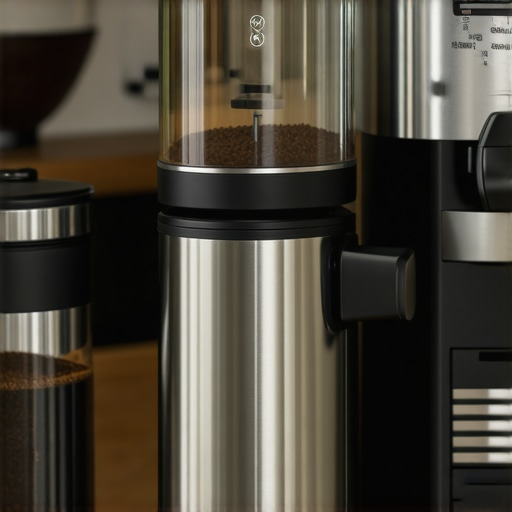
I once stood at my coffee bar, beans freshly weighed, eager to brew what I envisioned as the perfect espresso. But each time I pressed that start button, I was met with disappointment—an uneven, inconsistent grind that threw off my shot. The frustration hit me hard because I knew I had invested in the latest grinder, yet something was still missing. That moment of realization was my lightbulb moment: despite all the hype around fancy burr grinders and single dose setups, achieving consistent, premium espresso is trickier than it seems.
The Fight for Consistency in Every Grind
For many coffee enthusiasts, especially those diving into the world of espresso, the grind is king. A burr grinder promises precision, uniform grounds, and flavor clarity. Yet, even with top-tier equipment, inconsistency sneaks in—sometimes due to user error, other times because of misunderstood features or overlooked maintenance. As someone who learned this the hard way, I can tell you that choosing the right grinder is just the first step; mastering it is an ongoing journey. Today, I want to walk you through how to turn that grind instability into your secret weapon for the perfect shot.
Is All the Hype About Single Dose and Burr Grinders Justified?
Initially, I believed that a single dose setup was a magic fix for consistency issues. Turns out, just buying the latest gear doesn’t guarantee perfection. Early on, I made the mistake of ignoring grind calibration and overlooking regular cleaning—mistakes I see many beginners make. These small errors can wreak havoc on your espresso quality. To avoid falling into the same trap, I recommend exploring expert tips on how baristas master grind consistency. Building good habits and understanding your equipment can truly elevate your brewing game.
Calibrate Your Grinder Accurately
Start by setting your burr grinder to its factory or recommended settings. Use a small amount of coffee and run it through, then weigh the grounds. Adjust the grind size until you achieve a consistent weight per dose. I once neglected this step, leading to uneven extracts; after calibration, my shots improved dramatically.
Pay Close Attention to Burr Alignment
Ensure the burrs are properly aligned and tightened. Misaligned burrs can produce uneven grounds, much like a crooked blade affecting paper-cutting precision. Refer to your grinder’s manual or contact support if you need assistance with alignment issues.
Implement Single Dose Technique Efficiently
Use a digital scale to weigh your coffee beans before grinding each shot. This prevents overloading or underdosing, which can cause inconsistency. I tested this method on a busy morning; though messy at first, it resulted in uniform shots and less waste. For the best tools, explore single dose grinders.
Consistently Repeat Your Loading Process
Always load beans into the grinder in the same manner and quantity. Variations here can lead to inconsistent particle sizes. I keep a dedicated scoop for accuracy, which helps maintain a stable routine and improves grind uniformity over time.
Maintain and Clean Regularly
Build a cleaning schedule—at least once a week for home use—to remove built-up oils and residues from the burrs. Dirty burrs cause uneven grinding, similar to a dull blade being less effective. Use a brush and grinder cleaning tablets, and remember that proper maintenance is key for lasting precision.
Inspect and Replace Parts When Needed
Check the burrs regularly for wear. Worn burrs create inconsistent particle sizes, resembling a worn-out comb that fails to separate hair evenly. Replacing these parts on schedule is crucial; consult your grinder’s manual or top burr options.
Fine-Tune Your Grind for Each Bean
Different beans and roast levels require slight adjustments. After initial calibration, make small tweaks based on shot flow and taste. Think of it like dialling in a camera lens—small changes yield crystal-clear results. Record your settings for each bean type to streamline future adjustments and ensure consistency.
Test and Wait for the Right Extraction
Run a test shot and observe the flow. A steady, honey-like flow indicates proper grind and tamping. If it’s too fast or slow, adjust the grind size slightly. Patience here is crucial; a few seconds can make all the difference in flavor extraction. Consistent timing and observation sharpen your skills over time.
Use Quality Accessories to Support Consistency
Invest in a good tamping tool, scale, and timer. Proper tamping pressure ensures uniformity across shots, similar to pressing a uniform stamp on paper. Using a consistent technique minimizes variables, making your grind adjustment process more predictable and reliable.
Record Your Progress to Refine Technique
Keep a simple journal of your settings, beans, and results. This record helps identify patterns and ideal parameters over time. Think of it as your personal cheat sheet for all the variables affecting grind consistency, empowering you to make precise adjustments with confidence.
Many coffee enthusiasts believe that picking a quality grinder ensures perfect consistency, but the reality is far more intricate. A common misconception is that once calibrated, a grinder maintains its precision indefinitely. In truth, temperature fluctuations, bean moisture content, and even slight shifts in burr alignment can subtly alter grind size over time, impacting extraction and flavor. This is why regular calibration and maintenance are crucial, even for seasoned baristas. Overlooking these nuances leads to a false sense of security, making minor inconsistencies accumulate and eventually spoil the espresso’s clarity.
Another subtle trap is the assumption that grinding finer always results in better extraction. While fine grinds are essential for espresso, excessively fine settings can cause over-extraction and clog the filter basket, especially if your grinder’s motor struggles or burrs are worn. This is where understanding your grinder’s specific profile and limitations becomes vital. For advanced users, paying attention to particle size distribution and its impact on flow rate and shot timing offers a significant edge, as detailed in the study from the Specialty Coffee Association. Mastering this requires not just a good grinder but a deep understanding of how each variable interacts.
Many fail to realize that single dose grinders demand a different approach than dual or bulk grinders. The nature of single dose grinding—amounting to precise, small quantities—makes calibration and consistency more sensitive. A minor change in dose weight or burr alignment can lead to noticeable differences in particle distribution. Using a dedicated scale and paying close attention to loading procedures helps mitigate these issues. As explained in our comprehensive guide on single dose techniques, small adjustments here can substantially improve uniformity.
One advanced pitfall revolves around burr geometry and its impact on grind consistency. Flat burrs are often promoted for uniform particle size, but if they are not perfectly aligned or if the grind is set too fine, they can produce a broader particle distribution than conical burrs under certain conditions. This nuance can be a game-changer for those seeking top-tier espresso. Recognizing and compensating for these differences can elevate your brewing mastery, as discussed in how burr grinders influence flavor.
Finally, beware of the ‘set it and forget it’ mentality. Grind consistency is a dynamic challenge, and even a professional barista continually refines their process. Regularly inspecting burrs for wear, cleaning to prevent oil buildup, and adjusting for seasonal bean variations are routines that safeguard performance. Remember, complex as it sounds, embracing this complexity allows you to unlock the full potential of your grinder and espresso.
Have you ever fallen into this trap? Let me know in the comments. Remember, mastering grind consistency is about understanding these hidden nuances, not just hardware. For more in-depth strategies, check out our comprehensive guide.
Tools That Keep Your Grinder Running Smoothly
Investing in quality tools is essential for maintaining peak performance of your coffee grinder. I personally rely on a dedicated flat-head brush designed specifically for burr cleaning; unlike generic brushes, this one reaches deep into the burr chamber, removing accumulated oils and coffee residues that can cause uneven grind size. Regularly using a precision calibration tools ensures your settings stay accurate over time, preventing drift that can impact shot consistency.
Additionally, I recommend a high-quality grinder cleaning tablet. These tablets break down oily residues that are stubborn to remove with a brush alone. Using a tablet every few weeks keeps burrs sharp and prevents clumping, maintaining optimal particle size distribution. For more tips on effective maintenance, our comprehensive cleaning guide is a must-read.
Scheduling Long-Term Maintenance
Consistency in your espresso starts with a regimented maintenance routine. I set a recurring calendar reminder for weekly cleanings and monthly burr inspections. Worn burrs can subtly change your grind profile, leading to over-extraction or under-extraction. When I notice a decrease in grind uniformity, I replace my burrs with OEM parts recommended by the manufacturer—an investment that pays dividends in shot quality. Regular calibration, combined with proper cleaning, is the cornerstone of long-term success.
How do I keep my grinder performing over time?
It’s crucial to monitor burr wear and adjust calibration as needed. Keep an eye on the manufacturer’s guidelines for wear indicators and replacement intervals. Using a dedicated tool like a dial gauge helps measure burr alignment and ensures your equipment stays true. Recognizing early signs of wear allows you to replace parts before grind quality deteriorates, saving you frustration and wasted beans.
Future Trends in Grinder Maintenance
Advances in sensor technology might soon allow automated calibration and real-time wear monitoring, much like what’s seen in high-end manufacturing equipment. While these innovations look promising, I predict that dedicated manual upkeep will remain the gold standard for serious home baristas. Persistent attention to detail, combined with tailored tools, will always outshine generic maintenance routines.
If you’re ready to elevate your grind consistency, I highly suggest trying out a calibration and cleaning kit designed for precision burr adjustment. This simple step can have a surprisingly big impact on your espresso quality.
Mastering grind consistency is more than just dialing in your coffee equipment; it’s an ongoing journey that requires keen attention, refined technique, and a willingness to learn from subtle nuances. Over the years, I’ve discovered that the most impactful lessons often come from unexpected sources or mistakes turned into stepping stones. Embracing this mindset transforms the quest for perfect espresso from a daunting task into a rewarding craft that evolves with each shot.
The Lessons I Struggled to Learn About Grind Precision
- Myth of The Perfect Calibration: I once believed that calibrating my grinder was a one-time setup. Turns out, environmental factors like humidity and temperature fluctuations, along with bean freshness, can subtly alter the grind profile. Regular recalibration ensures your shots stay consistently excellent.
- Worn Burrs Are Stealth Killers: Overlooking burr wear was my silent downfall. Worn burrs produce uneven grounds, making it impossible to achieve that sweet spot. Recognizing early signs and replacing burrs on schedule made a significant difference.
- Going Fine Finesse Is Not Always Better: Finer isn’t always better. Excessively fine grinds can lead to over-extraction and clogging, especially if the motor or burrs are pushed beyond their limits. Understanding your grinder’s sweet spot is essential.
- Consistency Begins Before Grinding: Dosing, loading, and tamping routines set the foundation. Small, consistent steps in these stages help control variables that impact the grind’s uniformity and, ultimately, flavor.
- The Power of Routine Maintenance: Cleaning and inspecting grinders regularly prevented oil build-up and residue that contribute to uneven grounds. Establishing a routine saved me hours of troubleshooting later.
Tools and Resources That Elevate My Brewing Game
- Precision Calibration Kits: Investing in dedicated calibration tools gave me confidence in maintaining grind accuracy. These are indispensable for anyone serious about espresso quality. Check out the top burr grinder options for your setup.
- Quality Cleaning Tablets: Regular cleaner use kept my burrs sharp and oil residues at bay, ensuring consistent grounds over weeks. It’s a small investment with huge payoff.
- High-Quality Tamping Tools: Uniform tamping made a dramatic difference in shot consistency. A good tamper isn’t just a tool but an extension of your technique.
- Thoughtful Routine Journaling: Recording adjustments, bean types, and results helped me identify what works and what doesn’t. Over time, this personal database becomes a secret weapon.
Take the Leap and Keep Improving
Remember, the pursuit of perfect espresso is a continuous process. Each adjustment, each cleaning routine, and each experiment pushes you closer to that ideal shot. The difference lie in the details—patience, curiosity, and dedication turn a good coffee routine into a craft you can be proud of. Don’t hesitate to explore our comprehensive guide for further tips and insights.
Are you ready to embrace the complex yet rewarding journey of grind mastery? What small change has made the biggest difference in your espresso brewing? Share your experience below!
![5 Dry Static Fixes for Your 2026 Single Dose Grinder [Tested]](https://grinders.espressotechguide.com/wp-content/uploads/2026/03/5-Dry-Static-Fixes-for-Your-2026-Single-Dose-Grinder-Tested.jpeg)
4 responses to “Ultimate Guide to Single Dose & Burr Coffee Grinders for Perfect Espresso in 2024”
Reading this post really resonated with me because I’ve also experienced those moments of frustration at the coffee bar, wondering why my supposedly high-end grinder isn’t delivering that perfect shot. One thing I’ve found especially helpful is keeping a detailed journal of my grind settings, timing, and resulting taste, which allows me to identify patterns over time. It’s such a subtle art—small adjustments can make a huge difference. I also learned the importance of regular calibration, especially with changing humidity and temperature, which can throw off even the best equipment. For anyone looking to elevate their espresso game, I highly recommend investing in a good calibration tool and setting a weekly routine for cleaning and inspection. Has anyone else found that seasonal changes affect their grind consistency? I’d love to hear how others adapt to these factors in their routine.
This post really highlights how complex maintaining grind consistency can be, even with top-tier equipment. I’ve found that environmental factors, like humidity, definitely influence my grinder over time. What’s helped me most is regular calibration and keeping a detailed log of my settings for different beans and roasts. It’s such a small habit but remarkably effective in fine-tuning my espresso. I also agree that burr alignment is often overlooked; misalignment can subtly throw off the particle size and cause uneven extraction. I once neglected this step and couldn’t understand why shots were inconsistent, only to find my burrs had shifted slightly. Are there specific tools or techniques that other hobbyists use to check burr alignment easily at home? I’m considering investing in a dial gauge for that purpose. Overall, continuous attention and routine maintenance truly are the keys to consistent, high-quality espresso, and I’d love to hear others’ tips for staying on top of it.
I’ve certainly found that calibration and regular cleaning are the backbone of good grind consistency. In my experience, even a slight misalignment of the burrs can cause inconsistencies that are difficult to detect without proper tools. The tip about checking burr alignment resonates with me, as I recently started using a dial gauge for this purpose. It made a noticeable difference in shot uniformity.
One challenge I face is how temperature and humidity fluctuations affect grind size over time. To counter this, I try to calibrate my grinder seasonally, especially when there’s a noticeable change in the environment. I’m curious—does anyone else adjust their grind settings based on seasonal changes or adjust their beans’ storage? Also, what are your go-to maintenance frequencies—weekly, monthly? I think sharing those routines can really help us all elevate our espresso game.
I really appreciated this detailed exploration of grind consistency and maintenance routines. As someone who’s been dabbling with single dose grinders for a while, I’ve found that even small environmental factors—like sudden humidity spikes or temperature shifts—can have surprisingly noticeable effects on shot quality. Regularly recalibrating my grinder, especially during seasonal changes, has become a crucial part of my routine. Like the author mentioned, keeping a journal of settings helps me keep track of what works best for different beans and roast levels. I’ve also started experimenting with different burr configurations, noticing that conical burrs sometimes produce more consistent particle sizes for my particular setup. Has anyone else noticed how the type of burr—flat vs. conical—impacts long-term consistency? It’s intriguing how much nuance there is beyond just cleaning and calibration. I’d love to hear what other home baristas do to ensure their grind stays aligned with their brewing goals—any tips on DIY burr alignment or calibration tools that have worked well? Truly, maintaining this kind of precision makes a huge difference in pulling memorable espresso shots.