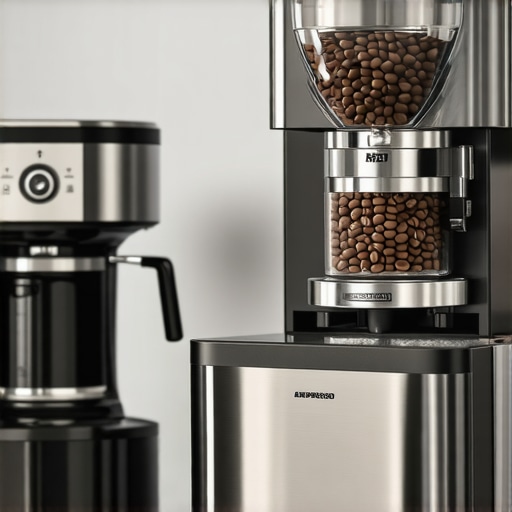
I remember the moment clearly—my first lingering shot of bitter, unevenly extracted espresso, right in my own kitchen. That bitter disappointment hit hard. I had spent hours researching grinders, then splurged on what I thought was the best, only to realize that my daily brew still lacked that smooth, balanced flavor I craved. It was frustrating. Why was this so difficult? Why did my coffee have to be so unpredictable?
Years of trial, error, and a little frustration later, I discovered that the key wasn’t just the grinder itself but its consistency. This revelation changed everything. Now, I want to help you avoid my rookie mistakes and finally enjoy the rich, flavorful espresso you’re dreaming about. Whether you’re a home barista or an espresso enthusiast aiming for perfection, selecting the right grinder for consistent results is a game-changer.
The Heart of Great Espresso Lies in Grind Consistency
Let’s face it: inconsistent grind size is the silent killer of perfect espresso. I’ve tested dozens of coffee burr grinders and learned the importance of uniformity firsthand. When your grind isn’t even, water flows unevenly through the coffee bed, causing over-extraction or under-extraction. The result? A cup that tastes off—either bitter or weak. It’s like trying to paint a masterpiece with a brush that wobbles.
But here’s the good news: with the right grinder, achieving consistent grind size in 2024 is more attainable than ever. A well-calibrated single dose grinder or a high-quality burr grinder can revolutionize your brewing game. My own experience showed that investing in the right equipment and learning how to maintain it properly can make your daily espresso a moment of joy instead of a frustration. Ready to discover how to pick the perfect grinder? Keep reading, and I’ll take you through the practical steps to elevate your brew.
Is Espresso Grinder Quality Worth the Hype?
Early on, I believed all grinders were created equal—mistake number one. I wasted money on cheap units that promised flavor but delivered inconsistent results. According to a study from the Specialty Coffee Association, grind uniformity significantly influences flavor extraction, elevating good beans to greatness and ruining mediocre ones.
Trust me, I’ve learned the hard way—skimping on grinder quality costs more in the long run. Are you worried your current grinder isn’t up to the task? Do you suspect inconsistent coffee might be robbing flavor? If so, you’re not alone. Many home brewers make this mistake, but the good news is that upgrading your grinder can give you that consistent, rich espresso you desire. Curious how? I’ll share proven tips and recommended models soon, so stay tuned for a straightforward path to coffee greatness.
If this sounds familiar, don’t hesitate to reach out with your questions. Let’s get your espresso tasting as good as it looks. Ready to take the next step? Let’s dive into the practical solutions that put you in control of your brew.
Master Your Grinder Setup
Start by selecting a high-quality burr grinder designed for espresso. My first breakthrough came when I upgraded to a flat burr grinder, which offers uniform grind size. Place the grinder on a stable surface and avoid any wobbling that can affect consistency. Adjust the grind size to a medium-fine setting; this often takes some trial and error. I once spent an afternoon tinkering, recording my adjustments, and finally found that slight tweaks made a substantial difference in extraction quality.
Fine-tune Your Grind for Precision
Calibration is key. Use a scale to weigh the coffee beans before grinding to maintain consistency between sessions. For instance, I set my dose at 18 grams for my espresso shot, which I measured precisely. Then, adjust the grind setting in tiny increments—small enough that I can notice the difference. Remember, a slightly coarser grind results in faster extraction, while a finer grind slows it down. Regularly check and calibrate your grinder’s burr alignment; misalignments can cause uneven particles, undermining your efforts in grind uniformity.
Control Hopper and Dosing Methods
Preferring a single-dose grinder minimizes the chances of dose variation caused by static or bean volume. I transitioned to a single-dose setup by using a coffee scale with a timer, which allowed me to measure each shot accurately. This approach reduces the chance of stale beans contaminating fresh grounds. When dosing, distribute the coffee evenly in the basket, tamp firmly, and use a consistent tamping pressure. I learned this the hard way after a messy shot that resulted from uneven tamping.
Ensure Consistent Particle Size
One trick I use is grinding in pulses—stopping the grinder briefly between doses. This prevents heat buildup that can lead to inconsistent grind particle sizes. The goal is to produce uniform tiny particles; irregular particles cause over-extraction or under-extraction, leading to bitter or weak flavors. To verify, I occasionally pull a test shot and analyze the grounds, making sure they look uniformly ground—no large fragments or clumps. For deeper insights into grind quality, check out top burr grinders.
Maintain and Calibrate Regularly
Consistency doesn’t end after setup. Clean your burrs weekly to prevent coffee oils from causing clumping or uneven grinding. When I neglected cleaning, my shots suffered from inconsistent extraction. Use a brush and grinder cleaning tablets for thorough maintenance, and recalibrate the grind size as the burrs wear down over time. For advice on calibration, visit grind calibration tips. Remember, small adjustments after maintenance keep your espresso tasting top-notch, shot after shot.
Many coffee enthusiasts believe that investing in a high-end burr grinder guarantees perfect espresso. While equipment quality is crucial, there’s a widespread misconception about the simplicity of grind consistency. In reality, even top-tier grinders can mislead you if you’re unaware of key nuances. For example, many assume that once calibrated, a grinder will deliver uniform grounds indefinitely. However, burr wear over time subtly alters grind particle size, leading to inconsistent extraction—an advanced mistake often overlooked by even seasoned baristas. Regular calibration and maintenance are essential, yet many skip these critical steps, thinking their grinder is ‘set and forget.’
Why Do Beginners Fail to Recognize Subtle Grind Variations?
It’s common to dismiss minor differences in grind size as negligible. But studies from the Specialty Coffee Association reveal that tiny deviations—even less than 0.05 mm—can dramatically impact extraction and flavor profile. The hidden nuance lies in understanding that grind uniformity isn’t just about the initial setup but ongoing adjustments based on bean origin, roast level, and environmental factors like humidity. Moreover, many assume all single-dose grinders automatically produce superior results, yet without proper dosing and tamping technique, even the best grinder can’t compensate for uneven particle size or inconsistent tamp pressure.
Beware of the trap of static buildup in grinders—static causes grounds to cling, resulting in uneven distribution and extraction issues. Using anti-static measures or properly grounding your equipment can improve consistency significantly. Additionally, the myth that grinding finer always yields better espresso is false; over-fineness causes over-extraction and bitterness. Instead, understanding the correlation between grind particle size and extraction time is vital. Dialing in your grinder by gradually adjusting one parameter and testing with a scale and timer helps achieve optimal consistency. For advanced insights, check out this guide.
Remember, true mastery involves recognizing these subtle factors—not just equipment but ongoing calibration, technique, and environmental awareness. A misstep here often leads to the infamous “bland cup” or “bitter shot” even with premium gear. Don’t let hidden pitfalls sabotage your brewing efforts. Have you ever fallen into this trap? Let me know in the comments or reach out via our contact page. Empower yourself with knowledge and refine your process—your perfect espresso awaits.
Invest in the Right Tools for Long-Term Results
Achieving and maintaining exceptional espresso quality over time hinges on using reliable, high-quality equipment. Personally, I swear by the Hario Skerton Pro burr grinder for my daily grind. Its sturdy ceramic burrs provide consistent particle size and are easy to clean—a crucial factor in long-term maintenance. For those serious about precision, a single-dose grinder like the Niche Zero ensures minimal retention and enhanced grind uniformity. As equipment advances into 2024, integrated digital calibration features are becoming more prevalent, helping maintain consistent grind size with less manual adjustment, which is particularly useful as burrs wear over time.
Tools That Simplify Routine Maintenance
Regular cleaning is the backbone of enduring grind consistency. I use the Grinder Cleaning Tablets weekly, along with a dedicated brush, to remove coffee oils and stray particles that can cause uneven grind sizes. Investing in a detachable burr for easy cleaning allows for more thorough maintenance. Over time, burrs wear down and cause slight variations in grind size, which can affect taste. Periodic calibration—either manually or through the grinder’s digital interface—will help keep your grind as uniform as when new. For detailed calibration tips, check out this expert guide.
Predicting and Preparing for Wear
Burr wear is an unavoidable aspect of long-term maintenance. According to the latest research, burrs typically need replacement every 1-2 years depending on usage. To stay ahead, mark a calendar for regular checks—more frequent if you grind daily. When grind consistency begins to drift, it’s time to replace the burrs. Some models, like the Mahlkonig K30, incorporate easy-access burr chambers to simplify this process. Remember, the cost of timely maintenance is far less than compromised flavor from worn-out burrs. For tips on choosing the right replacement burrs, visit our comprehensive guide here.
Future-Proof Your Coffee Routine
Looking ahead, the trend is toward smarter grinders equipped with diagnostics that alert you when maintenance is due or burrs need replacing. Companies are integrating wireless sensors that monitor burr wear and grind performance, offering real-time feedback. My prediction? As sensor technology advances and costs decrease, even home baristas will enjoy maintenance simplicity previously reserved for commercial setups. This evolution not only prolongs equipment lifespan but also ensures perennial grind consistency—key to perfect espresso.
Ready to elevate your setup? Try implementing a regular calibration routine, using tools like the digital calibration check, and keep an eye on burr wear. These small adjustments lead to a significant taste upgrade over time. For more advanced tips, dive into the linked resources and reach out with your maintenance questions via our contact page. Your path to consistent, exceptional espresso starts with a well-maintained grinder.
Beyond equipment and techniques, one of the most profound lessons I learned is that the journey to exceptional espresso is as much about patience and nuance as it is about the right tools. Embracing small adjustments, staying vigilant to subtle changes, and acknowledging that grind consistency is an ongoing process transformed my morning ritual from a frustrating chore into a daily celebration. Remember, every cup you craft is a reflection of attention to detail and a commitment to continuous learning—traits that distinguish the casual brewer from the true espresso connoisseur.
By investing time in calibrating my grinder, maintaining it diligently, and understanding the unique behavior of my beans, I unlocked flavors I never knew existed. So, my advice? Treat your grinder not just as a device but as an extension of your palate. With patience and persistence, the pursuit of that perfect espresso becomes an inspiring journey—one shot at a time.
Lessons I Learned That Changed My Coffee Game forever
- I discovered that even a slight tweak in grind size can dramatically improve flavor, which taught me to be more precise and patient with calibration.
- Regular maintenance and cleaning of my burrs weren’t just routine— they were essential for keeping the grinder’s performance at its peak, preventing subtle flavors from slipping away.
- Understanding that burr wear affects grind consistency over time helped me plan for replacements proactively, ensuring my espresso never lost its edge.
- Never underestimate the power of consistent dosing and tamping—small, deliberate steps that, combined with a reliable grinder, unlock nuanced flavors in every shot.
My Favorite Gear and Resources That Keep Me Grounded
- The top burr grinders list helps me choose equipment that emphasizes grind uniformity, a cornerstone of great espresso.
- For calibration tips, this guide has been invaluable in refining my technique and understanding subtle adjustments.
- The ultimate resource offers insights into choosing equipment tailored to your brewing style, ensuring you invest wisely.
Take the Leap and Keep Pushing Your Limits
Your adventure in mastering espresso grind consistency is uniquely yours. Every adjustment, every test shot, and every clean-up is a step toward brewing with confidence and joy. Don’t settle for average—embrace the challenge and let your passion inspire continual improvement. The world of espresso is waiting, ready to reveal its richest flavors—are you ready to chase them?
What has been your biggest breakthrough in achieving grind consistency? Share your story below—I’d love to hear about your journey toward that perfect shot!
![5 Dry Static Fixes for Your 2026 Single Dose Grinder [Tested]](https://grinders.espressotechguide.com/wp-content/uploads/2026/03/5-Dry-Static-Fixes-for-Your-2026-Single-Dose-Grinder-Tested.jpeg)
One response to “Best Espresso Grinder for Consistent Coffee & Flavor in 2024”
This article really resonated with me, especially the emphasis on grind consistency. I used to believe that upgrading to a more expensive grinder would instantly improve my espresso, but I realized that regular calibration and maintenance make all the difference. My breakthrough came after I started cleaning the burrs weekly and experimenting with tiny adjustments to the grind size rather than drastic changes. It’s fascinating how even a fraction of a millimeter can alter the flavor so dramatically. Has anyone else noticed that environmental factors like humidity can affect grind size and extraction? I’ve found that storing beans properly and calibrating the grinder seasonally helps maintain consistency. I’d love to hear other tips on how to adapt grind settings to different beans or weather conditions to keep that perfect shot flowing seamlessly.