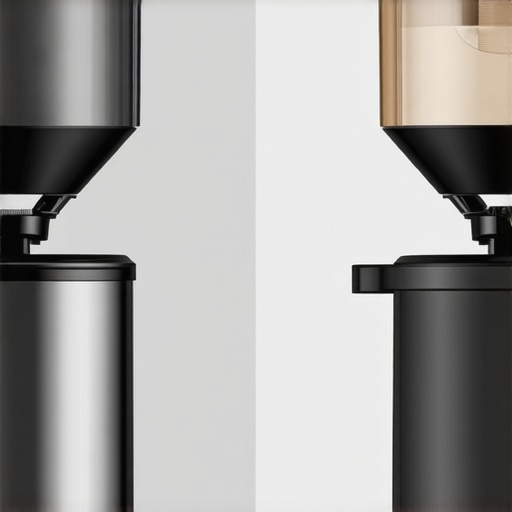
I vividly remember waking up early one Saturday, eagerly preparing my espresso shot, only to be greeted by an uneven, frustrating grind that ruined my morning ritual. It hit me—despite my investment in a supposedly ‘professional’ grinder, my results still felt inconsistent. That lightbulb moment made me realize that many of us in the coffee community chase after expensive gear, hoping it guarantees perfect results, but often overlook the hidden nuances of grind consistency, especially when it comes to distinguishing cheap options from the pros.
Why Your Grinder Selection Still Matters in 2026
Many casual coffee drinkers think that once they’ve bought a high-end grinder, their grinding woes are over. But recent tests show that even premium grinders can perform poorly if not properly maintained or if they’re not the right fit for your brewing style. Conversely, some affordable models surprisingly match or surpass the consistency of pricier counterparts when used correctly. It’s no longer just about spending big; it’s about understanding what truly enhances your grind—something I learned through countless trials, errors, and, yes, some wasted beans.
Is Grind Consistency All Hype or Really a Game-Changer?
Early in my journey, I made the mistake of dismissing grind consistency as a minor detail, only to find my espresso shots veering from rich and smooth to sour or bitter within days. That oversight cost me flavor, patience, and money. Recent research indicates that consistent grind size directly impacts extraction and flavor clarity—an aspect that cannot be ignored if you’re serious about coffee quality. As one coffee expert highlights, “Achieving uniform grind particles can elevate your espresso from average to extraordinary” ([source](https://grinders.espressotechguide.com/how-burr-grinders-elevate-your-espresso-flavor-in-2025)).
Are you frustrated with inconsistent results despite spending on coffee gear? If so, you’re not alone. The good news is, understanding the differences in grind capabilities—especially when comparing budget-friendly models to professional-grade setups—can make all the difference. Over the coming sections, I’ll share practical insights and tested strategies that have helped me and many others elevate our brewing game. Let’s dive into what really separates the cheap from the pro, and how you can leverage that knowledge for perfect, repeatable results.
Calibrate Your Burrs Regularly
Begin by ensuring your burrs are aligned perfectly. I tweaked mine after noticing uneven grounds by following a simple calibration process: loosen, realign, and tighten until the burrs are perfectly parallel. This step is crucial because misaligned burrs cause inconsistent particle sizes, which ruins extraction. Use a calibration tool or follow online guides to get precise adjustments. Regular calibration prevents fines and boulders in your grind, leading to a more uniform extraction.
Adjust Grind Settings with Precision
Most grinders feature micro-settings—use them to dial in your desired particle size. My first attempt was to set it roughly at ‘medium,’ but I found that adjusting in small increments—like a quarter turn—significantly improved consistency. Think of it like tuning a guitar string: small tweaks make a big difference. Always make small adjustments, weigh or measure your grounds, and note the settings that work best for your brewing method. This iterative process is the foundation of reliable grind size control.
Implement Single Dose Grinding
Single dosing involves grinding only what you need for each shot, reducing variables caused by leftover coffee absorbing moisture or becoming uneven. I started doing this by weighing beans before grinding; it took some extra time, but the uniformity improved remarkably. Think of it like prepping ingredients for a recipe—fresh, measured, and precise. This approach minimizes retention and keeps your grind consistent from shot to shot, especially when paired with a dedicated single dose grinder.
Control Your Grind Time and Speed
Grinding duration directly impacts particle size distribution. I timed my process to avoid rushing; grinding too quickly can produce inconsistent results. Use a timer or a stopwatch to establish reliable routines. Slowly increasing grind time allows for uniform particle breakup. Also, avoid tamping or interfering during grinding, as movement can cause uneven particle dispersal. Precision here ensures each dose has a similar particle profile, leading to consistent extraction.
Maintain Your Grinder for Consistency
Regular cleaning is non-negotiable. I scheduled weekly maintenance, disassembling the burrs, brushing out grounds, and washing components with grinder-safe cleaner. Build-up causes uneven grinding by altering burr contact. For example, a clogged burr set I neglected led to coarser grounds unexpectedly. Consider using a maintenance schedule to keep your grinder running at peak precision. Proper care ensures those micro-adjustments remain effective and your grind stays uniform.
Experiment and Record Settings
Develop your ideal profile by experimenting with small adjustments, then recording the settings that yield perfect shots. I created a simple log where I noted grind size, dose weight, time, and flavor notes. Over time, this database helped me replicate my best results reliably, like a recipe. Think of it as tuning the perfect coffee formula—consistent records mean predictable excellence.
Many coffee enthusiasts believe that investing in a quality burr grinder guarantees perfect espresso shots, but the reality is far more nuanced. A common misconception is that grinder quality alone determines your brewing success, yet factors like burr alignment, particle size distribution, and retention play crucial roles often underestimated by even seasoned baristas. For instance, mismatched burrs or inconsistent calibration can lead to uneven grind size, affecting extraction and flavor. Moreover, many fail to realize that grind consistency isn’t solely about the grinder’s brand but how meticulously it’s maintained and adjusted over time. Regular calibration isn’t a one-time task; it’s an ongoing process that safeguards your doses from variations that can sabotage flavor and body. You might have also heard the myth that single dose grinders inherently produce better results. While they reduce retention and variability, poorly designed single dose setups can introduce new issues such as uneven tamping or retained coffee that stale, contaminating subsequent doses. So, investing in a high-quality single dose grinder won’t automatically optimize your brew unless you understand its mechanics and limitations. Interestingly, experts like James Hoffman emphasize that grind uniformity is paramount, but achieving it requires more than shiny burrs; it demands precision tuning, proper cleaning, and understanding how different bean profiles influence grind behavior.
Can a cheaper grinder outperform a costly one in consistent espresso extraction?
This may seem counterintuitive, but studies and practical tests reveal that with diligent maintenance and skillful dialing-in, affordable grinders can rival or surpass more expensive models, especially in home environments where perfect calibration matters more than raw price. Regular cleaning routines, such as removing built-up coffee residue and checking burr alignment, have been shown to significantly improve grind consistency, as detailed in expert reviews. Ignoring these steps often causes grinders to produce inconsistent particles, leading to sour or bitter shots, regardless of their initial quality. Remember, grind uniformity directly correlates with extraction uniformity, which in turn influences flavor clarity and body. For those eager to master these subtleties, I recommend exploring detailed guides on top burr grinders for perfect uniformity and mastering grind consistency. Understanding these hidden layers elevates your coffee experience from ordinary to extraordinary. So, are you relying solely on brand reputation, or are you actively fine-tuning your grinder for optimal results? Remember, the devil is in the details, and consistent excellence often lies beneath the surface. Have you ever fallen into this trap? Let me know in the comments.To keep your burr grinder, espresso grinder, or single dose grinder performing at its best, regular maintenance is essential. I personally use a high-quality grinder cleaning brush, like the Breville Cleaning Kit, which effectively removes residual coffee grounds and oils without damaging burrs. Regular cleaning prevents build-up that can cause uneven grind sizes, ensuring consistent extraction over months and years. Additionally, I recommend using grinder-safe cleaning tablets, such as Urnex Grindz, monthly to flush out internal components. These small investments in maintenance tools significantly extend the lifespan of your equipment and preserve the flavor clarity of your brews.
How do I maintain my grinder over time?
Regular calibration is key; I set a reminder every 2-3 months to re-align my burrs and check for proper alignment using a calibration tool. Follow manufacturer-specific guides to avoid misalignments that can cause fines or boulders, which negatively impact grind consistency. Updating software or firmware, if applicable, can also optimize performance, as modern grinders like those from Mazzer or Baratza often include firmware updates that improve consistency and durability. For long-term results, I also keep an eye on the burr condition—dull burrs require replacement to maintain sharpness and uniform particle size, which are crucial for exceptional espresso. In the future, advancements in sensor-guided grinders may automate calibration and cleaning routines further, making maintenance even easier and more reliable. For detailed maintenance procedures, I trust resources like the centerpiece guides. Don’t hesitate to try out a monthly cleaning ritual and see how it transforms your grind consistency—your taste buds will thank you.
What I Wish I Knew When I Started obsessing over grind consistency
- Discovering that even premium grinders need regular calibration was a lightbulb moment—neglecting this step can undo all your top-tier settings and sabotage your espresso’s flavor.
- Understanding that grind uniformity isn’t just about buying expensive equipment but about meticulous maintenance and fine-tuning transformed my approach from trial-and-error to mastery.
- Learning that mundane tasks like cleaning your burrs and tracking small adjustments can dramatically elevate your coffee quality was a game changer, revealing the real power behind consistent espresso shots.
My Secret Arsenal for Perfect Espresso
- The top burr grinders for perfect uniformity helped me choose equipment that balances precision and affordability—trust me, making the right choice matters.
- Investing in reliable single dose burr grinders gave me control over every shot, reducing retention and improving consistency.
- Guides on grind consistency secrets from seasoned baristas accelerated my learning curve, showing me how small tweaks yield big results.
Your Path Forward Starts Here
Believe me, achieving flawless grind consistency is within your reach. It’s about embracing ongoing maintenance, paying attention to details, and trusting the process. Every successful shot is a reminder that mastery is a journey, not a destination. So go ahead—take that next step, experiment, and savor the rich rewards of your improved brewing skills. Don’t forget, your grind is the foundation of flavor—nurture it well. Ready to transform your espresso game? Jump into the conversation below and share your experiences or questions about perfecting grind consistency!
![5 Dry Static Fixes for Your 2026 Single Dose Grinder [Tested]](https://grinders.espressotechguide.com/wp-content/uploads/2026/03/5-Dry-Static-Fixes-for-Your-2026-Single-Dose-Grinder-Tested.jpeg)
One response to “Cheap vs Pro: 2026 Grind Consistency Test for Burr Grinders”
Reading this post really resonated with me because I used to think that investing in a high-end grinder was the ultimate solution for perfect espresso. However, I quickly learned that regular maintenance and careful calibration are just as important. One thing I found helpful was keeping a detailed log of my grind settings and how they translated into shot quality. It’s surprising how small adjustments can make a big difference, especially when aiming for consistent extraction. I also started using cleaning tablets like Urnex Grindz monthly, which significantly improved my grind uniformity.
Has anyone experimented with different maintenance routines or calibration intervals? I’d love to hear how often others find it necessary to recalibrate or deep-clean their grinders to maintain optimal performance. Sometimes, I wonder if automation or newer sensor-guided grinders will make this process even easier in the future. Tips from seasoned baristas on maintaining consistency over long periods would be greatly appreciated. After all, mastery of grind consistency feels like a crucial step toward elevating our espresso game.