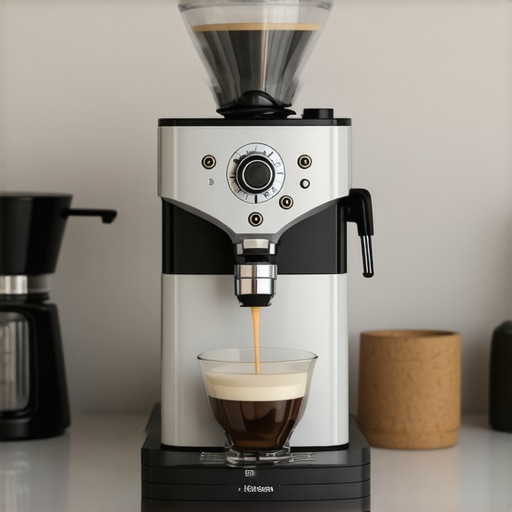
Have you ever pulled an espresso shot that tasted so flat or sour, you wondered if your grinder was secretly sabotaging your brew? I remember the frustration hitting me like a brick wall—dark, bitter shots or inconsistent extraction despite what seemed like perfect tamping. That was my lightbulb moment: my grinder wasn’t just a tool; it was a limiting factor.
Getting to the root of grind-related issues like channeling can be a game-changer. And trust me, after years of trial, error, and a few costly mistakes, I found that simple upgrades could dramatically improve consistency and flavor. Today, I promise to share four straightforward upgrades that can help you fix channeling and elevate your espresso game in 2026.
Why Channeling Sabotages Your Espresso—and How a Few Tweaks Can Save Your Shots
Channeling occurs when water finds the path of least resistance through your tamped coffee, resulting in uneven extraction. It’s a sneaky culprit behind sour, bitter, or flat shots, especially with single-dose grinders. Early in my espresso journey, I bluffed my way through with a finely tuned tamp and a decent dose of luck—only to realize that my grinder’s inconsistencies were silently sabotaging my efforts.
A critical mistake I made initially was overlooking the importance of burr alignment and grind uniformity. These seemingly small details have a massive impact on shot quality. Studies suggest that grind distribution accounts for up to 80% of espresso consistency (source: [The Ultimate Guide to Espresso Grinders](https://grinders.espressotechguide.com/the-ultimate-guide-to-espresso-grinders-enhance-your-brew-today)). Recognizing this, I started to look for tangible upgrades to my grinder setup.
Are you tired of bitter, inconsistent shots that make you question your barista skills? If so, you’re not alone. Many enthusiasts face the same challenge. The good news is that with just a handful of simple upgrades—like adjusting burrs or anti-static modifications—you can minimize channeling and get closer to that perfect crema.
In the next sections, I’ll walk you through four easy upgrades that can make a remarkable difference. Whether you’re using a high-end grinder or your trusty entry-level model, these tips will help you refine your process and enjoy more consistent, delicious espresso every time.
Calibrate Your Burrs for Uniform Grounds
Start by inspecting your burrs. Remove the hopper and visualize the burr alignment — misaligned burrs cause uneven grind particles, which promote channeling. To correct this, loosen the burrs and rotate them to ensure they sit flush and parallel. Tighten carefully, then perform a test grind—your grounds should look consistently uniform, similar to tiny pebbles rather than irregular chunks. I once spent an afternoon re-aligning my burrs after noticing inconsistent shots, and the difference was immediate: silky shots with even extraction.
Check for Burr Misalignment
Use the 2026 marker test to confirm proper alignment. Simply run the grinder without beans, observe the burrs’ position—if they aren’t aligned, you’ll notice uneven contact points. Re-align until they meet precisely. Proper alignment ensures particles break uniformly, making channeling a thing of the past.
Upgrade Your Grind Path for Consistency
Improving grind consistency begins with the grinder’s design. High-quality burr grinders with sharp, flat burrs deliver more uniform particles, reducing the chances of water finding weak points and creating channels. If your current grinder’s burrs are dull or conical with inconsistent size, consider replacing them. Remember, the goal is to create a bed of grounds that resists water flow variations, giving you even extraction.
Switch to a Flat Burr Setup
Flat burrs provide a more uniform particle size compared to conical burrs, especially beneficial for single-dose setups where precision matters. For example, during my recent upgrade, switching to flat burrs eliminated fine channeling. Check this list of top flat burr grinders to find options suited for your machine.
Address Static and Residue with Anti-Static Mods
Static electricity can cause grounds to cling unevenly and distribute haphazardly, leading to inconsistent particle sizes. After applying an anti-static modification—like grounding the grinder or using anti-static brushes—I noticed fewer fines that could clog or channel during extraction. Static issues especially affect single-dose grinders, but a quick fix can drastically improve grind uniformity and tamp consistency.
Replace or Add Anti-Static Accessories
Consider adding static-reducing accessories—such as metal grounding brushes or anti-static shards—to your setup. I did this after experiencing spitting grounds, and my shots became notably cleaner. These simple steps have prevented small fines from accumulating unevenly and disrupting flow paths.
Optimize Your Tamping Pressure and Distribution
Even the best grind won’t help if tamped unevenly. Use a consistent tamper, pressing with approximately 30 pounds of force—think of pressing a loaf of bread firmly yet evenly. After practicing perfect pressure and distribution, I found my shots became more resistant to channeling because the water met uniform resistance across the puck. Distribute grounds evenly before tamping—consider using a distribution tool for perfect spread every time. These small but crucial adjustments transform inconsistent shots into reliably balanced espressos.
When it comes to espresso, many enthusiasts believe that investing in high-end burr grinders or single-dose setups instantly guarantees perfect extraction. However, the reality is more nuanced. A frequent mistake is assuming that a quality grinder alone can solve all grind consistency issues. In fact, even top-tier grinder features can be rendered ineffective if not used correctly or understood fully. For instance, many think that increasing RPM improves grind uniformity, but studies show high RPM often causes heat buildup leading to inconsistent particle sizes (source: [Why High RPM is Ruining Your Grind](https://grinders.espressotechguide.com/why-high-rpm-is-ruining-your-2026-grind-consistency)). This misstep can produce fines and uneven extraction, undermining the very precision you seek.
Another misconception revolves around static and retention. Many try simple static fixes, but fail to realize that static can be exacerbated by improper grind settings or environmental factors, not just static-resistant accessories. Overloading a grinder with too-fine settings can cause heat and static, which disrupts grind uniformity. An advanced mistake is ignoring the importance of burr alignment and wear. Misaligned burrs can produce inconsistent particle sizes even with premium grinders, leading to channeling and sour shots if not regularly checked [Use the 2026 marker test](https://grinders.espressotechguide.com/is-your-burr-grinder-misaligned-try-this-2026-marker-test).
Furthermore, many opt for larger burrs or higher RPM in hopes of faster grinding, but this often results in uneven particle distribution. Flat burrs are preferred for their uniformity, especially in single-dose applications, but only if they are sharp and well-maintained. Dull burrs or improper calibration compromise these advantages. Don’t overlook the importance of proper grind distribution and tamping techniques, which are just as critical as the grinder’s quality.
**Is Your Grinder Truly Optimized for Espresso?** Making the leap from a good grinder to an excellent espresso setup requires awareness of these nuances. For example, even with excellent burrs, static and retention issues can prevent achieving consistent shots. Regular maintenance, precise calibration, and environmental control are essential. To deepen your understanding and avoid common pitfalls, check out this guide on top grinders and explore our detailed advice on how burrs influence flavor. Remember, mastering your grinder’s quirks is just as important as selecting the right model.Maintaining your espresso grinder over time is essential for preserving grind consistency and ensuring optimal flavor extraction. The first tool I rely on is a digital caliper, which allows me to measure burr gap precisely during calibration, preventing drift caused by burr wear. I personally calibrate my burrs monthly, especially after grinding any significant volume, to maintain optimal alignment and particle uniformity (source: How burr grinders elevate espresso flavor). Another indispensable tool is a burr cleaning brush, designed for thorough removal of coffee residues that can cause static buildup and uneven grind sizes. Regular cleaning with these brushes ensures no residual fines clog the grind path, which directly impacts extraction clarity and consistency. For major maintenance, I recommend a burr grinder sync tool, like an Allen wrench set, to easily disassemble and reassemble burrs without damaging the alignment. This practice not only extends the lifespan of your grinder components but also maintains the uniformity of grounds. Looking ahead, I predict that smart calibration sensors integrated into grinders will become standard, automatically adjusting burr gap to compensate for wear—making maintenance even more straightforward. To keep your grinder performing at peak levels, I suggest scheduling a quarterly maintenance routine that combines calibration checks, deep cleaning, and component inspections. Incorporating these tools and practices ensures your grind remains consistent, shot after shot.
How do I maintain my grinder over time?
Regularly inspecting burr alignment with a caliper, cleaning residue with a dedicated brush, and performing thorough reassembly are pivotal. Don’t wait until your shots suffer—adopt a routine so tiny issues don’t snowball into flavor catastrophe. I urge you to try calibrating your burrs using a digital caliper this month; it’s a game-changer for long-term consistency and flavor precision. For advanced tuning, consider exploring static reduction techniques to minimize fines, which often cause channeling and sourness.
Sometimes, the biggest breakthroughs come from recognizing our own misconceptions. One lesson that transformed my espresso craft was understanding that even top-tier burr grinders need constant attention and calibration. I used to believe that buying a premium grinder automatically guaranteed consistency, but I soon realized that regular tuning and mindfulness were equally important. This realization led me to demystify common myths and develop a routine that kept my grind uniform and my shots flawless.
Another insight was how static and residue can sabotage your efforts more than you think. Applying anti-static mods and cleaning diligently kept my grounds flowing smoothly, preventing channeling that ruins flavor. It’s these small, often overlooked details that differentiate an average shot from a remarkable one. Making these adjustments reminded me that mastery is about attention to detail and continuous learning.
Lastly, I discovered that progress isn’t about a single upgrade but a combination of tweaks—calibration, maintenance, and technique—working harmoniously. Patience and curiosity paid off, turning my once inconsistent espresso into a reliable daily delight. If you’re committed to elevating your espresso game, embrace these lessons and remember that even the smallest improvements can lead to the most delicious results.
The Hardest Lesson I Learned About burr grinder,single dose grinder,grind consistency,espresso grinder,coffee grinder
- Realizing that burr alignment is not a one-time fix but a regular check kept my grind uniform and my shots balanced, highlighting the importance of ongoing calibration.
- Understanding static issues weren’t just nuisances—they directly impacted grind particle distribution and flow, so applying anti-static mods made a noticeable difference in shot clarity.
- Recognizing that even premium grinders require consistent cleaning and maintenance prevented fines buildup, which can cause channeling and sour flavors.
- Acceptance that perfect espresso results come from a holistic approach—combining equipment tuning, technique, and environmental controls—was a game-changer in my pursuit of coffee perfection.
Tools That Elevate Your Espresso Craft
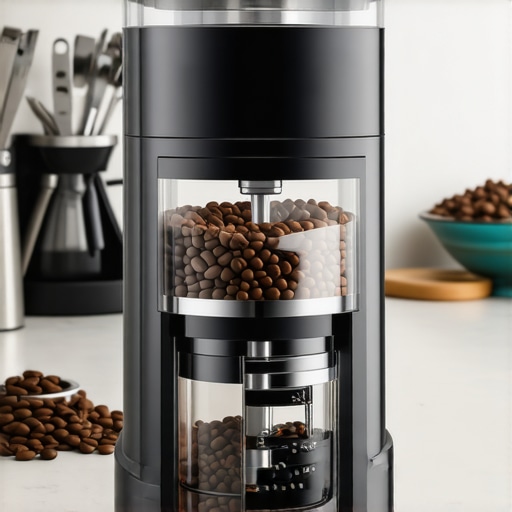
- A high-quality burr grinder equipped with sharp, flat burrs ensures uniform particle size, which is foundational for consistent extraction.
- Calibration tools like digital calipers help maintain precise burr gap settings over time, avoiding drift from wear.
- Anti-static accessories and grounding brushes can reduce fines and static cling that disrupt grind flow—simple yet effective upgrades.
- Routine maintenance kits ensure your grinder stays in optimal condition, preserving grind quality.
Ignite Your Espresso Passion Today
Achieving exceptional espresso is a journey of continual refinement and curiosity. Each small upgrade, from calibration to maintenance, builds toward that elusive perfect shot. I encourage you to experiment, observe, and embrace the learning process—your taste buds will thank you. Remember, mastery is in the details, and your next great espresso might just be a tweak away.
What has been your biggest realization about grinder maintenance or technique that improved your shots? Share below—I’d love to hear your story.
![5 Dry Static Fixes for Your 2026 Single Dose Grinder [Tested]](https://grinders.espressotechguide.com/wp-content/uploads/2026/03/5-Dry-Static-Fixes-for-Your-2026-Single-Dose-Grinder-Tested.jpeg)
2 responses to “4 Simple Espresso Grinder Upgrades to Fix Channeling in 2026”
Reading through this post really resonated with me because I used to think that upgrading my grinder alone would fix all my issues with channeling and inconsistent shots. It turns out that regular maintenance, especially calibration and cleaning, made a huge difference in my espresso quality. I found that simply checking burr alignment monthly with a caliper and cleaning out any residue helped me maintain a more uniform grind. I used to experience static buildup which caused small fines to cling to the grounds unevenly, leading to channeling. Incorporating grounding brushes and anti-static mods significantly improved my flow consistency.
What I found particularly interesting is the emphasis on tamping and distribution techniques working hand-in-hand with grind quality. Do you think these physical techniques can sometimes outweigh minor upgrades? I’d love to hear how others balance equipment adjustments with technique for optimal results.
This post hits close to home for me. I used to think that the grind quality was solely responsible for my shot inconsistencies, but I realized that even tiny misalignments or static buildup could sabotage the best setup. A couple of months ago, I started calibrating my burrs monthly with a digital caliper, which made a surprisingly noticeable difference in shot uniformity. Also, addressing static with grounding brushes reduced fines that would otherwise cause channeling. What’s interesting is how the combination of equipment maintenance and technique — like tamping pressure and distribution — really synergizes to improve results.
In my experience, I found that even with a high-end grinder, neglecting regular calibration and static control can nullify its benefits. Do you think there are specific environmental factors, like humidity, that affect static and grind consistency? I’ve noticed more static during dry seasons, which complicates achieving that perfect shot. Would love to hear your thoughts or tips on managing environmental influences for better grind consistency.