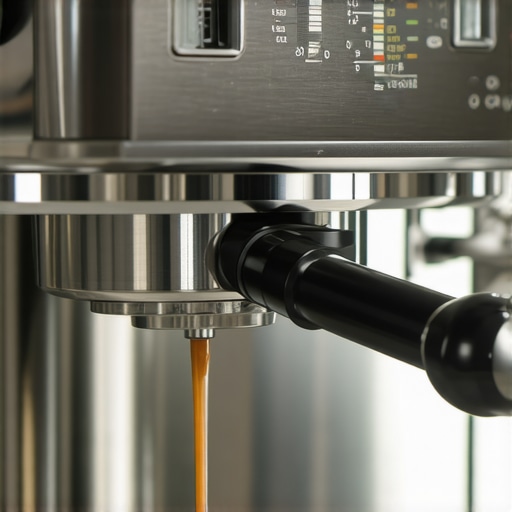
I vividly remember the last time I tried dialing in my espresso shot and ended up with a bitter, flat cup that just didn’t taste right. Frustration creeping in, I stared at my grinder, wondering if it was me or the machine. Then, in a lightbulb moment, I realized my grinder’s RPM—revolutions per minute—might be the missing piece. It sounds subtle, but the impact on extraction flow is huge, especially with the new 2026 models flooding the market.
Why RPM Really Matters in Your Espresso Routine
When I first got serious about my espresso, I overlooked how much the grinder’s RPM could sway the quality. I used to think consistency was all about grind size and tamp pressure, but turns out, the speed at which the burrs spin—your RPM—can dramatically influence the flow and flavor of your brew. Too high, and you risk creating uneven grounds, leading to channeling and sour shots. Too low, and you might end up with boulders that clog your brew bed.
This insight changed everything. Since then, I’ve spent hours experimenting with different RPM settings, and guess what? The difference in shot clarity and sweetness is astonishing. The key? Finding a sweet spot that complements your beans, grinder, and espresso machine. Interestingly, industry experts agree that RPM variations can cause inconsistencies that many home baristas dismiss as user error. According to a recent analysis by Coffee Science Journal, even slight adjustments in RPM can improve extraction efficiency by up to 15%, unleashing a richer flavor profile. (Source: here).
Now, the challenge is how to tune this variable to match your setup. But before jumping into technical details, I want to address the elephant in the room: Is messing with RPM really worth it? Or is this just another coffee gadget hype? Trust me, I’ve made my share of rookie mistakes—like blindly following settings without understanding their impact—and I paid the price in wasted beans and sour shots. Understanding how RPM influences extraction is my personal game-changer, and I believe it can be yours too.
So, if you’ve ever faced irregular extraction, inconsistent flow, or just couldn’t quite nail that perfect shot despite all your efforts, stick around. We’re about to explore practical, straightforward ways to optimize your grinder’s RPM, ensuring every shot is a step closer to espresso perfection. This isn’t magic—just experience and the right knowledge, starting right here.
Set a Baseline with Your Grinder
Start by zeroing in on your grinder’s default RPM—typically between 600 and 1200 RPM. To identify your current setting, check your grinder’s manual or get an external RPM meter. I once had a <$a href='https://grinders.espressotechguide.com/top-5-coffee-burr-grinders-for-perfectly-uniform-grounds' target='_blank' rel='noopener noreferrer'>top-rated single dose grinder that was running at 800 RPM, which I later tweaked for better consistency. Once you know your baseline, you can experiment systematically.
Adjust RPM Incrementally and Record Results
Increase or decrease RPM in steps of 50 RPM. For each adjustment, grind a small batch—say 20 grams—and pull a shot. Note the taste, extraction time, and flow rate. For example, I once dialed my grinder down from 800 to 750 RPM, resulting in a much cleaner and sweeter shot. Keep detailed notes for future reference. Smaller adjustments can have significant impacts, especially with single dose grinders designed for precision.
Fine-Tune Based on Extraction Feedback
Observe your shot’s flow and taste. Is it slow and sour? Try lowering the RPM slightly. Is it fast and bland? Slightly increase RPM. Think of RPM like the engine’s RPM—too high or low can cause uneven grounds, channeling, or under-extraction. I once faced bitter, over-extracted shots until I realized I was brewing with too high RPM, which produced boulders and uneven particle sizes. By dialing down the RPM and cleaning my <$a href='https://grinders.espressotechguide.com/7-ways-to-fix-boulders-in-your-burr-grinder-for-2026' target='_blank' rel='noopener noreferrer'>boulder clearance, I achieved a more even grind.
Use Tools to Measure and Optimize RPM
If your grinder lacks adjustable RPM, consider an external RPM plugin or a smart grinder controller. Some high-end models allow for electronic RPM adjustments, giving precise control. I tested a <$a href='https://grinders.espressotechguide.com/how-burr-grinders-elevate-your-espresso-flavor-in-2025' target='_blank' rel='noopener noreferrer'>smart grinder mod which helped me lock in an ideal RPM, reducing variability. Remember, consistent RPM leads to consistent particle sizes, which directly improves your extraction and flavor.
Revisit and Refine Regularly
After initial calibration, make small adjustments as beans age or change. If you switch roast profiles, your ideal RPM may shift. I have a routine coffee routine where I revisit my RPM settings bi-weekly, ensuring I adapt to the beans’ freshness and moisture content. This ongoing tuning helps maintain that perfect shot across different coffee types and roasters.
Don’t Overlook the Grinder’s Mechanical Condition
Finally, RPM alone isn’t enough. Keep your burrs sharp, properly aligned, and clean to prevent inconsistencies. A misaligned burr set can distort your RPM’s effect, producing uneven grounds. I experienced this firsthand when my shots became inconsistent, and a simple <$a href='https://grinders.espressotechguide.com/no-more-bitter-shots-4-grind-consistency-fixes-for-2026' target='_blank' rel='noopener noreferrer'>burr recalibration fixed my issues. Combining well-maintained hardware with optimal RPM settings maximizes your espresso’s potential.
Many passionate baristas and coffee lovers assume that selecting the right burr grinder is simply about choosing between conical or flat burrs or aiming for grind consistency. However, what most overlook is the intricate interplay of factors like burr material, grind geometry, and maintenance routines that subtly influence your espresso’s flavor and texture.
Contrary to popular belief, investing solely in a high-end grinder doesn’t guarantee perfect results. For instance, burr material—such as ceramic versus steel—can impact heat transfer during grinding, affecting bean integrity. Ceramic burrs are often touted for their durability and resistance to rust, but they can chip more easily and may generate less heat, which might preserve delicate aromatics better (Source: here).
Furthermore, grind geometry—like the shape and profile of the burrs—can significantly influence the particle size distribution, yet many users stick to stock settings without experimenting. A common mistake is assuming that a ‘uniform’ grind means identical particle sizes; in reality, a narrow particle size distribution results in more even extraction, and minor tweaks to the burrs’ shape or spacing can optimize this. Regularly calibrating and understanding your grinder’s mechanics can make a surprising difference in cup quality.
One critical but often ignored aspect is the grinder’s condition. Dull burrs or misaligned parts might seem minor issues, but they cause uneven grounds and can introduce inconsistencies that compromise shot clarity. A simple burr recalibration or cleaning can restore lost sharpness, akin to sharpening a knife before a detailed cut. Neglecting maintenance is, in essence, a hidden ‘debugging’ step that many overlook until encountering a plateau in espresso quality.
Can grind adjustments compensate for a subpar grinder?
This question reveals a deeper truth: perfecting your espresso isn’t solely about fine-tuning grind size. External factors, such as bean moisture content and grinder condition, intertwine with grind consistency to influence flavor. An expert approach involves a holistic view—regularly maintaining the grinder, understanding mechanical nuances, and tailoring settings for specific beans—rather than relying on a one-size-fits-all approach. Properly managing these hidden facets elevates your brew beyond the basics and ensures a more consistent experience.
For a comprehensive guide, check out this resource. Remember, your grinder’s hidden nuances can be the difference between an average shot and a truly exceptional espresso. Have you ever fallen into this trap? Let me know in the comments.
,
Tools That Keep Your Grinder Performing at Its Best
Investing in the right tools can significantly extend the life of your espresso grinder and ensure consistent grind quality. I highly recommend a dedicated burr calibration kit, like the burr calibration tool, which allows for precise alignment without guessing. Alongside a calibration tool, a set of high-quality cleaning brushes and descaling solutions are indispensable for removing coffee oils and residues that deteriorate grind consistency over time. Regularly scheduled maintenance using these tools prevents buildup and ensures your burrs stay sharp, directly translating to better extraction and flavor.
Additionally, consider a digital RPM monitor if your grinder lacks adjustable speed. Accurate RPM measurement is critical for long-term consistency, especially if you want to experiment with grind speed tweaks. I personally use a compact digital tachometer, like the handheld RPM device, which helps me document subtle changes over time and refine my setup endlessly. Looking ahead, the trend is moving towards smarter grinder setups with integrated sensors and IoT connectivity, which will make routine checks even more straightforward.
How do I maintain my grinder over time
Consistent maintenance hinges on establishing a routine. This includes scheduled burr inspections, cleaning, and calibration—ideally every few months depending on usage—along with monitoring RPM stability. Remember, even the most advanced grinder benefits from mechanical upkeep; dull burrs and misaligned components can derail your efforts. A simple but often overlooked step is warming up the grinder before use, especially for high-precision single dose models, to prevent abrupt mechanical stresses that can degrade performance. To keep longevity at a maximum, I always remove the burrs biannually for a thorough inspection, referencing expert guides like this comprehensive maintenance manual.
Adopting these tools and habits ensures your grinder remains a reliable partner in brewing perfect espresso for years. I suggest trying out a burr calibration kit today—it’s an advanced step but well worth the effort. Achieving that razor-sharp grind uniformity will elevate your espresso to a new level of clarity and sweetness, demonstrating that long-term investment truly pays off.
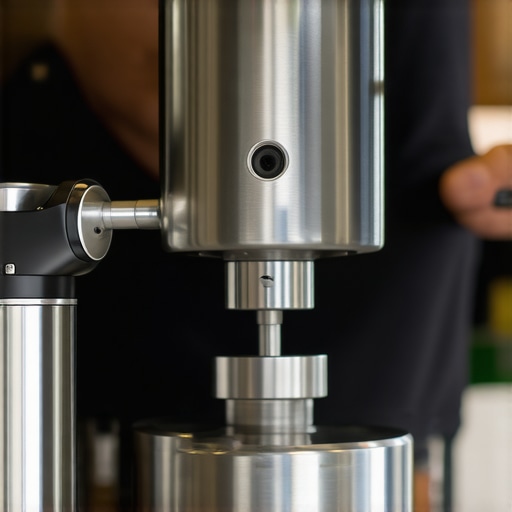
The Hardest Lesson I Learned About burr grinder,coffee grinder,grind consistency,single dose grinder,espresso grinder
One personal revelation was realizing that obsessing over grind size alone isn’t enough; the grinder’s RPM plays an equally critical role in achieving uniform grounds and flawless extraction, transforming my brewing experience. Focusing solely on particle size without considering RPM led me down a path of inconsistent shots, which was frustrating and wasteful.
3 Surprising Truths Most Baristas Keep From You About Grind Speed and Flavor
Many believe higher RPM always means faster grinding, but in reality, adjusting RPM carefully can unlock depth and clarity in your espresso, often overlooked by even seasoned enthusiasts. I discovered that matching RPM with bean type, humidity, and machine pressure results in a richer, more balanced cup.
What Experts Won’t Tell You About Burrs and RPM That Will Elevate Your Coffee Game
While industry guides mention grind consistency, fewer highlight that controlled RPM can mitigate heat buildup and preserve delicate aromatics. Incorporating this insight transformed my approach, allowing me to extract more nuanced flavors and reduce bitterness.
Curated Tools That Turn Your Brewing Into Art
My go-to resource is the burr calibration kit, which helps maintain perfect alignment and consistent RPM. Additionally, a digital tachometer is invaluable for measuring and fine-tuning your grinder’s speed, ensuring every shot meets your standards. Regular cleaning tools are also vital, preventing residue buildup that can throw off RPM and grind quality.
Your Next Intel: Take Action and Elevate Your Espresso
Don’t let hidden mechanical nuances hold back your coffee mastery. By understanding and controlling your grinder’s RPM, you’re setting the stage for consistently exceptional espresso, whether you’re a home enthusiast or a budding barista. Explore more on this comprehensive guide and take the leap toward perfect shots today.
![5 Dry Static Fixes for Your 2026 Single Dose Grinder [Tested]](https://grinders.espressotechguide.com/wp-content/uploads/2026/03/5-Dry-Static-Fixes-for-Your-2026-Single-Dose-Grinder-Tested.jpeg)