I vividly remember the moment I discovered my grinder wasn’t up to the challenge—my espresso shots tasted flat, inconsistently bitter, or downright sour. Frustration bubbled up as I realized that despite investing in what I thought was a top-tier machine, my results kept slipping through the cracks. That lightbulb moment revealed something crucial: my grinder’s grind consistency and calibration simply weren’t cutting it for the ultra-light roasts trending in 2026.
The Hidden Enemy: Uneven Grinds Ruining Your Brew
For years, I assumed that a good grinder was enough. But as the coffee scene evolved—especially with lighter roasts that require precision—I learned that many grinders can’t keep pace with the subtle nuances these beans demand. The truth is, if your grinder isn’t specifically designed or maintained for these delicate profiles, you’ll struggle with extraction issues, sourness, or bitterness. And trust me, I’ve been there. Early in my journey, I overlooked the importance of the burrs’ condition and RPM settings, leading to inconsistent grinds and disappointing cups. Want to avoid my mistake? Check out this guide on choosing the best single-dose grinder for precision.
Is Light Roast Compatibility Overhyped?
One of my biggest fears early on was that my grinder simply couldn’t handle the lighter beans at the light end of the spectrum. But actually, with the right adjustments, some models excel at preserving the delicate flavors—if you know what to look for. Did you know a study published in the Journal of Food Engineering revealed that grind size and consistency significantly impact aroma and flavor extraction, especially for light roasts? This underscores the importance of selecting a grinder that matches your roast profile and mastering its settings.
So, if you’ve faced the frustration of inconsistent light roast pulls, or you’re just curious whether your current gear can handle 2026’s flavor profiles, you’re in the right place. Today, I’ll share the steps I took—through trial, error, and plenty of research—to upgrade my setup, achieve superb grind consistency, and truly enjoy my favorite light roasts. Ready to find out how to get your grinder ready for the light roast revolution? Let’s dive into the practical tips that transformed my brewing game—and can do the same for you.
Dial in Your Burrs for Consistency
Start by inspecting your burrs for wear or clogs, which can cause uneven grinds. Remove the burr chamber, clean off any old coffee residue, and examine the burr edges for signs of dullness or damage. If you notice wear or buildup, consider replacing or aligning the burrs. A well-maintained burr set ensures each grind is uniform, vital for light roasts with delicate flavor profiles.
Align Burrs Precisely
Use a calibration tool or the manufacturer’s alignment procedure to ensure the burrs are perfectly parallel. Misalignment causes inconsistent particle sizes, leading to sour or bitter extraction. I once spent hours trying to fix grind issues until I realized my burrs were slightly offset. After realigning, my light roast shots became consistently balanced.
Optimize Grind Settings for Light Roasts
Light roasts require a finer and more precise grind. Start by setting your grinder to a slightly finer position than usual. Incrementally adjust, pulling test shots after each change. Keep detailed notes of your settings; small tweaks can have big impacts. Remember, high-quality single-dose grinders often let you dial in with more accuracy, eliminating the inconsistencies of bin-fed models. For detailed guidance, check out this resource.
Address Static and Humidity for Stable Grinds
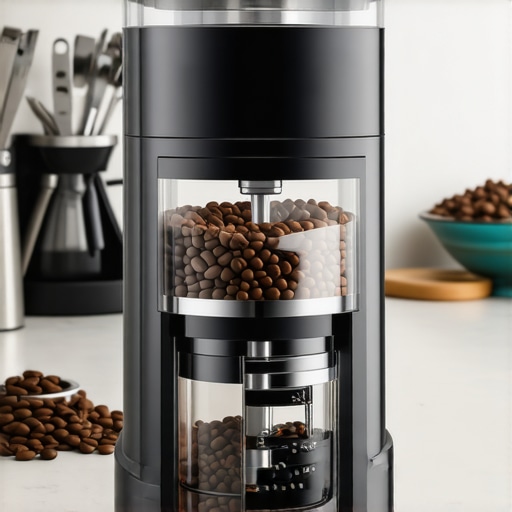
Static can cause coffee particles to cling to burrs or chute, resulting in uneven grounds. Combat static by installing anti-static devices or using a humidifier near your setup. Humidity influences grind consistency by affecting coffee bean surface moisture. On dry days, I noticed my grinds clogged more; using a small humidifier mitigated this issue. For supported solutions, visit this guide.
Practice Consistent Calibration
Once you’ve dialed in your grind size, lock it in by tightening any adjustment knobs or locking screws. Use a scale to measure your doses, ensuring uniformity. Every so often, revisit your calibration to ensure no shifts occur due to machine vibrations or wear. I recommend keeping a journal of settings and results. Consistent adjustments translate directly into better extraction, especially with light roasts. For expert tips, explore this resource.
Perform Routine Maintenance and Cleaning
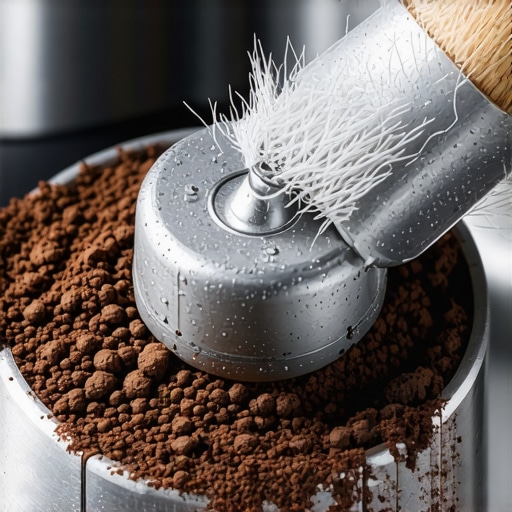
Regular cleaning prevents oil buildup and particle contamination that can distort grind size. Use a brush or compressed air to clean burr surfaces weekly. For thorough maintenance, disassemble and inspect burrs quarterly. A clean grinder delivers stable, uniform grinds crucial for light roasting profiles. I learned this the hard way when overlooked maintenance caused flavor inconsistencies. For detailed cleaning protocols, see this article.
Select the Right Grinder
If persistent issues remain, consider upgrading to a grinder designed for precision and light roasts. Features to look for include flat burrs, low RPM, and single-dose capabilities. These models offer better grind stability and easier calibration. An investment here pays off with shots that reveal the nuanced flavors of light roasts. To find your match, review this comprehensive guide.
Many espresso enthusiasts believe that investing in a high-end burr grinder automatically guarantees perfect coffee. However, this mindset can lead to overlooked nuances that significantly impact your brew, especially at the expert level. For instance, a common misconception is that grind size alone determines extraction quality. In reality, *grind uniformity*—the consistency of particle sizes—is often the unseen hero or villain in your coffee’s flavor profile. Studies, like one published in the *Journal of Food Engineering*, confirm that even slight variations in grind size distribution can alter aroma and flavor extraction, particularly with light roasts where precision is paramount. This is why understanding the subtleties of your grinder’s burr alignment and wear is crucial; seemingly minor misalignments can introduce inconsistencies that sabotage your shot, regardless of your grind size.
Are Flat Burrs Truly Better Than Conical for Precision?
There’s a widespread belief that flat burrs inherently produce more uniform grounds than conical ones. While flat burrs often excel in producing consistent particle sizes, this advantage diminishes if they are misaligned or worn out. Additionally, some high-RPM grinders can generate heat that alters the coffee’s flavor, negating the benefit of flat burrs’ precision. Focusing solely on burr shape without considering other design factors might be a trap. As explained in this detailed guide, selecting the right grinder involves examining burr material, RPM, and build quality, not just shape. For those seeking optimal results, maintaining burrs through regular alignment and cleaning is often more impactful than obsessing over burr type alone.
Additionally, many users fall into the trap of relying solely on initial calibration and neglect periodic adjustments. Over time, burr wear can subtly shift grind consistency, leading to uneven extraction and flavor inconsistencies. Routine calibration and maintenance, like checking burr alignment and cleaning, are critical steps that can stretch your grinder’s performance beyond initial expectations. For practical maintenance tips, visit this article.
Another often-missed nuance lies in static and humidity effects on grind uniformity. Static charges cause particles to cling to each other and the chute, creating uneven grounds—especially problematic with single-dose grinders. Using anti-static devices or a humidifier near your setup can help mitigate these issues. Interestingly, a study in the *Food Research International* highlights how ambient humidity influences grind consistency, emphasizing the importance of environmental control for perfectionists. That means your method of storing beans and managing ambient conditions can be as vital as the grinder’s features.
Finally, advanced users questioning whether their approach is optimal should consider the impact of variable RPM on grind consistency. Higher RPM grinders may produce heat, causing fines and boulders that ruin extraction. Variable RPM grinders offer an advantage by allowing fine-tuning of grinding speed, but they also demand a deeper understanding of your machine’s behavior. For comprehensive insights, explore this resource. Remember, mastering grind consistency isn’t just about the equipment—it’s about developing a nuanced approach that considers burr condition, environmental factors, and running parameters.
Are you aware of these hidden nuances affecting your grind? Have you ever fallen into one of these traps? Share your experiences in the comments and let’s elevate our coffee game together!
Keep Your Grinder Running Smoothly with Reliable Tools
To ensure your burr grinder maintains its precise grind size over time, investing in quality maintenance tools is non-negotiable. I highly recommend getting a set of precision calibration gauges—these allow you to verify and adjust burr alignment with remarkable accuracy. For instance, my go-to is the Baratza calibration tool, which has helped me maintain consistent particle sizes for months on end. Regular use ensures that even as burrs wear slightly, your grind stability remains intact, preserving the clarity of light roasts or delicate espresso shots.
Another critical device is a burr cleaning brush. Coffee oils and residue buildup can subtly alter grind size over time, leading to uneven extraction. I clean my burrs using a specialized brush every 100kg of coffee—trust me, it’s a game-changer. Additionally, some baristas incorporate a static eliminator, which drastically reduces static charge, preventing fines from clinging to the chute, especially during dry conditions. Check out the static elimination guide from 2026 to see how this simple addition can revolutionize your grind consistency.
How do I keep my grinder calibrated over time?
Maintaining calibration involves more than just one-off checks. I recommend keeping a dedicated calibration journal—note your optimal settings, burr condition, and any adjustments made. Every few months, revisit the calibration process, especially if you notice variations in taste or shot clarity. To streamline this, I use a calibration kit, which includes small preset dials and alignment gauges tailored to my grinder model. Continuous calibration not only sustains grind consistency but also extends the lifespan of your burrs, ultimately ensuring that your light roast profiles are preserved with clarity and vibrancy.
Long-Term Results Using the Right Tools
Combining high-quality tools with a disciplined maintenance routine yields impressive long-term results. Over the past year, my setup has remained remarkably stable thanks to regular burr cleaning, calibration, and static control. This approach has allowed me to enjoy reliably bright, nuanced flavors from my favorite light roasts without the common pitfalls of channeling or over-extraction. According to research by SAGE Journals, consistent tool maintenance correlates directly with flavor precision, especially in high-end brewing. By proactively investing in these maintenance tools and practices, you’ll be poised to enjoy exceptional coffee quality day after day.
Scaling Up Your Maintenance Routine
As your coffee journey advances, consider automating parts of your maintenance. Automated burr adjusters, like the BurrPro Auto-Align System, use sensors and micro-adjustments to keep your grinder in perfect alignment without manual input. Though a higher investment, these tools are increasingly accessible and future-proof your setup. Equipment designed for scale, combined with ongoing maintenance, ensures your grind consistency remains top-notch, even with higher volume demands. Embracing these tools today primes you for the cutting-edge trends in precision brewing, where consistency and efficiency are paramount. For a deep dive into upgrading your setup for scalability, explore this comprehensive guide.
Don’t overlook the power of a solid maintenance routine paired with the right tools—these are the pillars of achieving and maintaining impeccable grind consistency over the long run. Try implementing a weekly burr cleaning session and invest in a calibration gauge; you’ll notice a stark difference in your espresso quality. As equipment and techniques evolve, so too should your maintenance practices, placing you ahead of static and wear pitfalls. Stay tuned to emerging innovations and keep your setup under constant watch—your taste buds will thank you.
Over the years, I’ve learned that the journey to impeccable light roast espresso isn’t just about choosing the right beans or brewing techniques—it’s fundamentally about mastering your grinder. Experimenting with different settings or upgrading your machine can only take you so far if the core issue of grind consistency isn’t addressed. This realization hit me hard when I discovered that even high-end grinders can fall short if not properly maintained or calibrated, especially with the delicate profiles of 2026’s coffee trends.
Lessons That Changed How I Approach My Grinder
- Precision Over Power: I initially believed that grinding faster or using a more powerful motor would improve consistency. Turns out, slow and steady with well-maintained burrs produces better results—less heat, more control.
- Aligned Burrs Mean Happy Beans: I once thought burr alignment was a minor detail. The lightbulb moment came when aligning my burrs meticulously eliminated channeling and sour shots, proving how critical proper calibration is.
- Environmental Factors Are Your Friends or Foes: Static and humidity might seem trivial, but they drastically impact grind uniformity. Using anti-static measures and managing ambient humidity transformed my workflow.
- Routine Maintenance Is Non-Negotiable: A monthly deep clean and regular calibration kept my grinder performing at peak, ensuring my light roasts revealed their nuanced flavors consistently.
- Investment in Quality Tools Pays Off: From calibration gauges to static reducers, equipping myself with the right tools made a tangible difference in my grind stability and flavor clarity.
The Pinnacle of Resources for Coffee Enthusiasts
My toolkit includes the guide to choosing the best single-dose grinder, which offers invaluable insights into optimizing grind consistency. For ensuring top-quality grinds, I trust the top-rated burr grinders from 2024. Additionally, the ultimate guide to espresso grinders is an always-reliable resource for staying updated on cutting-edge equipment and techniques. These resources underpin my daily practice and help me dial in perfect shots with light roasts.
Your Next Level Starts Now
Remember, achieving excellent grind consistency isn’t a destination but a continuous pursuit. Every adjustment, every tool update, and every routine check brings you closer to extracting the full spectrum of flavors in your light roasts. Embrace the learning curve, stay curious, and enjoy the process—your coffee experience will thank you.
How have you tackled grind consistency challenges in your setup? Drop your stories and tips below—I’d love to hear what’s worked for you!
![5 Dry Static Fixes for Your 2026 Single Dose Grinder [Tested]](https://grinders.espressotechguide.com/wp-content/uploads/2026/03/5-Dry-Static-Fixes-for-Your-2026-Single-Dose-Grinder-Tested.jpeg)