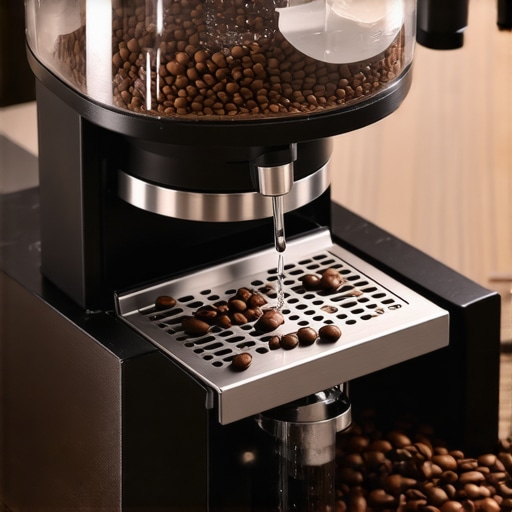
It was a frustrating Saturday morning—the kind where your freshly ground coffee suddenly looks like it’s had a wild party with moisture. I vividly remember watching my once-perfect espresso shot turn sour, grainy, and inconsistent. It hit me then: humidity was sabotaging my grind.
Why Moisture in the Air Can Ruin Your Espresso Grind
As a dedicated coffee enthusiast, I thought I had my technique nailed. But reality hit when I realized that my environment’s humidity was silently sabotaging my finely tuned grinder settings. Moisture from the air seeps into the coffee beans and grinder, causing the grounds to clump, make static worse, and ultimately produce inconsistent espresso shots. It’s a common pitfall that many home baristas overlook, yet it can make or break your brewing experience.
Understanding the impact of humidity is crucial. It affects not just your beans but also your grinder’s performance. In fact, experts warn that high moisture levels can lead to increased static, causing fines and uneven grounds, which directly impact shot quality. Quite surprisingly, a study by the Specialty Coffee Association demonstrates that environmental factors like humidity can alter extraction and flavor profiles more than many realize.
Ever faced a day where your grinder seems to be fighting you, producing inconsistent grinds even with the same beans? If so, you’re not alone. Many baristas and homebrew enthusiasts wrestle with this invisible yet persistent challenge. But don’t worry—the good news is, there are practical solutions to keep your grind steady, regardless of the weather outside.
What We’ll Cover Today
In this post, I’ll share my personal experiences, mistakes I made early on, and proven strategies to counter humidity’s effects. We’ll explore how to keep moisture-affected grounds at bay, so you can enjoy consistently excellent espresso shots no matter the weather. Ready to take control of your grind? Let’s dive into how humidity really affects your espresso—and what you can do about it.
Seal and Store Your Beans Properly
To combat moisture intrusion, store your coffee beans in an airtight container, ideally with a desiccant packet inside. This prevents humidity from seeping into your beans before grinding, maintaining their optimal moisture level. I learned this the hard way when a small, resealable jar kept my beans fresh and dry compared to the standard bag that let moisture in during rainy weeks.
Adjust Your Grinder Settings Regularly
Humidity can cause your grinder to produce inconsistent grounds over time. Check your burr alignment and grind size before each session, especially during humid days. Start with a slightly coarser setting and fine-tune until your shots stabilize. Regular calibration ensures static and clumping issues are minimized, much like dialing in a new espresso machine.
Use a Humidity-Resistant Grinder or Dehumidifier
If you live in a particularly humid climate, consider investing in a grinder with sealed burr chambers or RDT technology. Alternatively, run a small dehumidifier in your coffee corner during brewing. I once placed a compact dehumidifier in my setup, which noticeably reduced static and improved grind consistency—think of it as giving your grinder a dry environment to excel in.
Pre-Grind Your Beans in Controlled Conditions
Grinding just before brewing in a dry, climate-controlled room minimizes moisture absorption. Avoid leaving grounds exposed for long periods, especially in humid settings. I adopted this by pre-measuring single doses in a sealed container and grinding them immediately before extraction, which kept my espresso tasting vibrant and consistent.
Implement a Static and Moisture Blocking Technique
Apply anti-static sprays or anti-static sleeves to your grinder and containers. Additionally, lightly mist your beans or grounds with a small amount of dry paper towel if static is a persistent problem. During a particularly humid week, I used a static spray on my portafilter and grinder, which significantly reduced clumping and fines, leading to better extraction.
Experiment with Different Grind Size and Dose
Adjust your grind size and dose to find the sweet spot that compensates for moisture. Coarser grinds tend to clump less when humidity rises, and slightly increasing the dose can mitigate channeling caused by uneven grounds. I manually tested various settings during a humid spell and documented the results, gradually building a profile that maintained consistency regardless of weather.
Maintain Your Equipment for Peak Performance
Regular cleaning and inspection of your grinder, especially burrs and chute, prevent moisture buildup and static issues. Use a brush and damp cloth (not wet) to keep parts dry. I set a monthly cleaning schedule and found that my grinder performed more reliably, with fewer static and retention issues, leading to a steadier grind quality.
Consider Upgrading to a Specialized Grinder
If inconsistencies persist despite your efforts, explore upgrading to a single dose grinder designed for maximum stability and low static—review options at this guide. A quality grinder with tight burr alignment and advanced static control can be a game-changer during humid seasons, ensuring your grind remains uniform and your espresso tastes just right.
Leverage Environmental Controls and External Accessories
Use dehumidifiers or air conditioners in your brewing space, especially in high-humidity climates. Investing in a dedicated coffee corner with climate control can dramatically improve consistency. I installed a small portable air conditioner during a summer season, which normalized the environment, reducing static and static-related clumping, and enhancing overall grind reliability.
Many home baristas believe that selecting a high-quality burr grinder guarantees perfect grind consistency, but this is a common misconception that can lead to costly mistakes. While it’s true that premium espresso grinders and single dose options often feature superior build quality and advanced mechanics, the real challenge lies in understanding that grind consistency isn’t just about the machine—it’s about nuanced factors such as burr alignment, static control, and environmental effects. For example, even the most expensive grinder can produce uneven grounds if the burrs are misaligned or if static buildup isn’t managed properly. Proper calibration and regular maintenance are essential, but many overlook these critical details, assuming that investing in a top-tier grinder solves all issues. Some believe static and retention are unavoidable nuisances—yet, experts from the Specialty Coffee Association emphasize that static reduction techniques and precise dosing have a significant impact on shot quality. An advanced mistake many make is relying solely on grind size adjustments to fix flavor inconsistencies, ignoring that small burr misalignments can distort particle uniformity and extraction. Want to understand how to elevate your grind consistency? Dive into our [cornerstone guide on grind mastery](https://grinders.espressotechguide.com/mastering-grind-consistency-secrets-from-coffee-expert-baristas) to discover how even minor technical nuances can make a huge difference. Have you ever fallen into this trap? Let me know in the comments.
Equip Yourself with Precision Tools
Investing in the right tools is fundamental for maintaining your coffee grinder’s performance over time. I personally rely on a high-quality burr cleaning brush to remove residual coffee oils and particles from the burrs, which prevents static buildup and ensures consistent grind size. Additionally, a digital caliper allows me to measure burr alignment accurately, ensuring optimal performance and minimizing uneven grounds, especially critical when using an advanced single dose grinder.
Streamline Your Routine with Proper Maintenance
Regular cleanings are non-negotiable. I schedule monthly deep cleanings by disassembling the grinder, brushing away coffee debris, and inspecting burr alignment. During this process, I use a specialized coffee grinder lubricant to maintain smooth movement of parts, and I verify burr tightness with a torque wrench to prevent misalignment. Maintaining your grinder not only prolongs its lifespan but also sustains perfect grind consistency, essential for quality espresso extraction.
Adopt Smart, Long-Term Strategies
With evolving technologies, I predict that grinders equipped with automatic calibration algorithms will become standard. These systems analyze grind output and fine-tune settings in real-time, minimizing user intervention. Currently, I manually calibrate by using calibration tools to keep my grinder consistent across different beans and humidity levels. Embracing these innovations can save time and ensure sustained quality, making your investment future-proof.
How do I maintain my grinder over time?
Maintaining a burr grinder involves routine cleaning, inspecting burr alignment, and using precise calibration tools. Keeping static issues at bay by managing static buildup techniques also plays a vital role. For more detailed guidance, explore our mastering grind consistency article. I recommend testing a dynamic calibration method, such as adjusting burr tension with a torque wrench periodically, to keep your grinder humming smoothly—try this approach today to unlock your grinder’s full potential.
During my early days as a home barista, I underestimated the subtle yet relentless influence of ambient humidity on my espresso grind. My lessons came from countless mornings of inconsistent shots and static-clogged grounds, leading me to uncover insights that transformed my brewing process. Now, I want to share those revelations that aren’t typically found in general guides but are invaluable for sincere coffee lovers.
The Quiet Lessons That Turned My Coffee Routine Around
- Static is Your Enemy, Not Just an Annoyance: I learned that static buildup isn’t merely a minor inconvenience; it can severely affect grind uniformity. Using static-reducing techniques learned from this cornerstone resource helped me achieve consistency.
- Store Beans with Care Beyond Just Airtight Containers: I discovered that adding desiccant packets and choosing the right storage environment preserves bean freshness and prevents moisture absorption, which can sabotage your grind. It’s a small change that yields big flavor consistency.
- The Power of Environmental Control: Investing in a dedicated climate-controlled space, even with simple dehumidifiers, dramatically reduced static and clumping issues. This ambient management was a game-changer I wish I embraced earlier.
- Calibrate, Calibrate, Calibrate: Regular and precise calibration of burr alignment and grind settings, especially during humid days, kept my results steady. The importance of maintenance and calibration can’t be overstated—your grinder’s reputation depends on it.
- Embrace Quality Tools and Be Patient: Using tools like a digital caliper for burr alignment, along with systematic adjustments, helped me unlock my grinder’s full potential. Consistency wasn’t achieved overnight; patience and attention to detail made all the difference.
Sculpt Your Path with Proven Resources
If you’re eager to elevate your espresso game further, I highly recommend exploring this comprehensive guide on single dose burr grinders. It offers deep insights into selecting equipment that minimizes static and maximizes grind consistency. For troubleshooting static issues, these tips from industry experts have saved me more than once. Remember, investing in the right knowledge and tools creates a ripple effect of joy in every cup you brew.
Your Next Step — Elevate Your Espresso Craft
Don’t let humidity and static hold you back from achieving barista-level espresso at home. Embrace control over your environment, maintain your grinder meticulously, and stay curious about new techniques. Mastering the nuances of grind consistency through such dedicated efforts transforms an ordinary morning into a daily celebration of coffee. Remember, every great espresso starts with a steady grind, no matter the weather.
What specific challenge have you faced with static or humidity affecting your grind? Share your experience below, and let’s learn together!
![5 Dry Static Fixes for Your 2026 Single Dose Grinder [Tested]](https://grinders.espressotechguide.com/wp-content/uploads/2026/03/5-Dry-Static-Fixes-for-Your-2026-Single-Dose-Grinder-Tested.jpeg)
2 responses to “How Humidity Destroys Your 2026 Espresso Grind Consistency”
Reading this post really resonated with me because I’ve struggled with static and moisture affecting my grind, especially during the humid summer months here in Austin. I found that storing beans with desiccant packs and keeping my grinder inside a climate-controlled room made a noticeable difference. The static sprays and pre-measuring doses also helped stabilize my espresso shots, which had been inconsistent before. I think many home baristas overlook how much environment impacts grind quality. My question is: Have others experimented with different types of dehumidifiers or climate control systems to see which is most effective for maintaining a stable environment specifically for grinding? It seems like creating the right microclimate is just as important as choosing a good grinder these days, and I’m curious about what has worked for others.
I can definitely relate to the challenges presented here. Humidity has been a sneaky adversary in my coffee routine too. What’s worked best for me is investing in a small dehumidifier in my coffee corner; it keeps the environment consistent and significantly reduces static and clumping issues. I’ve also found that storing beans in vacuum-sealed bags with desiccant packs and pre-grinding immediately before brewing helps maintain moisture control and grind consistency. Sometimes, I wonder if people underestimate the impact of ambient conditions on grind quality and extraction. Considering different dehumidifiers, I’d love to hear from others: which models or specific features have proven most effective in maintaining a stable microclimate for grinding during humid seasons? Do you think climate control makes a bigger difference than, say, upgrading to a sealed-chamber grinder? Curious about everyone’s experiences as I look to refine my setup further.