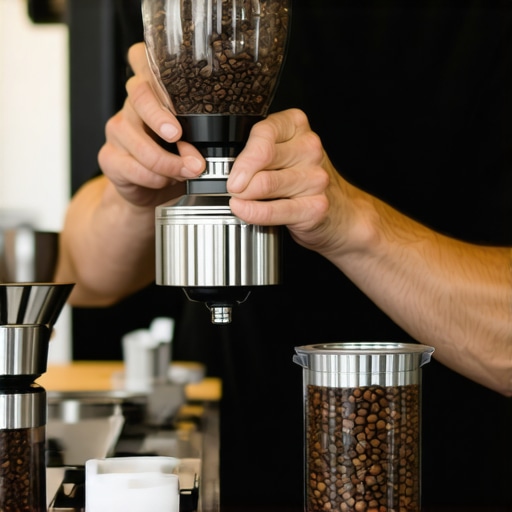
Ever pulled a shot of espresso that tasted absolutely amazing, only to find the next one wildly inconsistent? Been there. I remember the lightbulb moment when I realized that my grind size was fluctuating from shot to shot, ruining the flavor I was chasing. It’s frustrating, right? Especially when you invest in a good grinder and still struggle to get that perfect, uniform grind. That inconsistency can feel like an insurmountable barrier—like trying to hit a moving target every time you brew.
Why Your Grind Matters More Than You Think
Grind consistency isn’t just about aesthetics or precision for its own sake. It directly impacts the flavor, aroma, and overall quality of your espresso. When your grinder produces uneven particles, extraction becomes uneven too. Some grounds get over-extracted, turning bitter, while others under-extract, leaving your brew flat and sour. The result? A headache for any coffee lover wanting that perfect shot.
But here’s the thing—achieving maximum grind consistency with your burr or single dose grinder isn’t magic. It’s about understanding your equipment, mastering the right techniques, and paying close attention to small details. I’ve learned this the hard way, making that classic mistake early on: not calibrating my grinder properly. I used to think that setting the grind once was enough. Turns out, regular adjustments and maintenance are key to keeping things on point. If you’re tired of inconsistent brews, don’t worry. I’ll show you how to get your grind dialed in and keep it that way.
Is Grind Consistency Overhyped or Worth It?
Many skeptics think grind consistency is just a fancy term or a luxury for serious baristas. I used to believe that too—before I realized how much it dictated the flavor profile of my espresso. It’s not overhyped. It’s crucial. If you’re serious about brewing quality coffee, this is the secret ingredient that transforms a good shot into a great one.
One common mistake I made early on was ignoring the importance of regular cleaning and calibration. Dust, coffee oils, and wear can throw your grind off without you noticing. That’s why I now recommend a routine checkup, which you can learn more about in this comprehensive guide.
Stick with me, and I’ll guide you through the practical steps to maximize your grinder’s potential—so your next brew is just as consistent as your favorite coffee shop’s. Ready to take control of your grind? Let’s dive in and start mastering that perfect, uniform grind every single time.
Choose the Right Burrs and Set Them Correctly
Start by selecting high-quality burrs designed for uniform grinding. When I first upgraded to a set of premium conical burrs, I noticed an immediate improvement in consistency. Make sure to install them properly and set your grind size precisely. Use your grinder’s calibration settings to dial in the initial grind, then test by pulling a shot. Adjust in small increments until you find the sweet spot. Regularly check and recalibrate your grinder as burrs wear down over time, which can cause your grounds to become uneven. For detailed guidance, visit this guide.
Master the Art of Consistent Dosing
Single dosing prevents the variability introduced by bulk loading, giving you more control over your grind. Use a scale to measure your coffee dose precisely each time—aim for consistency within ±0.1 grams. When I started weighing my doses, I saw a sharp decrease in shot-to-shot variation. To further improve, consider a dedicated dosing cup or a funnel that minimizes spillage and tamping inconsistencies. This attention to detail ensures your grounds are uniform, which is vital for a consistent extraction. Check out this article for more tips.
Refine Your Grinding Technique
Apply even, steady pressure when grinding. I once tried to rush through a grind and noticed the particles were uneven—some too fine, others too coarse. Instead, I developed a routine: press the button for a consistent duration, then stop and inspect. Use a uniform tamping pressure and avoid tapping or shaking the portafilter excessively. Consistency in your technique reduces variables that can affect grind uniformity. Practice makes perfect, and over time, your muscle memory will produce steadier results. For more advanced techniques, see this resource.
Implement Routine Maintenance and Calibration
Clean your grinder regularly to prevent coffee oils and dust from clogging the burrs, which can cause uneven grinding. I dedicate 5 minutes weekly to brush off residual grounds and wipe down the burrs. Additionally, recalibrate your grinder after every few hundred shots or if you notice a flavor or grind inconsistency. Use calibration tools if available, and follow the manufacturer’s instructions. This routine helps maintain the integrity of your burr alignment and prevents subtle shifts that sabotage uniformity. For detailed maintenance procedures, refer to this comprehensive guide.
Optimize Your Environment and Workflow
Keep your grinder in a stable environment—avoid temperature fluctuations and vibrations that can alter grinding behavior. I set up my grinder on a sturdy, vibration-free countertop, and I keep the room temperature consistent. Additionally, streamline your workflow to minimize handling errors: grind directly into your portafilter, tamp with uniform pressure, and avoid unnecessary movements. These small adjustments help ensure each shot is as close to perfect as possible. Learn more about creating the ideal setup in this article.
Many coffee enthusiasts believe that once you’ve set your grinder to the perfect grind size, there’s no need for further adjustments. However, this is a misconception that can severely impact your espresso quality over time. In reality, even high-quality burrs wear down gradually, causing the grind size to drift and affecting extraction. Regular recalibration, as discussed in this guide, is essential to maintain that consistent particle size and flavor profile.
Another myth is that cleaning your grinder is optional. I used to skip routine maintenance, thinking it wouldn’t make much difference. But dust, coffee oils, and residual grounds accumulate and can clog the burrs, leading to uneven grinding. Regular cleaning, which I now schedule weekly, can prevent this issue and keep your grinder performing at peak consistency. For detailed maintenance routines, check this resource.
Why do some believe grind uniformity isn’t worth the fuss?
This misconception often stems from the idea that espresso is a complex art, and small particle variations don’t matter. But studies, such as one published in the Journal of Food Science, show that particle size distribution significantly influences extraction efficiency. In fact, even minor inconsistencies can lead to over- or under-extraction, ruining the shot. Being aware of this, as detailed in this article, can elevate your brewing game.
Many people overlook the importance of environmental stability. Vibration, temperature fluctuations, and humidity can subtly alter grind consistency. For example, placing your grinder on a sturdy, vibration-free surface and controlling room temperature can make a noticeable difference. This nuance is often underestimated but is crucial for advanced users aiming for perfection. Learn more about optimizing your setup in this guide.
Have you ever fallen into this trap? Let me know in the comments and share your experiences with grind consistency challenges. Remember, mastering these nuances can be the difference between a good shot and an exceptional one.
Maintaining your grinder isn’t just about keeping it clean; it’s about ensuring each shot of espresso is consistently delicious. Over time, even the best grinders can suffer from wear and tear, affecting grind uniformity and flavor extraction. That’s why investing in the right tools and establishing a routine maintenance schedule is crucial for any serious coffee enthusiast.
Tools I Recommend for Long-Term Grinder Care
First, I rely heavily on a high-quality brush designed specifically for burr grinders. For example, the coffee grinder cleaning brush I use has stiff bristles that effectively dislodge residual grounds and oils without damaging the burrs. Regular brushing after each use prevents buildup that can cause uneven grinding. For deeper cleaning, I use a grinder cleaning tablet—these are food-safe and help remove oils that regular brushing can’t reach.
Additionally, a calibration tool like a dial gauge is invaluable. I calibrate my grinder every few hundred shots, especially after changing burrs or noticing shifts in flavor. This ensures particle size remains uniform, maintaining consistent extraction. Many manufacturers offer calibration kits tailored to specific models, so check your grinder’s documentation or contact their support for advice.
How to Maintain Your Grinder Over Time
Establish a weekly routine where you brush and wipe down your grinder. I also schedule monthly deep cleans, which involve removing the burrs and cleaning the entire chamber with a dry cloth and a soft brush. Remember, burrs wear down gradually, and their sharpness directly impacts grind consistency. Replacing burrs when they become dull is a wise investment—many high-end models have easily accessible burr replacement options.
For calibration, I use a digital scale to measure doses and a calibration tool to verify particle size. This process can seem technical at first, but it pays off with more consistent shots and better flavor. If you’re unsure how to calibrate properly, check out the comprehensive guide on maintaining grind uniformity.
Looking Ahead: The Future of Grinder Maintenance
As technology advances, I predict more grinders will incorporate smart sensors to monitor wear and automatically suggest maintenance. These innovations could extend the lifespan of your equipment and ensure optimal performance with minimal effort. Meanwhile, sticking to proven tools and routines remains the best strategy for now. Try integrating a calibration check into your weekly routine—it’s a simple step that guarantees your gear stays in top shape.
Ready to elevate your espresso game? Start by investing in a quality calibration tool and commit to regular cleaning. Your taste buds will thank you. For more insights, visit this guide and keep your grinder performing like new.
The Hardest Lessons I Learned About Grind Consistency
One of my biggest lightbulb moments was realizing that even small fluctuations in grind size could sabotage my entire brew. I used to think I could set my grinder once and forget it, but I learned the hard way that regular calibration is essential. The more I ignored routine maintenance, the more my shots varied, and I finally understood that consistency is a continuous journey, not a one-time fix.
Another lesson was that quality burrs make a real difference. Upgrading to high-quality, well-machined burrs transformed my grind uniformity, making my shots more predictable and flavorful. Trust me, investing in top-tier burrs is worth every penny if you’re serious about your espresso.
Lastly, I discovered the importance of environmental stability. Keeping my grinder on a vibration-free surface and maintaining a consistent room temperature drastically improved my results. Small details, like avoiding vibrations and temperature swings, can elevate your brewing game beyond the basics.
My Essential Toolkit for Consistent Espresso
For maintaining grind consistency, I swear by a dedicated calibration tool, such as a dial gauge, which helps me fine-tune my grinder regularly. A high-quality cleaning brush is also indispensable for removing oils and residual grounds—regular cleaning prevents uneven grinding caused by buildup. Additionally, a precise digital scale ensures my doses are consistent, which is critical for reliable extraction.
If you’re serious about long-term performance, consider a grinder cleaning tablet to keep your burrs in top shape. Combining these tools with a routine maintenance schedule has revolutionized my espresso quality.
Your Turn to Elevate Your Espresso Game
Achieving perfect grind consistency is a game-changer, and it’s within your reach. Small adjustments and routine care can transform your brewing experience, turning every shot into a masterpiece. Remember, the journey to better espresso starts with attention to detail and a commitment to regular maintenance. Keep experimenting, stay patient, and enjoy the process of mastering your grind for consistently delicious espresso.
What’s been your biggest challenge with maintaining grind consistency? Share your experience below and let’s learn from each other!
![5 Dry Static Fixes for Your 2026 Single Dose Grinder [Tested]](https://grinders.espressotechguide.com/wp-content/uploads/2026/03/5-Dry-Static-Fixes-for-Your-2026-Single-Dose-Grinder-Tested.jpeg)
One response to “How to Achieve Maximum Grind Consistency with Burr & Single Dose Coffee Grinders”
Reading through this post really resonated with me, especially the part about regular calibration and maintenance. I’ve been experimenting with different burrs and found that investing in high-quality conical burrs made a substantial difference in achieving consistent grind size. However, I still struggle with environmental factors, like vibrations from nearby appliances, affecting the grind even when I set everything up correctly. Since reading this, I started placing my grinder on a vibration-dampening mat, and it has noticeably improved consistency.
It’s interesting how small details, like maintaining a stable room temperature, can influence the results. Have others noticed similar effects from their environment? I’m curious if there are additional tips for minimizing external influences that can throw off grind uniformity over time. Sharing these experiences can help all of us refine our routines further and keep those shots tasting just right.