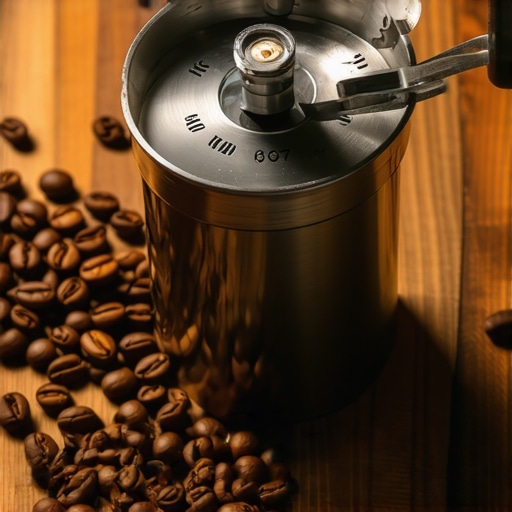
I remember the first time I pulled an espresso shot that tasted off—flat, bitter, and lacking that vibrant brightness I knew my machine should deliver. After hours of troubleshooting, I realized my problem wasn’t the machine but my grinder. It hit me like a lightbulb moment: my burr grinder was starting to lose its edge, and I hadn’t given it a second thought until that bitter shot made me reconsider everything. This experience made me wonder—how many espresso lovers like you and me are unknowingly battling dull grinders without realizing it? In fact, a dull grinder can quietly sabotage your entire coffee experience, turning what should be a ritual of joy into a frustrating chore.
Why Recognizing Grinder Dullness Now Matters More Than Ever
In the coffee world, freshness and precision are king. With the continuously evolving landscape of espresso brewing, failing to keep your grinder sharp can mean the difference between a perfect cup and a disappointing one. The good news is that spotting the signs early can save you time, beans, and money, all while elevating your espresso game. Given how much coffee technology has advanced—think high-RPM burrs and static-reducing design—it’s easy to overlook when your grinder starts to falter. But recognizing the early warning signs keeps your brew consistently excellent and prevents the cascade of issues that come with a dull burr.
Ever Wonder if Your Grinder Is Still Performing?
I was guilty of brushing off the signs for too long, assuming my grinder only needed a quick cleaning. Turns out, I was making a critical mistake. I didn’t realize that even minor wear and tear could seriously impact grind size distribution, leading to uneven extraction and bitter shots. Do you suspect your grinder might be dull but aren’t sure? You’re not alone. An understanding of these key signs can help you assess whether your grinder has served its time or if it’s time for an upgrade. For more on selecting the perfect grinder, you might check out [this guide on choosing the best single-dose grinder](https://grinders.espressotechguide.com/choosing-the-best-single-dose-grinder-for-precise-coffee-tasting), which offers valuable insights into maintaining optimal performance.
Keep reading—I’ll walk you through five clear signs that indicate your grinder’s dullness and what steps to take next to keep your espresso on point. Because, honestly, who has the patience for flat, inconsistent shots when a simple switch can make all the difference? After all, maintaining your grinder isn’t just about preserving equipment—it’s about preserving the magic in every cup you brew.
Assess Your Grinder’s Performance with Precision
Before diving into complex fixes, you need to evaluate whether your grinder is truly underperforming. Think of your burr grinder as a set of scales—if they’re off, your weights are inaccurate. Remove the hopper if you use one and check the consistency of your grind by running a small amount of beans and comparing the grounds visually. Uneven grounds hint at burr misalignment or wear. Conduct a simple test by adjusting grind settings slightly and observing if the consistency improves. If your grounds are still uneven after adjustments, it’s a sign your burrs might be dull or misaligned. For a detailed procedure, consider this alignment test.
Clean and Service Your Grinder Regularly
Just like a chef cleans their knives, a coffee grinder needs regular cleaning to perform at its best. Start by unplugging your grinder and removing all accessible parts. Use a soft brush to clear out residual coffee grounds from the burrs and chamber, paying special attention to static-prone areas. For stubborn buildup, run a small amount of rice or commercial grinder cleaning tablets to absorb oils and remove grounds stuck in crevices. This process prevents grounds from clogging or causing uneven grind sizes, which directly impacts extraction quality. I once experienced a noticeable improvement after a thorough clean—my shots became smoother and more consistent, illustrating the power of routine maintenance. For comprehensive cleaning tips, check out this guide.
Adjust Your Burrs for Optimal Performance
Burr alignment is vital for uniform grounds. Misaligned burrs can create boulders or fine powder, both detrimental to extraction. To verify proper alignment, follow a simple test: run your grinder and observe the shape of the grounds. Flat, uniform particles indicate good alignment; if you notice irregular shapes, your burrs might be misaligned. Use a burr alignment gauge or perform a visual check by removing the burrs and inspecting their positioning. Realignment involves loosening burr mounting screws and adjusting their position until grounds are consistently uniform. This step is crucial; I once fixed a misaligned burr with a simple shim, leading to a dramatic boost in shot clarity. For detailed alignment techniques, refer to these tricks.
Optimize Grind Size and Dose
Grinding too fine or coarse can doom your shots, regardless of burr condition. Start with the manufacturer’s recommended settings and fine-tune based on your taste and extraction time. For single-dose grinders, precision is key—you’re dosing a specific amount each time, which improves consistency. Use a digital scale to measure beans before grinding to ensure uniformity. Remember, a slight tweak in grind size can exponentially improve flavor; for instance, I once adjusted my burrs from “finer” to “slightly coarser,” which eliminated over-extraction bitterness. Combine this with consistent dosing practices, and your espresso will breathe with more clarity. For best practices, visit this resource.
Regularly Replace and Upgrade Burrs
Even the best burrs wear out over time—they lose their edge, causing inconsistent particle sizes. Typically, burrs should be replaced every 800–1,200 pounds of beans, depending on usage. Keep track of your grinding hours or weight to prevent under-performance. When replacing burrs, prioritize high-quality, titanium-coated models for durability and precision. Upgrading to premium burrs like these can dramatically improve grind consistency, especially with lighter roasts. My experience with newer burrs was transformative; after upgrading, I noticed a significant reduction in fines and an overall better extraction profile. Stay ahead by consulting guides like top burr grinders to choose your next upgrade.
Many coffee enthusiasts believe that achieving perfect grind consistency is simply a matter of selecting the right burr grinder or tweaking grind settings. However, even seasoned baristas and aficionados often overlook nuanced factors that undermine grind uniformity. Contrary to popular belief, grind consistency isn’t solely dependent on equipment quality; it involves a complex interplay of variables like burr wear, static buildup, and even grinder seasonings. One common myth is that once you replace the burrs, your grind will automatically improve—yet, neglecting proper calibration and maintenance can still lead to uneven grounds.
A critical trap to avoid is trusting static reduction methods blindly, as static isn’t the only culprit causing fines or uneven particle sizes. In fact, static can be mitigated effectively using techniques highlighted in this comprehensive guide, but underlying burr misalignment or burr wobble can still sabotage your efforts. This is where understanding the importance of burr alignment precision and regular calibration comes into play, especially with single-dose grinders in mind—that’s an area often underestimated.
Why does grind uniformity sometimes deceive even experts?
It’s because many overlook that grind consistency involves multiple layers of subtle variables. For example, even the slightest burr wobble or misalignment can cause inconsistent particle sizes, leading to over- or under-extraction. These issues are particularly critical when dialing in for espresso, where uniform particle size ensures optimal extraction dynamics. A misaligned burr can introduce irregularities that a simple setting tweak can’t fix. To overcome these challenges, dive into this article which shares advanced insights from professional baristas.
One often overlooked nuance is grinder seasoning—allowing your grinder to run with certain beans for a period can stabilize burr performance and static levels. This practice, combined with precise calibration, reduces variability that even high-end models may introduce over time. Moreover, consider that static isn’t just a bother; it can mask underlying mechanical issues if not addressed properly. That’s why integrating routine checks for burr wobble and alignment should become part of your regular maintenance, rather than an afterthought.
Have you ever fallen into this trap? Let me know in the comments. Ensuring true grind consistency requires attention to detail beyond equipment specs—it’s about understanding the subtleties that affect particle uniformity and extraction quality, ultimately elevating your espresso to a professional level.
Invest in Precision Tools for Long-Term Consistency
To maintain reliable grind quality, I personally depend on the Baratza Virtuoso+ for its durability and consistent performance over years. It’s equipped with conical burrs that minimize heat transfer, preserving bean integrity during grinding. Additionally, I use a digital caliper to measure burr gap precisely during alignment, ensuring uniform particle size. Regular calibration with such tools helps prevent drift that can compromise shot quality. As grinding technology advances, incorporating digital tools becomes indispensable for home baristas aiming for professional results. Looking ahead, I predict that smart grinder apps integrated with IoT will play a pivotal role in routine maintenance and real-time performance monitoring, making upkeep more intuitive.
How do I maintain grinder performance over time?
The key is a disciplined routine: frequent cleaning, precise calibration, and timely burr replacement. I recommend cleaning your burr chamber with grinder-specific vacuum attachments every 100 pounds of beans, followed by a thorough brush cleaning. To confirm burr alignment, I use a simple alignment jig that ensures each burr is perfectly seated. Replacing burrs every 900 pounds or when a noticeable drop in grind uniformity occurs is crucial, as dull burrs significantly impair consistency. I personally keep a log of grinding hours and set reminders based on manufacturer guidelines. This systematic approach not only preserves the quality of your espresso but also prolongs the lifespan of your hardware. For advanced calibration tips, I suggest exploring these expert techniques. Take one actionable step today—try recalibrating your grinder’s burr gap with a precision tool—and see how it elevates your brew.
My journey to consistently delicious espresso taught me that few things are more crucial than a sharp, well-maintained grinder. Discovering the subtle signs of wear and tear, and understanding their impact on flavor, was a revelation. Through trial, error, and becoming more observant, I learned that patience and attention to detail in grinder upkeep can significantly elevate your brewing game. Embracing these insights turned my mornings into moments of pure enjoyment rather than frustration, proving that sometimes, the smallest adjustments make the biggest difference. If you’re committed to mastering your espresso craft, investing in your grinder’s health is truly worth every effort—because excellence is in the details, and those details start with a precise, well-cared-for burr.
![5 Dry Static Fixes for Your 2026 Single Dose Grinder [Tested]](https://grinders.espressotechguide.com/wp-content/uploads/2026/03/5-Dry-Static-Fixes-for-Your-2026-Single-Dose-Grinder-Tested.jpeg)
One response to “Is Your Espresso Grinder Dull? 5 Signs to Check in 2026”
This post really highlights the importance of routine maintenance and vigilance when it comes to our espresso grinders. I’ve definitely fallen into the trap of ignoring minor signs of wear and tear, only to regret it when my shots started to taste dull or bitter. It’s interesting how small things like burr misalignment or static buildup can subtly sabotage the flavor. I especially appreciate the emphasis on using precision tools like digital calipers and alignment jigs — those have been game changers in my maintenance routine. I’m curious, has anyone experimented with grinder seasoning techniques? I’ve read that letting the grinder run with certain beans before actual brewing can help stabilize performance and static. Do others find that effective, or do you think it’s more of a myth? I’d love to hear different approaches for keeping grind consistency top-notch, especially over months of regular use.