My Journey into the Art of Grind Consistency
Let me start by sharing a little story. A few months ago, I was struggling with inconsistent coffee grounds, which led to unpredictable espresso shots. It was frustrating—until I decided to dive deep into the world of grind consistency. From experimenting with different grinders to learning from expert baristas, I uncovered secrets that transformed my brewing game. Today, I want to share those insights with you, so you can elevate your coffee ritual.
Why Does Grind Consistency Matter So Much?
As I learned from seasoned baristas, the secret to a perfect coffee shot lies in uniform grounds. When the coffee particles are evenly sized, water flows through evenly, extracting all those rich flavors and aromatic oils. Inconsistent grind sizes, on the other hand, can cause under-extraction or over-extraction, making your coffee taste off. This is why mastering grind consistency is vital if you’re serious about your brew. I found that investing in a quality burr grinder made a massive difference, especially models that can be fine-tuned for precise settings, like the ones I explored in Top 5 Coffee Burr Grinders for Perfectly Uniform Grounds.
How Do Expert Baristas Achieve Perfectly Uniform Grounds?
From my chats with professional baristas, I learned that their secret is often in the grinder. They prefer burr grinders over blade grinders because burrs crush beans to a consistent size. Additionally, they meticulously calibrate their grinders to ensure the grind size remains stable. This consistency allows them to repeat excellent shots every time. I also discovered that regular cleaning of the grinder prevents uneven grinding caused by trapped coffee residues. For a deeper dive into this, check out How Burr Grinders Elevate Your Espresso Flavor in 2025.
Can Grind Settings Be Perfected for Different Coffee Beans?
What are the best practices for adjusting grind size for various beans?
Adjusting grind size isn’t a one-size-fits-all. During my experimentation, I found that lighter roasts often require a slightly finer grind, while darker roasts may need a coarser setting. It’s all about balancing extraction time and flavor. I recommend starting with a medium grind and tweaking based on your taste and extraction time. If you want to master this process, exploring guides on selecting the best single dose grinder can be helpful, like in Choosing the Best Single Dose Grinder for Precise Coffee Tasting.
If you’ve faced similar challenges or have your own grind secrets, I’d love to hear your stories—drop a comment below!
Remember, consistent grinding isn’t just about equipment; it’s about understanding your beans and your taste preferences. For more expert tips, don’t forget to check out The Ultimate Guide to Espresso Grinders: Enhance Your Brew Today.
What Are the Hidden Nuances of Grind Consistency That Even Experts Overlook?
While many home baristas focus on selecting the right grinder or adjusting grind size, there are subtler factors that influence grind consistency. For instance, the temperature of the beans, the humidity in your environment, and even the alignment of the grinder burrs can subtly affect the uniformity of your grounds. As I explored in Top 5 Coffee Burr Grinders for Perfectly Uniform Grounds, precision calibration and maintenance are vital. Regularly checking burr alignment and ensuring your grinder is free from residue buildup can make a noticeable difference, especially when aiming for consistent espresso shots.
How Do External Factors Impact Your grind and Brew Quality?
Beyond equipment, environmental conditions play a surprisingly significant role. For example, high humidity can cause coffee beans to absorb moisture, which in turn affects grind size and extraction. Similarly, temperature fluctuations may influence the grind’s consistency, especially with sensitive burr grinders. Understanding these external influences allows you to adapt your grind settings proactively. It’s akin to a sommelier adjusting wine decanting based on ambient conditions—attention to detail elevates the final brew.
Can You Develop a Routine to Maintain Peak Grind Precision?
How might a disciplined routine improve your grind consistency over time?
Establishing a regular routine for grinder maintenance and calibration can significantly enhance consistency. For instance, cleaning your grinder after every few uses prevents residue buildup, which can cause uneven grinding. Additionally, regularly recalibrating your grinder—especially after changing beans or roasting levels—ensures that your settings remain optimal. This discipline echoes practices recommended in Choosing the Best Single Dose Grinder for Precise Coffee Tasting, where consistency is key to reproducible results.
Furthermore, tracking your grind settings and brewing outcomes can help identify patterns or deviations. Using a simple journal or digital log, you can note the grind size, bean type, humidity conditions, and taste results. Over time, this data-driven approach allows for fine-tuning your process and achieving a level of mastery comparable to professional baristas, as seen in How Burr Grinders Elevate Your Espresso Flavor in 2025.
Why Is It Worth Investing in Quality Equipment and Knowledge?
Ultimately, consistent grind quality boils down to the synergy of good equipment, ongoing maintenance, and understanding your unique environment. High-end grinders with precise burrs and stepless adjustments, like those featured in Top 5 Coffee Burr Grinders for Perfectly Uniform Grounds, offer the control needed for expert-level consistency. Coupled with continuous learning—reading guides, watching tutorials, and engaging with fellow enthusiasts—you elevate your brewing game significantly.
If you’re eager to deepen your understanding, I recommend exploring resources like The Ultimate Guide to Espresso Grinders and participating in online forums. Sharing your insights or asking questions can spark new ideas and help you troubleshoot issues that may seem minor but impact your final cup profoundly.
What are your own strategies for maintaining grind consistency? Share your routines or challenges in the comments—I’d love to hear your experiences and tips!
Beyond the Surface: The Subtle Art of Fine-Tuning Your Grind
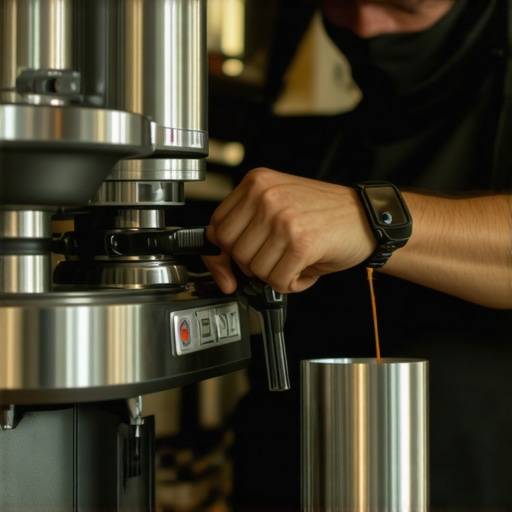
As I delved deeper into the intricacies of grind consistency, I realized that the devil truly is in the details. Small adjustments—like the slight tilt of the grinder or the ambient temperature of your space—can ripple through your brew, subtly altering flavor profiles. I recall experimenting late into the night, noting how a mere 0.2 mm change in grind size could shift a shot from bitter to beautifully balanced. This journey taught me that mastery isn’t just about the big tools but also about cultivating an awareness of these minute yet impactful factors.
What Are the Hidden Nuances That Even Experts Overlook?
One revelation that surprised me was how the freshness of your beans affects grind consistency. Freshly roasted beans tend to be more hygroscopic—they absorb moisture from the air—causing their grind to vary unexpectedly. I learned from top coffee experts that allowing beans to rest for a few days post-roast can stabilize their moisture content, leading to more predictable grinding results. It’s a subtle art of balancing freshness with consistency, reminding me that coffee brewing is as much about patience as it is about precision.
How Do External Factors Impact Your Grind and Brew Quality?
Environmental conditions—like humidity, temperature, and even air pressure—play a more significant role than many realize. During a particularly humid summer, I noticed my usual grind settings produced inconsistent extraction. I had to adapt by slightly coarsening the grind and increasing the dose to compensate. This adaptive approach, inspired by techniques shared in expert guides, became a vital part of my routine. It’s akin to a jazz musician improvising within a structured piece—flexibility combined with knowledge results in a better brew.
Can You Develop a Routine to Maintain Peak Grind Precision?
Absolutely. I found that establishing a disciplined routine—cleaning the grinder after every few uses, recalibrating with each new batch of beans, and keeping detailed logs—transformed my consistency. Over time, these habits became second nature, much like a professional athlete’s routine. I keep a simple journal where I record grind settings, ambient conditions, and taste notes, which helps me refine my process. This ongoing commitment is what separates a casual coffee drinker from an enthusiast striving for perfection.
What Is the Role of Continuous Learning and Community Engagement?
Engaging with the broader coffee community has been invaluable. Online forums, workshops, and tutorials—like the comprehensive ultimate guide—offer fresh perspectives and troubleshooting tips. Sharing my experiences and challenges with fellow enthusiasts has opened my eyes to new techniques and subtle nuances. Sometimes, a simple tip from a seasoned barista can unlock a new level of consistency I hadn’t considered before. This ongoing learning fuels my passion and keeps me motivated to refine my craft continually.
How Do You Balance Technology and Intuition in Your Brewing Ritual?
While high-end grinders and precise measurements are crucial, I’ve found that developing an intuitive sense for your machine and beans is equally important. After years of trial and error, I can often detect when my grind needs a slight adjustment without consulting the scale. This instinct comes from a deep familiarity with my setup, much like a chef knows when a sauce needs more salt. Balancing data-driven adjustments with gut feelings creates a more fluid, enjoyable brewing experience. For those eager to deepen their understanding, exploring detailed guides like how to choose the right grinder can be a great starting point.
Refining Your Technique: The Subtle Art of Dialing in Your Grinder Settings
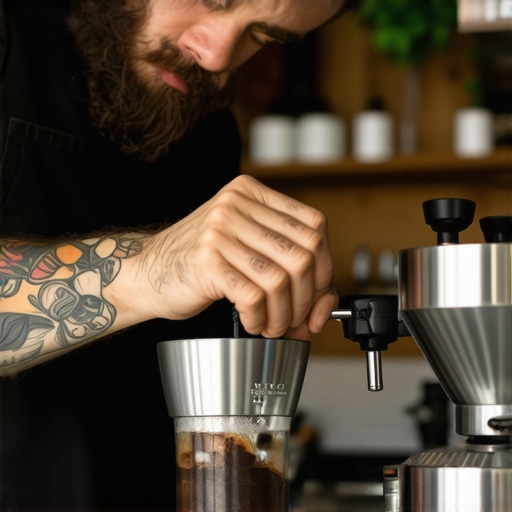
One of the most overlooked yet impactful aspects of achieving impeccable grind consistency is the process of dial-in—fine-tuning your grinder for peak performance with each batch of beans. During my own journey, I realized that even slight variations in grind size, often less than 0.1 mm, can dramatically alter extraction and flavor. This meticulous process involves systematically adjusting your grinder, brewing small test shots, and evaluating the taste and extraction time. Over time, I developed a personalized protocol—starting with a baseline setting, then making incremental adjustments based on shot clarity, crema richness, and taste notes. This iterative approach, detailed in Top 5 Coffee Burr Grinders for Perfectly Uniform Grounds, has enabled me to craft consistently balanced shots tailored to different beans.
Can External Factors Be Mastered Through Environmental Control?
External influences, such as ambient humidity, temperature fluctuations, and even air pressure, can subtly but significantly impact grind consistency. For instance, I noticed that during humid days, my beans absorbed moisture, causing the grind to become uneven and extraction to suffer. To combat this, I adopted a proactive approach—storing beans in airtight containers with desiccants and adjusting grind settings slightly coarser during high humidity. Additionally, controlling the temperature of my grinding environment, such as avoiding direct sunlight or drafts, proved beneficial. This level of environmental management echoes the practices recommended in How Burr Grinders Elevate Your Espresso Flavor in 2025, emphasizing the importance of a stable setting for optimal results. By understanding and controlling these factors, I found I could maintain a higher level of consistency regardless of external conditions.
How Do Advanced Calibration Techniques Elevate Your Grinding Precision?
Beyond basic calibration, I delved into advanced techniques such as using precise measurement tools and software-assisted calibration. For example, employing a digital caliper to measure burr gap adjustments with millimeter accuracy helped me replicate settings with remarkable consistency. Some high-end grinders now incorporate digital interfaces that facilitate repeatable calibration, reducing human error. Incorporating these tools, alongside regular maintenance routines, ensures that the grinder’s performance remains at an expert level. This meticulous calibration aligns with insights from Choosing the Best Single Dose Grinder for Precise Coffee Tasting, highlighting the importance of precision engineering and routine checks. Such practices have elevated my brewing from casual experimentation to professional-grade consistency, allowing me to reliably reproduce the same exceptional shot day after day.
What Are the Most Effective Strategies to Sustain Long-Term Grind Consistency?
Sustaining long-term consistency requires a disciplined routine and continuous education. I’ve found that scheduling regular maintenance—cleaning burrs every 50-100 uses, recalibrating after switching beans, and keeping detailed logs—creates a feedback loop that sharpens my intuition and technical skills. Engaging with online communities and reading comprehensive guides like The Ultimate Guide to Espresso Grinders keeps me informed about emerging technologies and nuanced techniques. Over time, this iterative learning not only enhances my skill but also deepens my appreciation for the craft. I encourage fellow enthusiasts to document their routines, experiment systematically, and share their findings—because collective knowledge accelerates mastery and transforms a hobby into an art form.
How Can You Develop an Intuitive Sense for Your Grinder’s Performance?
While precise measurements are invaluable, developing an intuitive feel for your grinder’s behavior can elevate your brewing artistry. Through years of practice, I learned to listen to the subtle sounds during grinding, observe the texture of the grounds, and gauge extraction quality visually and by taste. This sensory awareness allows me to make quick adjustments without always relying on tools, fostering a more fluid and satisfying brewing process. Achieving this balance between data-driven precision and intuitive mastery is the hallmark of an experienced barista or serious hobbyist. For those eager to refine this skill, exploring detailed guides on grinder tuning, such as how to choose the right grinder, can offer valuable insights into the technical foundations that support intuitive adjustments.
Things I Wish I Knew Earlier (or You Might Find Surprising)
The Hidden Impact of Bean Freshness
One thing I wish I understood sooner is how much the freshness of your beans affects grind consistency. Freshly roasted beans are more hygroscopic, meaning they absorb moisture from the air, which can cause unexpected variations in grind size and extraction. I used to think that simply storing beans in an airtight container was enough, but I learned that letting beans rest for a few days after roasting actually stabilizes their moisture content, leading to more predictable grinding and brewing results. This subtle insight has saved me countless headaches and improved my overall coffee quality.
The Power of Routine Maintenance
Maintaining a disciplined routine for grinder cleaning and calibration has been a game-changer. Small habits like cleaning burrs after every 50-100 uses and recalibrating whenever I switch bean types or roast levels have drastically improved my grind consistency. Tracking these routines in a simple log has helped me recognize patterns and make precise adjustments. It’s like tuning a musical instrument—regular care keeps everything sounding perfect.
External Conditions Really Matter
I used to overlook how environmental factors like humidity and ambient temperature could influence my grind. During humid summer days, I noticed my grind became uneven, leading to inconsistent shots. By storing beans properly, adjusting grind settings, and controlling my grinding environment, I could adapt to these external influences. It’s a bit like a chef adjusting seasoning based on the weather—attention to your environment makes a big difference.
The Subtle Art of Dialing In
Fine-tuning your grinder with small, incremental adjustments is essential. I found that changing grind size by less than 0.1 mm can significantly alter extraction quality. Developing a personal protocol—starting with a baseline and making tiny tweaks based on shot quality—has allowed me to craft consistently balanced espresso shots tailored to different beans. Patience and precision in this process are key to mastering your brew.
Balancing Tech and Intuition
While high-tech equipment and precise measurements are invaluable, developing an intuitive sense for your grinder’s performance adds a whole new dimension. Over time, I learned to listen to the sounds of grinding, observe the texture of the grounds, and taste the results to guide adjustments without always relying on tools. This balance between data and instinct has made my brewing process more enjoyable and satisfying.
Resources I’ve Come to Trust Over Time
- Top Coffee Experts: Their detailed guides on burr grinder calibration and maintenance have deepened my understanding and improved my technique. I highly recommend their articles for anyone serious about consistency.
- The Ultimate Guide to Espresso Grinders: This comprehensive resource covers everything from choosing the right grinder to advanced troubleshooting. It’s been my go-to reference for continuous learning.
- Online Coffee Forums: Engaging with the coffee community has provided practical tips, shared experiences, and support. It’s a great way to stay motivated and learn from others’ journeys.
Parting Thoughts from My Perspective
Mastering grind consistency isn’t just about having the best equipment; it’s about cultivating a mindful approach to your brewing process. Understanding how external factors, routine maintenance, and subtle adjustments influence your results has transformed my coffee ritual into a craft I truly enjoy. If you’re passionate about elevating your brew, I encourage you to experiment patiently, stay curious, and connect with fellow enthusiasts. Remember, every small improvement brings you closer to that perfect cup. If this resonated with you, I’d love to hear your thoughts—feel free to share your own tips or challenges in the comments, and happy brewing!