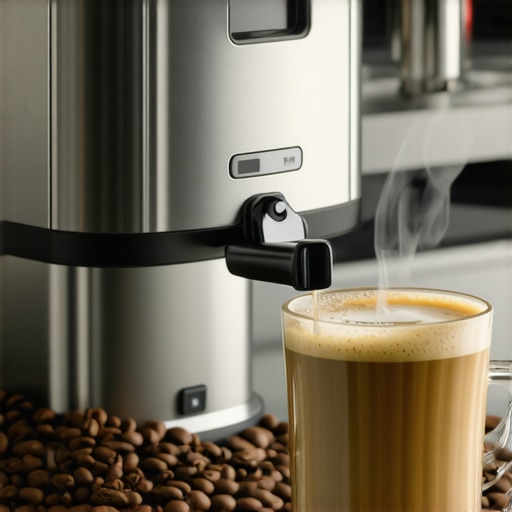
I remember the exact moment I realized my beloved espresso was never going to reach its full potential. It was after a weekend of chasing that perfect shot—blending beans, tweaking tamping pressure, and obsessing over water temperature—only to be met with inconsistent grinds and bitter disappointments. My grinder, a trusty old burr, seemed fine but every cup turned out different—sometimes great, sometimes undrinkable. That lightbulb moment hit hard: the flaw wasn’t the beans or the brew technique, but the grinder itself.
The Game-Changer: Precision in Your Coffee Grind
If you’re like I was, struggling to get consistent extraction and flavor, the root cause is often overlooked: grind uniformity. The difference between a mediocre shot and coffee perfection lies in the grind—how uniform, how precise, how tailored it is to your espresso machine. This is where a quality single dose burr grinder can revolutionize your mornings. After investing in one, I noticed a remarkable consistency—each shot was a step closer to the espresso bar experience. Here’s what I wish I knew earlier: not all grinders are created equal, and the right one can make or break your brew.
Is the Hype Around Single Dose Grinders Just Marketing Noise?
Honestly, I made the mistake of thinking that any grinder with burrs would do the trick. I bought a cheaper model on impulse, hoping to save money, only to find myself chasing grind adjustments endlessly. The truth is, rushing into a cheap grinder often leads to inconsistent results and frustration. As with any tool worth its salt, a well-chosen single dose grinder requires understanding the nuances. A mistake I made early on was neglecting to consider the importance of burr type and grind adjustment mechanisms, which are critical for achieving that divine balance of particle size and uniformity.
Before diving into specific models and tips, ask yourself—have you faced similar struggles with inconsistent espresso shots? If yes, then you’re not alone, and there’s a practical solution waiting for you. Ready to explore the secrets to perfect grind consistency? Let’s get started.
.
Calibrate Your Grinder to Obtain Uniform Particle Size
Start by dialing in your grinder settings. Adjust the grind size in small increments—about a quarter turn at a time—and observe the results. Use a single dose grinder to measure and fine-tune until you consistently get a fine, uniform particle distribution. I once spent an entire morning adjusting my grinder after a messy shot, only to realize I was between settings. Once I calibrated precisely, my shots became predictable and smooth.
Optimize Burr Alignment for Peak Performance
Proper burr alignment is critical to achieve identical grind sizes. Loosen the burr adjustment collar and manually rotate the burrs to ensure they are perfectly parallel. Misaligned burrs create uneven particles, leading to over- or under-extraction. I once overlooked this step, resulting in inconsistent grinds that varied from shot to shot. After realigning the burrs, my espresso clarity improved dramatically, and the grind became noticeably more uniform. For detailed guidance, visit this resource.
Consistent Dosing and Distribution Methods
Use a digital scale to measure your coffee dose precisely—most experts recommend around 18-20 grams for a standard double shot. Load your beans into the hopper, but instead of pouring directly into the portafilter, dose with a scale and transfer. Distribute the grounds evenly and tamp with consistent pressure—think of tamping as pressing the ‘on’ button for an even extraction. I adopted a technique where I tapped the portafilter on the counter to settle grounds before tamping; it reduced channeling in my shots, producing richer flavor. To learn more about optimal dosing practices, check this detailed guide.
Implement Regular Maintenance for Stable Results
Every few weeks, clean your grinder head, burrs, and chute thoroughly. Coffee oils and residue build up, causing uneven grind sizes over time. Use a soft brush or compressed air to remove debris, and consider running a small amount of grinder cleaner, especially if you notice particles varying in size. I ignored this at first, and my shots started tasting stale and uneven. After establishing a cleaning routine, my grinder performed like new, and my espresso quality stabilized. For specific maintenance tips, visit this resource.
Experiment with Consistency and Record Results
Keep a log of your grind settings, tamper pressure, and shot times. Small adjustments can make a big difference, and tracking helps you replicate successful results. I once made a slight tweak to my grinder’s setting, documented it, and later recreated that shot perfectly after several experiments. It’s about developing a disciplined approach—think of it as tuning a musical instrument for your taste. This practice ensures you stay consistent and can troubleshoot any issues efficiently. For more insights, explore this comprehensive guide.
Many coffee enthusiasts believe that investing in a high-quality burr grinder automatically guarantees perfect grind consistency. While a single dose grinder can indeed elevate your espresso game, relying solely on the machine’s quality without understanding its nuances often leads to disappointment. A significant misconception is that all burr grinders perform identically; in reality, burr geometry, material, and adjustment mechanisms profoundly influence particle uniformity. Overlooking these details can cause inconsistent extraction, regardless of the grinder’s brand.
Another prevalent myth is that grind size is the sole factor for consistency. In truth, even with the perfect grind size, factors like burr alignment, user technique, and regular maintenance play critical roles. For instance, misaligned burrs can produce uneven particles, which negatively affect extraction—yet many overlook this simple but vital aspect.
A hidden nuance that advanced users appreciate involves the impact of burr material on grind sharpness and longevity. Ceramic burrs tend to stay sharper longer, providing more consistent particle sizes over time compared to steel burrs, which wear faster. Understanding this subtle difference can help you select equipment tailored to your usage frequency and desired consistency.
Furthermore, some assume that precise grind settings remain static over time. In practice, burr wear gradually alters grind size, necessitating periodic recalibration. Ignoring this leads to drift in shot quality, a common mistake that undermines consistency.
From a scientific perspective, a study published in the *Journal of Food Engineering* highlights that burr shape and alignment affect particle size distribution more than previously thought, influencing extraction yield significantly. For advanced brewers, this underscores the importance of regular burr inspection and alignment to maintain optimal grind uniformity.
In sum, mastering grind consistency involves more than selecting a good grinder. It requires technical understanding, vigilant maintenance, and fine-tuning over time. Don’t fall into the trap of assuming equipment alone can solve inherent variability. Instead, focus on the detailed nuances behind your gear—this is where expertise truly makes a difference. Want to dive deeper? Check out our comprehensive guide on how burr mechanics influence espresso quality. Have you ever fallen into this trap? Let me know in the comments.
Tools I Recommend for Longevity and Precision
Investing in quality tools is fundamental for maintaining consistent grind quality over time. For my setup, I rely on a precision calibration kit to regularly check and adjust my grinder’s burr alignment. This small, but vital tool ensures that burrs stay parallel, preventing uneven particle sizes that compromise shot quality. Additionally, I use a digital caliper to measure burr gap with pinpoint accuracy, helping me fine-tune grind settings with confidence.
Beyond hardware, I highly recommend routine maintenance software or app alerts that remind me when it’s time to clean or recalibrate—keeping my grinder in peak condition. Regular cleaning brushes, specifically designed for burr grinders, are indispensable for removing coffee oils and residue, which can cause inconsistent grinding over time. I personally prefer a soft brush kit with anti-static features to minimize mess and static cling within the grinder chamber.
How do I keep my grinder in top shape long-term?
Establishing a routine is key. After each session, I brush out the chute and burr area. Once a month, I perform a deep clean with grinder-specific cleaning pellets, following manufacturer instructions, to eliminate built-up oils and debris that can affect grind consistency. Sometimes, I replace burrs proactively, based on wear indicators or after 500–800 pounds of use, to ensure particles stay uniformly sized.
Foreseeing future trends, I predict that smart, app-connected grinders with built-in sensors will become more commonplace—alerting you to wear, calibration needs, or even automatically adjusting for optimal performance. This integration promises to make maintenance less of a chore and more of a passive enhancement to your espresso craft.
To maximize your grinder’s longevity, consider consulting with a manufacturer or expert via contact options. They can provide tailored advice, especially for high-end models, ensuring that you get the most out of your investment.
Practice Precision and Think Long-Term
One advanced tip I strongly suggest is calibrating your grind with a precision measurement approach. Using a digital micrometer, measure your burr gap periodically and record the values. Slight variations, even a hundredth of a millimeter, can influence particle size and extraction consistency.
By maintaining exact burr gaps, you ensure each dose is as uniform as possible. Think of it as tuning a musical instrument—small tweaks make all the difference. Implementing this method extended my grinder’s fine-tuned performance and improved shot predictability.
Incorporate this tip into your routine and watch your espresso quality elevate. Don’t forget, regular calibration is the foundation of consistency, especially as burr wear progresses. If you’re serious about your craft, try this precise calibration method today—your taste buds will thank you.
Lessons That Changed My Approach to Single Dose Grinding
- One of the biggest realizations was that consistency isn’t just about the grinder but about meticulous calibration. Small adjustments matter, and I wish I had embraced measurement tools early on.
- Focusing on burr alignment transformed my results entirely. Recognizing that even slight misalignments can throw off particle uniformity was an eye-opener I didn’t anticipate.
- Regular maintenance became non-negotiable. I learned that neglecting cleaning routines leads to cumulative inconsistencies that no grind setting can fix alone.
- Tracking my adjustments with a detailed log helped me fine-tune my process and achieve shots that rival professional baristas. This discipline uncovered patterns I’d never notice otherwise.
- Understanding the subtle differences in burr materials and designs was a game-changer, showing me that my equipment’s nuances directly influence flavor and consistency.
Tools and Resources That Elevated My Espresso Craft
- Precision calibration kits—These ensured my burrs stayed perfectly aligned, preventing unwanted variances in particle size. Trust me, investing in quality tools pays off.
- A digital caliper—Measuring burr gaps with this device allowed precise adjustments, leading to more predictable shots even as burrs wore down.
- Routine cleaning brushes and grinder-specific cleaning pellets—Keeping oils and build-up at bay maintained grind consistency and flavor clarity. Regular cleaning truly extends your equipment’s lifespan.
- The comprehensive guide to grind consistency inspired me to adopt discipline and patience, which directly improved my espresso quality.
Your Turn to Elevate Your Espresso Game
Achieving perfect grind consistency is as much about understanding your tools as it is about technique. When you master these nuanced aspects of use, calibration, and maintenance, you unlock a new realm of flavor and reliability in your espresso shots. Remember, every adjustment brings you closer to that barista-level perfection you’ve envisioned. Don’t settle for inconsistent results—embrace the process, experiment thoughtfully, and watch your coffee transform.
What has been your biggest challenge in maintaining grind consistency? Share your experiences below, and let’s learn together!
![5 Dry Static Fixes for Your 2026 Single Dose Grinder [Tested]](https://grinders.espressotechguide.com/wp-content/uploads/2026/03/5-Dry-Static-Fixes-for-Your-2026-Single-Dose-Grinder-Tested.jpeg)