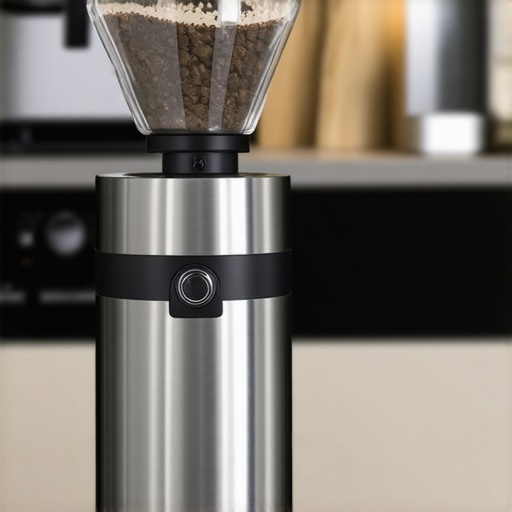
It was a morning like any other, but as I pulled my 64mm flat burr grinder out of the cabinet, I hesitated. I had been chasing perfection in my espresso shots for years, trying brand-new conical grinders that promised better flavor, more consistency, and quieter operation. Yet, every time I thought I found a superior alternative, my shots would end up bitter, uneven, or just… off. One day, I finally had a lightbulb moment: why do I still reach for that trusty flat burr grinder over newer conicals in 2026? The answer surprised me—and you might be surprised too.
Discovering the Ironclad Advantage of Flat Burrs
Today, I want to share my personal journey and insights into why, despite all the hype around conical grinders, the classic 64mm flat burr design remains a top choice for serious coffee enthusiasts in 2026. Whether you’re battling inconsistent grinds, static build-up, or just tired of chasing the latest gadget, understanding the real powers behind flat burr technology can transform your brewing game. And trust me, once I started looking past the marketing, I realized the benefits of flat burrs were still unmatched when it comes to grind uniformity and flavor clarity. Don’t believe me? Keep reading, because I’ll show you why flat burrs are still king—and how you can leverage their strengths for your best-ever espresso.
Is the Hype About Conicals Actually Just!?
Early in my journey, I made a common mistake: dismissing the importance of burr geometry without fully understanding its impact. I remember defaulting to shiny conicals because they seemed modern and sleek, but I ignored their limitations, especially with light roasts and single-dose workflows. Only after digging into expert resources like the ultimate guide to flat vs. conical burrs in 2026 did I realize that not all burrs are created equal. The truth is, flat burrs excel in producing consistent particle size, which directly influences extraction quality. This consistency is vital when aiming for that perfect shot, and it makes flat burrs a reliable choice—year after year, especially in the fast-paced grind of 2026.
If you’ve found yourself frustrated with uneven grinds or inconsistent flavor, you’re not alone. And the good news — there’s a reason why pros and many home baristas swear by flat burrs. In the upcoming sections, I’ll walk you through the core reasons flat burrs outperform conicals, plus practical tips to harness their full potential. Ready to get back to what truly matters—delivering stellar espresso day after day? Let’s dive in.
calibrate your grinder for consistent particle size
Start with a proper calibration process. I vividly remember the first time I adjusted my flat burr grinder precisely by hand, gradually turning the grind adjustment dial while note-taking every click. This controlled approach helped me reach a stable, optimal grind size for espresso. Use a scale to weigh your beans before grinding, ensuring consistency. After every adjustment, measure the particle size using a microscope or simply observe the grind for uniformity. Consistency in particle size is crucial because it directly influences extraction and flavor clarity. For detailed calibration techniques, check out this comprehensive calibration guide.
master your grind setting for different roasts
Light roasts require a slightly coarser setting, while darker roasts benefit from a finer grind. I once encountered a batch of espresso where the grind was too fine for a light roast, resulting in over-extraction and bitterness. By dialing my flat burr grinder back a touch, I observed improved clarity and sweetness. Adjust in small increments—about 0.1mm at a time—and keep detailed notes of each setting and the resulting shot quality. This method ensures you won’t lose track during busy mornings. Remember, after one tweak, always pull a test shot before proceeding. For nuanced insights, explore this guide on grind adjustments for various roasts.
implement effective cleaning to maintain grind consistency
Residue buildup and oil deposits can cause inconsistent grind sizes and flavor contamination. I learned this the hard way—after neglecting grinder cleaning for a week, my shots tasted off, and powder flow was uneven. To prevent this, establish a cleaning routine: disassemble your flat burr grinder weekly, brush out residues with a soft brush, and run a cleaning cycle with grinder cleaning pellets or rice to absorb oils. Pay special attention to the burrs and chute. For guidance on cleaning routines, see this cleaning checklist. Regular maintenance preserves the precise alignment and spacing between burrs, ensuring your grind remains uniform.
optimize single-dose workflow to preserve freshness
Using a single-dose grinder minimizes bean contact time, reducing static and static-related clumping. I integrated a dosing funnel with my flat burr grinder, which kept beans fresh and reduced retention issues. During one session, I used this single-dose setup, resulting in fresher grinds, better flavor extraction, and cleaner shots. Use a dedicated scale to measure your precise dose—typically between 18-20 grams for espresso. Also, avoid overfilling the hopper, as it can disturb the grinder’s balance. Implement a routine that refills beans just before each shot to maintain maximum freshness. For nuanced tips, review this resource on single-dose workflow.
fine-tune your tamp pressure to improve extraction
No matter how perfect your grind, inconsistent tamping can undermine extraction quality. I practiced applying a consistent tamp pressure—about 30 pounds—by using a digital scale and a tamper with a weight indicator. During one messy attempt, I realized my tamp was too light, leading to channeling, or too hard, causing resistance and uneven extraction. Aim for a firm, even tamp with controlled pressure, and rotate the tamper gently to ensure uniform compression. Checking your shot for even flow confirms proper tamping. For more detailed techniques, visit this guide on tamping and extraction.
monitor your ambient environment for stability
Temperature and humidity fluctuations can alter grind consistency and extraction. I noticed that on humid mornings, static buildup increased, causing uneven powder flow. To counter this, I stored beans in airtight containers and used a dehumidifier near my grinder. Also, I adjusted my grinder’s setting slightly to compensate for humidity-induced moisture. Keeping your environment stable minimizes variables that affect grind quality. Use a hygrometer to monitor humidity levels and adapt your workflow accordingly. For environmental control tips, see this advice on managing ambient conditions.
Many coffee enthusiasts believe that choosing a high-end burr grinder guarantees perfect consistency and flavor, but the truth runs deeper. One common misconception is that burr size alone dictates quality; however, factors like burr geometry, material, and alignment play crucial roles in grind uniformity. For example, even a premium 64mm flat burr grinder can produce inconsistent grounds if not properly calibrated or maintained, leading to channeling and uneven extraction. An often-overlooked nuance is the influence of burr wear over time, which subtly deteriorates grind precision, despite ongoing care. This can be especially deceptive since visual inspection alone may not reveal significant dullness that affects particle size distribution.
Are your grind inconsistencies caused by overlooked variables like burr alignment or motor performance?
Studies from industry experts, such as those cited in this comprehensive guide, demonstrate that even small deviations—like a misaligned burr or fluctuating RPM—can dramatically impact grind consistency. Another common trap is relying solely on static measurements of particle size without considering dynamic factors like static build-up or bean moisture content, which can cause unpredictable flow and inconsistent shots. Recognizing these nuances helps you move beyond stereotypes about equipment and focus on actual performance aspects that matter. To elevate your brewing game, familiarize yourself with advanced calibration and maintenance techniques at this resource. Remember, mastering these details ensures your grinder works for you, not against you. Have you ever fallen into this trap? Let me know in the comments and share your experiences with grind inconsistencies.
Investing in Quality Tools for Long-Term Performance
Gathering the right tools is fundamental to maintaining a consistent grind and ensuring your espresso taste remains exceptional. I highly recommend using a calibrated digital torque wrench when adjusting burr alignment—this allows for precise, repeatable settings that are vital for long-term grind consistency. For cleaning, a dedicated burr brush and grinder cleaning tablets are indispensable; I personally prefer brushes with stainless steel bristles that reach into tight crevices, helping prevent static buildup and residue accumulation. Incorporating these tools into your routine minimizes variability and extends the lifespan of your grinder, saving you money over time.
Your Go-To Maintenance Routine
Establishing a regular maintenance schedule is the backbone of enduring grind quality. I suggest disassembling your flat burr grinder weekly, paying close attention to burr alignment and cleanliness. After removing the burrs, inspect them for signs of wear—dull or uneven burrs can cause inconsistent particle sizes. Use a precision alignment gauge, similar to those recommended in industry guides, to confirm proper burr positioning. Regularly running cleaning cycles with grinder-specific cleaning pellets or rice can absorb oils and residues that impair performance. Keep a maintenance log; I note every burr adjustment and cleaning date, enabling me to identify patterns that affect grind consistency. Looking ahead, integrating a burr grinder with electronic grind setting memory can automate calibration for different beans and roasts, maintaining precise consistency with minimal effort.
How do I maintain grind steadiness over years of use?
Consistency isn’t just about initial calibration—it requires ongoing attention. Over time, burrs naturally dull, leading to broader particle size distribution and uneven extraction. I recommend scheduling professional burr sharpening every 2-3 years if your grinder permits, or replacing burrs proactively based on performance decline. Additionally, monitor motor health; irregular RPMs can subtly affect grind uniformity. Modern grinders equipped with RPM stabilization features are gaining popularity, as they dampen speed fluctuations caused by power supply inconsistencies or motor wear, ensuring your grind remains steady. External factors like static and moisture also threaten long-term results; thus, I keep my workspace humidity-controlled and use static-dampening accessories for consistent powder flow. For meticulous calibration, use a particle size analyzer—if you’re serious about precision, tools like microscope-grade measurement slides can reveal exact particle distributions, empowering you to make fine adjustments for enduring excellence.
Scaling Up Your Grind Warily and Effectively
As your coffee routine evolves, scaling your setup without sacrificing consistency requires thoughtful upgrades. Transitioning to a commercial-grade single dose grinder or adding automated dosing modules can streamline your workflow and preserve freshness, but only if you invest in robust maintenance practices. Modern grinders with modular burr sets and easy-to-clean components simplify ongoing care, making maintenance less daunting. Be mindful when upgrading; always verify compatibility with existing equipment and consider the impact on grind stability. I anticipate the trend toward smart grinders with integrated sensors and app-based calibration will continue to grow, allowing for real-time adjustments and automatic maintenance reminders—pushing home baristas toward professional-level results. Regularly test your grind with a particle size measurement tool every time you change beans or settings, ensuring that your scale-up maintains the high standards you’ve set.
Make Your Maintenance Routine Bulletproof
One key question: How do I maintain consistent grind quality over years of use? The secret lies in a disciplined, well-informed approach. Regularly verify burr alignment with precise tools, stay vigilant about burr wear, and keep static at bay with environmental controls. Consider periodic professional calibration or burr replacement—don’t wait until your shots are inconsistent. By adopting these meticulous routines and leveraging advanced tools, you’re setting yourself up for coffee excellence long into the future. For in-depth techniques, master the art of calibration and troubleshooting at this resource. Ready to elevate your routine? Start by integrating a burr alignment gauge today and experience the difference in your next shot.
Lessons That Changed My Coffee Journey Forever
One of the most profound insights I gained was realizing that diligent maintenance trumps any fancy upgrade. Regularly checking and re-aligning my flat burrs prevented subtle wear from sabotaging my grind consistency. I also learned that ambient factors like static and moisture can quietly derail your perfect shot—simple environmental tweaks made miracles happen. Lastly, I discovered that patience in calibration—small incremental adjustments—delivers robustness that no automated setting can replace. These lessons, born from years of hands-on trial, revealed that true mastery lies in sustained attention to detail rather than flashy equipment upgrades.
Tools That Keep My Coffee Perfect Year After Year
I swear by a precision burr alignment gauge; it’s like a trusted compass guiding consistent settings. My dedicated cleaning kit, especially a quality burr brush, wards off residues that cause uneven grounds. The ultimate guide to single-dose and burr coffee grinders in 2024 has been pivotal, sharing maintenance routines that extend grinder lifespan. For fine-tuning, I rely on a particle size analyzer—knowing the exact particle distribution helps me catch drift before it affects taste. Combining these tools transforms routine maintenance into an art form, ensuring my grind stays on point for years.
Your Next Step Toward Coffee Excellence
Embrace deliberate care, keep learning, and don’t shy away from fine-tuning your setup. As I’ve experienced, consistent grind quality isn’t an accident—it’s a habit cultivated through mindful maintenance and knowledge. The more I invested in understanding my flat burr grinder’s nuances, the more my espresso sang with clarity and depth. Remember, long-term success is built on small but steady actions. Ready to elevate your coffee game? Your journey toward perfect grind consistency in 2026 starts now—so what’s the first thing you’ll tweak today? Share your experience below and let’s grow together.
![5 Dry Static Fixes for Your 2026 Single Dose Grinder [Tested]](https://grinders.espressotechguide.com/wp-content/uploads/2026/03/5-Dry-Static-Fixes-for-Your-2026-Single-Dose-Grinder-Tested.jpeg)