Ever pulled a shot of espresso that was just… off? Maybe it was bitter, watery, or lacked that rich crema that makes your coffee look like a work of art. I’ve been there. One morning, after a frustrating week of inconsistent results, I finally realized the culprit wasn’t my beans or technique—it was my grinder. That lightbulb moment led me down a rabbit hole of research, experimentation, and a simple truth: the best espresso starts with a dependable, precise grinder. Today, I want to share how you can finally achieve that consistent grind, so every shot is as good as the last.
Why Consistent Grinding Matters More Than You Think
When it comes to espresso, consistency is king. A slight variation in grind size can turn a delicious shot into a bitter disappointment or a weak brew. Think about it: if your grind is uneven, water flows through at different speeds, extracting different flavors and creating an unpredictable taste. That’s why investing in a quality grinder isn’t just a luxury—it’s a necessity. According to a study by the Specialty Coffee Association, grind uniformity directly correlates with extraction quality, making it the foundation of a perfect shot (source). Whether you’re a home barista or a seasoned enthusiast, mastering grind consistency will elevate your brewing game.
Is It Really Worth the Hype?
I used to think all grinders were created equal—until I made the mistake of skimping on quality early in my journey. That mistake cost me countless cups of mediocre espresso. The truth is, not all grinders deliver the same level of precision. Cheaper models often produce inconsistent grounds, leading to unpredictable results. If you’ve faced the frustration of wasting beans or getting uneven extraction, you’re not alone. But here’s the good news: with the right tools and some know-how, you can consistently nail that perfect grind. Curious about which grinders stand out? Check out this guide for top picks that can transform your espresso experience.
Now that we understand why grind consistency is so vital, let’s dive into how to achieve it. From selecting the right grinder to mastering your technique, I’ll walk you through everything you need to know to make every shot count. Ready to become your own barista hero? Let’s go!
Pick the Right Grinder To Set a Solid Foundation
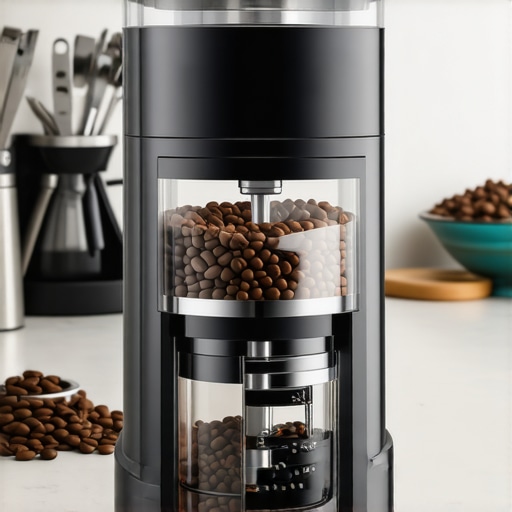
The journey to consistent espresso begins with selecting the right grinder. Think of your grinder as the engine of your coffee machine—without a reliable engine, everything else falls apart. Focus on burr grinders over blade options; burrs produce uniform grounds essential for even extraction. When I first upgraded, I chose a single-dose burr grinder, which allowed me to grind only what I needed, reducing waste and improving consistency. Make sure your grinder has stepless or micro-adjustments to dial in your grind size precisely. This tiny tweak can turn a mediocre shot into a barista-level espresso.
Set Your Grind Size with Precision
Getting the grind size right is like tuning a musical instrument—small changes make a big difference. Start by setting your grinder to a medium-fine grind, similar to powdered sugar, then pull a test shot. Watch for the flow rate and taste—if the shot drips too quickly, tighten the grind (make it finer); if it’s slow or over-extracted, loosen it (make it coarser). I remember the first time I did this, it was messy: I kept adjusting, tasting, and adjusting again until I hit that sweet spot. It took patience, but once dialed in, my shots became consistently rich and balanced. Use the detailed steps from this guide to refine your technique.
Maintain Your Grinder for Long-Term Consistency
Even the best grinder loses precision if neglected. Regular cleaning is crucial—residual oils and coffee particles can alter grind size and flavor. Disassemble your grinder periodically, brush out the burrs, and wipe down the internal components. When I started doing this every few weeks, my grind stability improved noticeably. Some grinders have a maintenance mode—use it as recommended by the manufacturer. Also, keep your burrs sharp; dull burrs crush beans unevenly, ruining consistency. Consider replacing burrs every 1-2 years if you’re a daily user. For detailed cleaning routines, check this comprehensive guide.
Fine-Tune and Record Your Settings
Once you find the perfect grind, don’t forget to document your settings—this is your baseline for future brews. Use a permanent marker or your grinder’s memory feature if available. When I discovered my ideal setting, I wrote it down and kept adjusting only slightly for different beans or humidity. This way, I can replicate the results consistently. Remember, factors like bean freshness and humidity can affect grind size, so revisit your settings periodically. To deepen your expertise, explore secrets from professional baristas on maintaining grind precision.
Practice and Patience Pay Off
Perfecting your grind is an ongoing process. Invest time in experimenting with small adjustments, tasting your espresso, and refining your technique. When I first started, I spent an entire weekend testing different settings, but the results were worth it—a shot every time that made me feel like a pro. Remember, consistency isn’t about perfection overnight; it’s about incremental improvements. Keep your process disciplined, and soon, your espresso will be as reliable as your morning routine.
For more tips on choosing your ideal grinder, visit this resource and elevate your coffee game to the next level.
Many coffee enthusiasts fall into the trap of oversimplifying the process of achieving perfect grind consistency, thinking that merely owning a high-quality grinder is enough. However, there’s a nuanced layer of common misconceptions and pitfalls that can sabotage your efforts even if you’ve invested in top gear. Let’s dig deeper into what most people get wrong about grind consistency and how to avoid these pitfalls to elevate your espresso game.
Why Do People Still Believe More Grind Settings Mean Better Control?
One widespread myth is that the more grind size options a grinder has, the better control you have. In reality, an excessively granular adjustment range can lead to confusion and miscalibration. Instead, focus on grinders with stepless or micro-adjustments, which allow for precise tuning without the distraction of numerous preset options. This precision is backed by studies indicating that fine-tuning with stepless grinders yields more consistent extraction results (source).
Beware of the “Set It and Forget It” Mindset
Many users set their grind once and assume that’s all they need. But this neglects the impact of variables like humidity, bean freshness, and even altitude, which can subtly shift your ideal grind setting. Regularly revisiting and adjusting your grind can prevent subtle degradation of shot quality. An advanced mistake is to rely solely on visual cues like grind size or shot flow without tasting—remember, flavor is the ultimate indicator of proper grind calibration. For detailed insights, check this resource.
Mastering the Art of Consistency Requires More Than Just a Good Grinder
Another oversight is ignoring the importance of grinder maintenance. Dull burrs and accumulated oils can alter the grind profile, causing inconsistency even if your settings are perfect. Regular cleaning and burr replacements are essential. Dull burrs crush beans unevenly, leading to inconsistent particle sizes and extraction issues. A professional tip is to calibrate your grinder after each cleaning session to ensure your adjustments remain accurate. According to expert baristas, consistent maintenance is as crucial as selecting the right machine (see more).
Is Your Grinder Actually the Right Choice for Your Needs?
Many assume that any grinder labeled as “espresso” will deliver perfect results. This is not always true. The key is choosing a grinder that matches your specific brewing style and beans. For instance, single-dose grinders often provide better control and freshness preservation compared to bulk-hopper models. Failing to match your grinder to your brewing routine can lead to frustration and inconsistent results. For tailored recommendations, visit this guide.
Have you ever fallen into this trap? Let me know in the comments how you’re overcoming these common pitfalls and refining your grind consistency. Remember, mastery is a journey, and avoiding these mistakes brings you closer to that perfect shot every time.
Maintaining your espresso grinder and using the right tools is crucial for sustaining that perfect grind consistency over time. After investing in a high-quality grinder, like the best single-dose burr grinder, it’s easy to assume it will perform flawlessly forever. However, regular upkeep and the right accessories can significantly extend its lifespan and keep your espresso consistently excellent.
How do I keep my grinder in top shape?
First, establish a routine cleaning schedule. Dull burrs or residual oils from beans can cause uneven grind sizes, leading to inconsistent extraction. I personally clean my grinder every two weeks, disassembling the burrs and brushing out coffee particles with a dedicated cleaning brush. For this, I rely on a burr cleaning brush kit designed specifically for espresso grinders. This simple step prevents buildup that can compromise grind uniformity. Additionally, replacing burrs every 1-2 years, depending on usage, ensures your grinder maintains precision, as dull burrs crush beans unevenly. When in doubt, consult your grinder’s manual or contact the manufacturer through their contact page.
Tools I recommend for grinder maintenance
Beyond brushes and burr replacements, I find that a calibrated scale is invaluable. Weighing beans precisely before grinding helps maintain consistency, especially when experimenting with grind size adjustments. For measuring grind consistency, I use a digital caliper to check burr alignment and particle size distribution. This allows me to detect subtle deviations early. Also, investing in a dedicated grinder cleaning tablet helps remove stubborn oils and residues, keeping the burrs sharp and clean.
The future of grinder maintenance and scalability
As technology advances, I predict future grinders will incorporate smart sensors that monitor burr wear and automatically alert you when maintenance is needed. Integration with smartphone apps could guide users through cleaning routines or even schedule automatic calibration checks. For now, however, diligent manual maintenance remains key. Remember, a well-maintained grinder not only lasts longer but ensures your espresso stays consistently great. Try scheduling a bi-weekly cleaning ritual and see how much more stable your grind becomes. For more detailed maintenance routines, check out this guide and keep your coffee game strong.
The Hardest Lesson I Learned About Espresso Grinding
One of my biggest breakthroughs came when I realized that even the tiniest grind adjustment could make or break my shot. It took patience and a lot of tasting, but I finally understood that consistency isn’t just about having a good grinder—it’s about fine-tuning and meticulous maintenance. My lightbulb moment was when I started recording my settings and noticed how external factors like humidity affected my results. This taught me that mastering grind consistency is an ongoing journey of observation and adjustment, not a one-time setup.
My Essential Toolkit for Espresso Grind Mastery
Over time, I relied on a few trusted tools to keep my grind on point. First, a high-quality single-dose burr grinder is the foundation—without it, precision is impossible. Regular cleaning kits, including a burr cleaning brush, help me maintain peak performance. I also swear by a digital caliper to measure particle size, ensuring every grind is uniform. These tools have transformed my approach, making consistency effortless and repeatable.
The Future of Grind Consistency
Looking ahead, I believe the next wave of coffee tech will incorporate smart sensors that monitor burr wear and automatically suggest adjustments. Imagine a grinder that syncs with your smartphone, reminding you when to clean or replace parts—saving time and ensuring perfect consistency. Although we’re not quite there yet, diligent manual maintenance and the right tools will always be your best allies. With a little discipline, you can elevate your espresso game to professional levels and enjoy that perfect shot every morning.
What’s Your Next Step?
Now it’s your turn to take control of your grind consistency. Whether you’re just starting or refining your technique, remember that patience and precision are your best friends. Keep experimenting, stay meticulous with maintenance, and don’t hesitate to document your settings. Your ideal espresso is within reach—just a few small adjustments away. Share your progress or questions below, and let’s master espresso together!
![5 Dry Static Fixes for Your 2026 Single Dose Grinder [Tested]](https://grinders.espressotechguide.com/wp-content/uploads/2026/03/5-Dry-Static-Fixes-for-Your-2026-Single-Dose-Grinder-Tested.jpeg)
5 responses to “Best Coffee Grinder for Consistent Espresso & Single Dose Results”
I completely agree with the importance of a good grinder in achieving consistent espresso shots. I used to think that just dialing in my espresso machine was enough, but I kept running into issues with shot variability. Switching to a high-quality burr grinder really made a difference in my results. I find that regularly cleaning the burrs and recording my settings helps me understand how different variables affect my shot. One thing I’ve noticed is that environmental factors like humidity can really throw off the grind consistency, even if I haven’t changed my setup. Do others find that climate impacts their grind, and how do you compensate for it? I’d love to hear tips on maintaining perfect consistency year-round, especially for those of us in varied climates.
This post hits home for me. I’ve spent so much time tweaking my grinder and machine, but I realized that regular maintenance and paying attention to external factors are equally critical for stability. I used to think that once I dialed in my grind for the day, I was set, but I’ve noticed that even slight shifts in humidity or temperature can cause subtle changes in extraction. Since I live in a climate with high humidity, I started keeping my beans in a sealed container and switching to a grinder with stepless micro-adjustments. Has anyone tried using dehumidifiers in their coffee storage or environment? I’m curious if there are other practical tips for maintaining consistency in challenging climates. Also, documenting your settings really helps, especially when weather patterns shift. Overall, continuous learning and hands-on maintenance seem to be the best way to keep that perfect shot coming every morning.
I’ve experienced how even small environmental changes can impact grind consistency. Living in a humid climate, I found that sealing my beans in airtight containers and using a grinder with micro-adjustments helped stabilize my shots. Regularly cleaning the burrs is also a game-changer; I do it every few weeks and notice a clear improvement in consistency. One approach I’ve considered is using a dehumidifier in my coffee storage area, but I wonder if others have tried this or have additional tips for maintaining stable results across different seasons? It’s fascinating how much external factors influence the precision of our grind. I’d love to hear how fellow enthusiasts adapt their routines to ensure consistent espresso, regardless of weather or humidity. Combining good equipment with diligent maintenance truly makes a difference in achieving that perfect shot.
This post really hits home about the importance of a reliable grinder for true consistency in espresso. I’ve noticed that even with the perfect beans and technique, if my grind isn’t spot-on, the shot just doesn’t turn out right. I’ve started paying more attention to my grinder’s maintenance—cleaning the burrs regularly and recording my settings. Interestingly, I’ve also found that ambient humidity can still throw off my grind, even when I’ve done everything right. Living in a humid climate here, I keep my beans in airtight containers, but I’m curious—has anyone experimented with using a dehumidifier near their grinder or coffee station? I’d love to hear what others have found effective for managing environmental factors that affect grind consistency. It seems like mastering these small details really makes a difference in the pursuit of that perfect shot every time.
This post really resonates with my experience. I used to underestimate how much environmental factors like humidity and temperature could influence my grind and, ultimately, my espresso quality. Since I started sealing my beans in airtight containers and cleaning my grinder thoroughly every week, I’ve noticed a much more consistent extraction, even during seasonal changes. It’s also interesting how small adjustments in grind setting can make such a big difference—kind of like tuning a guitar! I’m curious, have others here tried using climate control tools like dehumidifiers or humidity controllers in their coffee setup? I wonder if integrating such tools could further stabilize results. I’d love to hear about different routines or tools others have found effective for maintaining consistency in challenging conditions. It’s a reminder that precision and maintenance are just as important as choosing the right grinder. What’s everyone else’s go-to tip for dealing with environmental fluctuations?