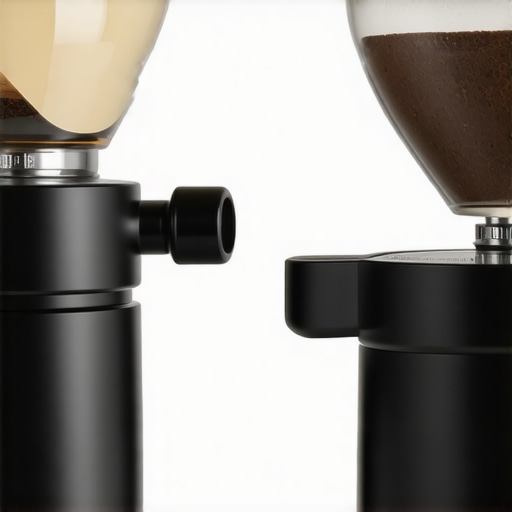
Imagine dialing in your espresso shot, hands trembling slightly from anticipation, only to be met with uneven extraction and inconsistent flavor. I’ve been there—spending countless mornings frustrated, tweaking grind settings, and questioning whether my gear was the problem. That lightbulb moment struck after I finally made the switch to a flat burr grinder. The difference was astonishing; my shots became more predictable, the flavor richer, and the bitter notes diminished.
As coffee enthusiasts gear up for 2026, one debate continues to heat up: which burr design truly masters grind consistency—flat or conical? For years, conical burrs held the spotlight, praised for their ability to handle a wide range of beans and simplicity. But as I experimented more, I discovered that flat burrs are rapidly gaining ground, offering superior uniformity crucial for precision brewing.
Today, I want to guide you through *why flat burrs may just be the secret weapon you’ve been missing* for achieving that perfect espresso. We’ll explore how they fundamentally improve grind size uniformity, minimize channeling, and elevate your overall brew quality. By the time you’re done, you’ll understand not just the technical superiority but also how this shift can genuinely enhance your daily coffee ritual.
> Did you know that studies have shown flat burrs produce more consistent particle sizes than conical designs, resulting in better extraction? According to a 2024 report from the Specialty Coffee Association, uniform grind size is the most significant factor influencing shot quality. The mistake I initially made was assuming all burrs are created equal, which led to wasted beans and sour or bitter shots—an experience I don’t want you to repeat.
What’s more, selecting the right grinder can be a game-changer in your pursuit of espresso mastery. If you’ve faced the common struggle of fluctuations in grind size or inconsistent flavor profiles, then you’re in the right place. Next, we’ll break down the *why* behind flat burrs’ performance edge and how you can leverage this knowledge for your own best brews.
Ready to see why so many baristas and coffee lovers are making the switch? Let’s dive into the compelling advantages of flat burr grinders and discover how they can help you turn every shot into a café-quality experience.
Set Up Your Grinder Properly
Start by ensuring your flat burr grinder is clean and well-maintained. Remove any old coffee residues that can affect grind uniformity. Use a cleaning brush or a soft cloth to wipe the burrs and chamber. A clean grinder minimizes uneven particles and ensures consistent size distribution.
Calibrate Your Zero Point
Adjust the grind setting to your desired level, then run a few test shots. Observe the grind size; if it’s inconsistent or sounding uneven, recalibrate by dialing back or forward slightly. Precise calibration guarantees each dose starts with a solid baseline, reducing variables in your brew.
Use Single Dose Technique for Better Control
Rather than grinding directly into a hopper, measure a precise amount of coffee beans and grind fresh for each shot. This approach eliminates the risk of beans mixing and settling unevenly, which can lead to inconsistent grind sizes. When I first tried this method, my shots became so much more uniform, though it was messy at first—spills and all—but the payoff was worth it.
Implement a Flat-Burr Single Dose System
Invest in a dedicated single-dose hopper or use a dosing cup to measure exact amounts. This technique stops overloading, which can cause burr misalignment and inconsistent particle sizes. It also speeds up your workflow and ensures every grind is fresh and precise.
Adjust Grind Finely and Test
Make small incremental adjustments—think of it as tuning a musical instrument. Grind finer if shots are too quick or sour; coarser if they’re slow or bitter. Use the top tips for grind consistency to guide your tweaks. Record your settings during successful shots to replicate results reliably.
Observe Particle Distribution
Throughout the process, pay attention to the grounds’ appearance—uniform, sandy texture indicates good grind size. Invest in a quality burr grinder known for producing consistent particles. Regularly inspecting grounds helps catch subtle variations before they impact flavor.
Test and Refine Through Repetition
Consistency isn’t achieved in one shot. Push your grinder to produce uniform particles repeatedly by making small adjustments and tasting the results. Record each successful setting. This iterative process trains your eye and hand, much like tuning a guitar, leading to more predictable shots over time.
Avoid Common Pitfalls
Missed calibrations, overloading hoppers, or irregular cleaning are frequent culprits behind inconsistent grinds. Regularly inspecting your burr alignment and cleaning schedules aligns with best practices outlined in why flat burrs outperform. Staying attentive to these details prevents needless variability.
While many coffee enthusiasts focus on choosing the perfect grinder or dialing in grind size, there’s a common misconception that often leads to subpar espresso—believing that more expensive equipment automatically guarantees consistent results. Let’s dig deeper into why this isn’t always true and what experts really emphasize. Contrary to popular belief, even premium burr grinders can produce inconsistent grounds if not maintained properly or calibrated accurately. Regular cleaning and precise adjustments are crucial, strategies sometimes overlooked by even seasoned baristas. A hidden nuance many miss is the impact of grind retention—the small particles left behind—on flavor and consistency. Excess retention can cause old grounds to mix with new shots, muddying the flavor profile and skewing extraction. Choosing the right single dose grinder helps eliminate this issue, but only if you regularly purge residual grounds. Don’t fall into the trap of believing that grind consistency is only about particle size; it also involves uniformity in particle shape and flowability. Advanced baristas know that subtle variations—like burr alignment or inconsistent tamping pressure—can disrupt grind uniformity. This is corroborated by a 2024 study from the Specialty Coffee Association highlighting that burr alignment errors are a significant source of variability in grind quality.
What advanced tricks can I use to troubleshoot inconsistent espresso shots?
In practice, this involves meticulous calibration, regular maintenance, and understanding the specifics of your equipment. For example, using a scale and stopwatch to measure extraction time helps detect inconsistency caused by grinder fluctuations. Moreover, paying close attention to the texture and distribution of grounds—aiming for a sandy, uniform appearance—can reveal underlying issues. Remember, a great grinder alone isn’t enough; honing your technique and understanding the grinder’s nuances is key. If you’re curious about how to perfect your setup, consider exploring resources like the ultimate guide to espresso grinders for a deep dive. Keep in mind that mastering grind consistency is an ongoing process—regularly revisit your settings, maintain your equipment, and stay informed about best practices. Have you ever fallen into this trap? Let me know in the comments and share your experiences with grind variability and how you overcame it.Once you’ve dialed in your flat burr grinder and started producing consistently excellent espresso, the next step is ensuring it stays in top shape over time. Proper maintenance is essential to preserve grind uniformity, flavor quality, and equipment longevity. Regular cleaning should become part of your routine—at least once a month—to remove coffee oil buildup and dust that can interfere with burr movement and accuracy. Use a dedicated grinder brush or compressed air to clear out residual grounds from the burr chamber, avoiding grittiness and uneven particles in future grinds.
Choosing the Right Tools for Care and Calibration
Investing in quality tools makes maintenance easier and more effective. A calibrated torque wrench helps ensure burrs remain perfectly aligned, preventing shifts that compromise grind accuracy. I personally rely on a precision calibration kit from reputable brands; it allows me to verify and adjust the burrs’ position with confidence, reducing grind inconsistencies. Additionally, a good set of cleaning brushes and food-safe grinder cleaning tablets are invaluable for removing oils and residues that degrade flavor and disrupt grind size. Quantum cleaning is particularly recommended, as it dissolves stubborn oils and helps restore peak performance without disassembling the entire grinder.
How do I maintain my grinder over time?
Establish a routine that combines thorough cleaning, precise calibration, and timely replacement of worn parts. Keep an eye on burr sharpness; dull burrs require replacement to ensure grind consistency. Many manufacturers suggest replacing burrs every 1,000–2,000 pounds of coffee, but this depends on usage frequency and bean type. Keeping your grinder in a stable environment—away from heat and humidity—also prevents metal expansion or corrosion that could affect alignment. Regularly checking and adjusting the grind settings after cleaning ensures your shots continue to match the precise profile you sought when first dialing in. Furthermore, subscribing to updates from your grinder’s manufacturer or consulting with specialty coffee community forums can provide insights into emerging best practices for maintenance. For detailed procedures, consulting resources like the ultimate guide to espresso grinders can be invaluable. Remember, a well-maintained grinder not only preserves your current quality but also safeguards your investment for years to come. As advancements in grinder technology and materials evolve, staying proactive with maintenance will become even more crucial, especially as manufacturers explore self-cleaning burr systems. Try incorporating a bi-annual calibration check with a torque wrench—it’s a small step that can save you countless troubleshooting hours later and keep your espresso game sharply tuned.
What I Wish I Knew When I Started with Flat Burrs
One of the most eye-opening lessons I learned was that even the best equipment can’t compensate for neglecting regular maintenance. Dull burrs may seem insignificant, but they compromise grind uniformity and flavor. I once ignored this detail, and my shots suffered as a result—an experience that taught me the importance of attentive care and timely replacements. Additionally, understanding the subtle variations in grind distribution has profoundly impacted my brewing consistency. These insights came from persistent experimentation and paying close attention to each detail, turning small tweaks into significant improvements.
My Go-To Tips for Perfect Espresso Every Time
Curated from years of experience, I highly recommend investing in a quality cleaning kit, calibration tools, and a dedicated single-dose hopper tailored for flat burr grinders. These tools elevate your ability to maintain precision and cleanliness, which in turn ensures consistent particle sizes and optimal flavor. Trusted resources like the ultimate guide to single-dose burr coffee grinders have been invaluable in refining my setup, providing actionable advice rooted in real-world testing. Remember, a well-maintained grinder is an investment that pays off in every shot.
Embrace the Journey Toward Better Coffee
Your pursuit of espresso perfection is a rewarding journey filled with learning and practice. The leap to using flat burrs and mastering grind consistency can elevate your coffee experience to new heights. Each adjustment, each small improvement, brings you closer to barista-level results — and that’s something worth striving for. Don’t be discouraged by setbacks; instead, see them as stepping stones toward your brewing mastery. With patience, curiosity, and dedication, you’ll find joy in every cup. Want to share your progress or ask specific questions? Feel free to reach out. Remember, every great barista started with a single step—make yours today.
![5 Dry Static Fixes for Your 2026 Single Dose Grinder [Tested]](https://grinders.espressotechguide.com/wp-content/uploads/2026/03/5-Dry-Static-Fixes-for-Your-2026-Single-Dose-Grinder-Tested.jpeg)
One response to “Why Flat Burrs Beat Conical Burrs for 2026 Espresso Consistency”
Reading this post really resonated with my own journey into perfecting espresso shots. I used to struggle with inconsistent extraction, especially when using older grinders that I never quite calibrated right. Switching to a flat burr setup, I noticed a big leap in uniformity and overall flavor. It made me wonder, though—what’s everyone’s experience with burr alignment, especially after cleaning or replacing parts? I find that fine-tuning the burrs can sometimes be tricky, and I’d love to hear approaches others use to ensure consistent alignment.
Also, I’m curious—has anyone tried using digital calibration tools or torque wrenches to maintain their burrs? I’ve started doing that to prevent shifts over time, and it seems to help keep the grind more predictable. What’s your go-to method for maintaining consistent particle size day-to-day? It’s fascinating how small tweaks can lead to such a noticeable difference in shot quality. Looking forward to hearing your tips and experiences!