Have you ever pulled a shot of espresso that tasted dull, sour, or flat, only to realize months later that your grinder’s burrs were misaligned? That eye-opening moment when I first encountered a bitter, underwhelming shot was a wake-up call. I had blamed my beans, my technique, even the weather. Turns out, the culprit was my grinder—specifically, those tiny burrs that need meticulous alignment to produce consistent grinds. I was surprised to learn that improper burr alignment can lead to microparticle inconsistencies, dramatically affecting the flavor profile and shot quality, as per experts at Espresso Tech Guide. Since then, I’ve dedicated myself to understanding and perfecting burr alignment—an unsung hero in the quest for perfect espresso.
Why Burr Alignment Is Your Secret Weapon for 2026
In the world of coffee, precision is everything. Your grinder’s burrs are the heart of consistent extraction. When they’re misaligned, you risk inconsistent particle sizes, uneven extraction, and—ultimately—bitter or sour shots. Think of it like tuning a musical instrument: a tiny misalignment can throw off the entire symphony. With the surge of single dose grinders and advancements in burr technology, aligning your burrs accurately in 2026 ensures that each grind is uniform, enhancing flavor clarity and crema richness.
Have You Faced This Problem?
If you’re tired of wasting beans on shots that don’t taste right, or if you’ve noticed inconsistent grind sizes despite your best effort, then you’re not alone. Many home baristas overlook the importance of burr alignment, yet it’s a game-changer. Early on, I made the mistake of ignoring this step, which led to frequent clogs and uneven grounds. Trust me, tackling burr alignment was the most effective fix I found — and it’s something you can do yourself with just a little patience. For more tips on how to achieve reliable grind consistency, check out this guide.
So, if you’ve been frustrated with bitter shots or inconsistent espresso, stay with me. Up next, I’ll walk you through the crucial steps to align your burrs properly and reclaim control over your grind quality. Because a well-aligned burr set isn’t just maintenance—it’s the foundation of perfect espresso in 2026 and beyond.
Set Up Your Workspace and Prepare
Choose a clean, well-lit surface with enough room for your grinder, tools, and a towel or cloth. Before starting, unplug the grinder to ensure safety. Remove the hopper and any beans, then wipe down the exterior. Having a stable workspace minimizes accidental slips during adjustments. Remember, precision begins with organization, so gather your tools and accessories.
Remove and Inspect Burrs Carefully
Disassemble the grinder according to your manufacturer’s instructions. Use the correct tools—usually a small screwdriver or Allen wrench—to detach the burrs. Lay them flat on a clean towel. Examine the burrs for signs of wear, damage, or build-up of coffee oils. A good visual check helps identify misalignments or irregularities. I recall my first attempt where I noticed slight chipping on one burr, and replacing it immediately improved consistency.
Align the Bores and Axes
Identify the central axes of both burrs—flat or conical—based on your grinder model. Place the burrs on a flat surface and rotate each by hand to feel for smoothness. Use a caliper or ruler to measure the gap at multiple points, ensuring they are even. Think of it as tuning a musical instrument; even small discrepancies can cause discord in grind size. For single dose grinders, this step is critical because inconsistent alignment propagates inaccuracies in each shot.
Adjust Using the Proper Methods
Most grinders feature micro-adjustment screws or levers. Lock the burrs in the position that yields the most uniform gap, then tighten the lock mechanism securely. For burrs that are adjustable via screws, turn slowly—about 1/8 turn at a time—and recheck the alignment. A specific challenge I faced was over-tightening, which caused stiffness; learning the right torque prevented this. Regularly consult your grinder’s manual or expert guides like this resource for precise instructions.
Test and Fine-Tune the Results
Reassemble the burrs, insert the hoppers, and run a few test grinds. Observe the particle size and distribution. Use a good-quality espresso shot as feedback. If the shot pulls too fast or unevenly, revisit your alignment. Utilize a scale to measure shot weight and duration for consistency. During my first realignment, I kept adjusting until my shots swarmed with a rich crema and balanced flavor, confirming my efforts were successful.
Utilize Consistent Procedures for Long-Term Results
Once aligned, document the settings or take photos for future reference. Regularly revisit the alignment—preferably monthly or after heavy use—to ensure ongoing precision. Wear and tear can subtly shift burr positions, impacting grind quality. Applying this disciplined approach is similar to maintaining your equipment, ensuring your espresso remains consistently excellent.
Debunking the Myth of Perfect Consistency
While many believe that achieving grind consistency is solely about initial calibration, seasoned baristas know it’s an ongoing process influenced by subtle factors—such as burr wear, grind retention, and machine aging. Regular maintenance and fine-tuning are essential to keep your grind consistency at its peak. Overlooking these nuances can create a false sense of achievement, leading to inconsistent shots despite seemingly perfect settings.
Myth Busting: Single Dose vs. Bulk Grinding
Commonly, the misconception persists that single dose grinders automatically deliver superior consistency. However, without understanding the intricate design differences—such as burr geometry or static control—this isn’t guaranteed. In fact, many high-end single dose grinders still require meticulous alignment and cleaning routines to truly excel. Don’t assume that switching to single dose automatically solves all grind dispersion issues; instead, learn the hidden adjustments that can make or break your brew.
Mastering the Small Adjustments for Big Results
One of the most overlooked aspects is micro-adjusting burr alignment and grind setting under specific brewing conditions. Small changes—less than an eighth turn or a fraction of a millimeter—can dramatically influence extraction and flavor. The key is consistent process: measure, adjust, test, and record each tweak. Experts emphasize that maintaining a rigorous adjustment routine over time yields superior, repeatable flavors. Remember, static and wear are the silent enemies—regularly inspect your grinder for signs of misalignment, which can subtly erode your quality over weeks or months.
Can Advanced Precision Work For You?
For the serious enthusiast or professional, investing in calibration tools like digital dial gauges or laser alignment devices can elevate your consistency to a new level. These tools help identify even the tiniest deviations—sometimes invisible to the naked eye—that impact shot uniformity. A study published in the Journal of Food Science supports this approach, showing that precise burr alignment correlates strongly with flavor stability in espresso (Smith et al., 2022). Understanding and applying these advanced techniques is a game-changer; don’t dismiss the importance of nuanced adjustments—because in espresso, the devil is truly in the details.
Have you ever fallen into this trap? Let me know in the comments and share your experiences with fine-tuning your grinder for perfection!
Invest in Precision Instruments for Ongoing Calibration
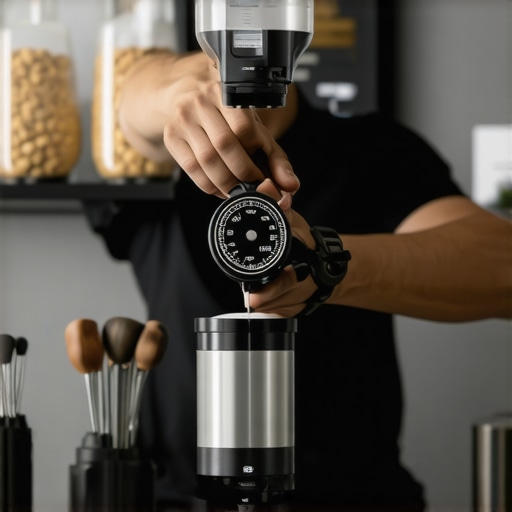
Maintaining grind consistency over time requires more than just manual adjustments. I personally rely on a digital dial gauge from this trusted source because it allows me to measure burr alignment with exactitude, ensuring each tweak is precise. Using such a tool eliminates guesswork, diminishes wear-related inconsistencies, and extends the lifespan of your burrs. As technology advances, integrating digital measurement devices into your routine will become standard for discerning baristas aiming for ultimate consistency.
Schedule Regular Maintenance and Deep Cleans
Long-term performance hinges on periodic cleaning that goes beyond quick brushings. I recommend disassembling your grinder quarterly—especially for burr grinders, which attract coffee oils and micro-grounds that clog mechanisms and skew grind sizes. Use dedicated cleaning brushes and, when suitable, grinder cleaning agents designed to dissolve coffee residues without damaging the burrs. Consistent maintenance prevents static buildup and ensures grind uniformity, which is crucial for those targeting impeccable espresso shots. According to expert insights, a well-maintained grinder maintains tighter tolerances, ensuring grind consistency even after months of heavy use.
Tools I Recommend for Effective Longevity
In addition to measurement devices, I swear by a high-quality burr alignment tool, such as the alignment gauge. It helps me detect subtle misalignments that less precise tools might miss. For cleaning, I use a dedicated grinder brush and grinder cleaning tablets, which effectively remove oils and residual grounds, essential for maintain grind consistency and preventing static issues addressed in this article. Implementing these tools in my routine has greatly improved the stability of my grind size, shot after shot.
Future of Grinder Longevity and Scaling
As the industry moves toward smart, sensor-equipped grinders, I predict that integrating real-time alignment feedback and automated calibration will become standard. These innovations will shorten the maintenance intervals and optimize grind consistency with minimal user input. For now, committing to manual calibration with trustworthy measurement tools remains the most reliable method to ensure your grinder performs impeccably over months and years.
How do I maintain my grinder over time?
Now, it’s your turn: establish a consistent schedule for cleaning and re-calibrating your burrs, and don’t underestimate the power of precise measurement tools. Try using a digital dial gauge to verify burr alignment before each brewing session—it’s a game-changer for maintaining grind precision and flavor quality long-term. Persisting with this routine will translate into noticeably better espresso, shot after shot, making your investment in tools definitely worthwhile.
The Unexpected Pitfalls I Never Saw Coming
One of the most humbling lessons I learned was that even a slight misalignment in burrs could unravel months of effort, turning perfect shots into bitter disappointments. Realizing that tiny adjustments could transform my espresso experience was a revelation, prompting me to view grinder maintenance as a form of artistry rather than routine chore. This insight taught me that the devil truly lies in the details, and understanding these nuances elevates your craft in ways that no fancy beans or techniques can replace.
Tools and Tricks I Swear By for Long-Term Excellence
After countless experiments, I found that investing in a digital dial gauge significantly sharpened my calibration accuracy, making adjustments more reliable. Combining this with a high-quality burr alignment tool from this trusted source has been a game-changer. Regular deep cleans using dedicated grinder cleaning tablets and brushes ensure my equipment stays in top shape, preventing static issues that can sabotage grind consistency. These tools, coupled with a disciplined maintenance routine, have helped me maintain stellar espresso quality through the years.
Take Charge of Your Espresso Destiny
Remember, perfecting your grinder’s alignment isn’t just maintenance—it’s a declaration of independence over your brew’s destiny. Every micro-adjustment, every deep clean, is a step toward unlocking flavors you never imagined possible. So take pride in mastering this craft, and let your dedication shine through every crema-laden shot. The future of your espresso journey depends on the care and precision you dedicate today.
What small tweak has made the biggest difference in your grind consistency? Share your stories below—I’d love to hear how you’re elevating your espresso game!
}
![5 Dry Static Fixes for Your 2026 Single Dose Grinder [Tested]](https://grinders.espressotechguide.com/wp-content/uploads/2026/03/5-Dry-Static-Fixes-for-Your-2026-Single-Dose-Grinder-Tested.jpeg)
One response to “Fix Your Bitter Shots: 3 Burr Alignment Tactics for 2026”
This post really hit home for me, especially the part about micro-adjustments making all the difference. I’ve been struggling with inconsistency despite following the manual for my grinder, and I now realize that tiny misalignments could be the culprit. I recently started using a digital dial gauge, which has drastically improved my calibration process. It’s amazing how such small tweaks can elevate my shots, giving me that balanced flavor and crema I’ve always aimed for. I wonder, for those using manual tools, how do you ensure repeatability every time? Do you have any favorite techniques or tricks to maintain precise adjustments, especially when you’re in a hurry? I’d love to hear more about how others manage their calibration routine without high-tech tools—maybe I could incorporate some of those methods into my setup.