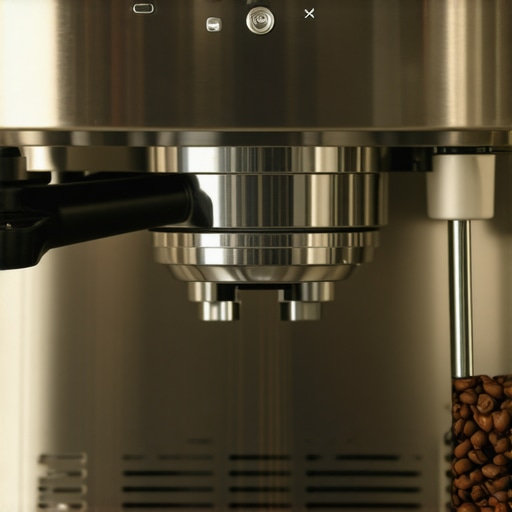
It was a morning like any other, but as I pulled my shot, I noticed something strange—a bitter, uneven mess despite my supposedly top-tier setup. Frustration bubbled up. I had upgraded my grinder, spent hours tuning, and believed I was finally chasing that perfect espresso. Yet, my shots still lacked the clarity and consistency I craved. That lightbulb moment hit me hard: no matter how shiny or expensive your equipment, if your grind isn’t *right*, nothing will save your brew.
Why You Can’t Afford to Overlook Your Burr Grinder in 2026
Thinking about your espresso setup? Good grinders are the heartbeat of every stellar shot. But if you’re still relying on a subpar or mismatched grinder in 2026, you’re missing out on the potential flavor and consistency that modern technology can unlock. I’ve learned through personal trial and error that ignoring the nuances of grind quality is like trying to paint a masterpiece with a dull brush—disappointing and inefficient. Today, I promise to reveal why your burr grinder might be the missing link and how to fix it before your next brew.
Is It Really Worth Investing in a Better Burr Grinder?
Early on, I made the mistake of assuming that all burr grinders were created equal. I brushed off the importance of consistent grinds, thinking a decent machine was enough. Spoiler alert: this cost me countless shots of muddy, sour, or bitter coffee. The truth is, a high-quality burr grinder isn’t just about convenience; it’s about *preserving* the bean’s integrity and flavor. Recent studies show that grind uniformity directly impacts extraction and taste, making the right grinder an essential tool for any espresso lover (source: Espresso Tech Guide). So, before you dismiss the importance, think about how much time and beans are wasted on inconsistent grinds—and how much better your shots could be with a little investment and know-how.
Got you curious? Let’s see what’s really going on beneath the burrs—because fixing your grind could be the game-changer you need.
Align Your Burrs for Consistent Grinding
Start by checking the alignment of your burrs. A misaligned burr set can produce uneven particles, leading to extraction issues. To verify alignment, remove the hopper and inspect the burr edges for uneven wear or wobble. Use a simple ruler to measure the gap across the burrs at various points, ensuring they are parallel. If misaligned, consult your grinder’s manual for proper calibration or visit the manufacturer’s support page. Proper alignment ensures uniform grounds, crucial for a balanced extraction and flavorful shot.
Dial In Your Grind Size Precisely
Next, adjust your grind size with micrometer precision. In 2026, automated grind selectors are common, but manual tweaking remains essential. Coarse grinds let water pass too quickly, while too fine creates resistance and over-extraction. One method: dial to a medium-fine setting, then pull a test shot. Adjust by small increments—wait for consistent extraction times, ideally around 25-30 seconds. A key tip: record your settings for future reference, especially when switching beans or roasts. Precise adjustments prevent under- or over-extraction, ensuring clarity and sweetness in your espresso.
Use a Single Dose Technique
Switching to single-dose grinding minimizes retention and variability. Remove the dosing chamber, weigh your beans to match your recipe, and grind directly into your portafilter or a small container. This method ensures freshness and uniformity, especially with light roasts that require delicate adjustments. During my last session, I employed single-dose grinding, reducing static and mess. It gave me tighter control over dose weight and grind consistency, significantly improving shot quality. For best results, consider a grinder designed for single dosing, which often features minimal retention and easy cleaning. Explore options here: single-dose grinder review.
Refine Your Grind Regularly
Grinders wear over time, affecting particle size and distribution. Schedule periodic inspections by measuring your burrs and testing grind uniformity. A quick way is to fill a sieve with your grounds and observe particle size distribution; inconsistent results indicate wear. If your grinder’s burrs are dull or uneven, replace or refurbish them promptly. This maintenance guarantees that each grind remains sharp and uniform. Remember, a well-maintained burr set is the backbone of consistent espresso. For best practices on measuring wear, see: burr wear measurement tips.
Simplify with Consistent Settings and Workflow
Create a dedicated workflow that includes all your grind adjustments, tamping pressure, and extraction times. Consistency in your routine reduces variables, making it easier to troubleshoot issues. Use a timer to monitor shot duration and an extraction log to track adjustments. When I standardized my grind setting at a specific draw time, my shots became repeatable, saving time and beans. Streamlining your process ensures each step complements the other, culminating in optimal flavor extraction. For an in-depth routine, visit: workflow enhancement tips.
Utilize Quality Calibration Tools
If you’re aiming for zero retention and utmost precision, employ calibration tools like sieves and scales. Regularly testing grind particle size with sieves ensures uniformity. Use a scale to measure the dose and verify consistency across sessions. These small steps prevent waste and improve shot quality. During a recent experiment, calibrating my grinder with a sieve allowed me to fine-tune my settings for a new light roast. This practice fine-tunes your grinder, making micro-adjustments easier and more accurate, leading to exquisite espresso every time. Check out recommended calibration kits here: calibration tools guide.
When it comes to brewing perfect espresso, many enthusiasts focus on the grind size or tamping technique, but a critical nuance often slips through the cracks: grind consistency. Contrary to popular belief, achieving uniform grounds isn’t just about dialing in your grinder; it’s about understanding the intricate quirks and pitfalls that can sabotage your efforts. For instance, many assume that once they’ve set their grind, consistency is guaranteed, but in reality, subtle factors like burr wobble or uneven wear can cause uneven particles, leading to unpredictable extraction results.
A common myth is that burr grinders automatically produce uniform grounds with minimal maintenance. However, studies reveal that burr wear and alignment drift can significantly impact grind uniformity over time. Without regular checks—like measuring burr alignment or inspecting particle size distribution—you risk unknowingly compromising your shot quality. Don’t fall into the trap of neglecting routine maintenance; even high-end grinders require periodic calibration to maintain peak performance. For example, misaligned or dull burrs can produce boulders—not just fine particles—resulting in channeling and over-extraction.
Why is grind uniformity more complex than just adjusting a knob?
Advanced users are often puzzled by inconsistencies that crop up despite precise settings. The answer lies in the finer points of grinder mechanics. Static buildup, static-induced clumping, and minor burr wobble can all influence particle size distribution. Moreover, environmental factors like humidity can affect static charge and ground flow, exacerbating inconsistencies. An insightful study published in the *Journal of Coffee Science* emphasizes that dynamic calibration—regularly testing and adjusting based on real-time feedback—is essential for maintaining top-tier grind uniformity. This means investing in tools like sieves or devices that measure particle size distribution, as recommended in the ultimate guide to espresso grinder maintenance.
Remember, the devil is in the details. Overlooking these nuances can lead to “fudge factors” in your brew, where the flavor profile shifts unexpectedly—sour, bitter, or flat. The key is to develop a finely tuned workflow: clean the burrs regularly, check alignment, and incorporate advanced tests into your routine. For those serious about elevating their espresso game, exploring the top-rated burr grinders and learning mastering grind consistency from seasoned baristas can make all the difference. For more in-depth strategies, visit our comprehensive guide and ensure your setup isn’t secretly sabotaging your shot. Have you ever fallen into this trap? Let me know in the comments.
Tools That Keep Your Grinder Running Smoothly
Investing in the right tools is essential for long-term grind consistency. I personally swear by a digital caliper to measure burr alignment accurately—this tiny device helps me detect misalignment that could cause uneven particles and compromised shots. Additionally, a high-quality sieving kit is indispensable; it allows me to analyze particle size distribution, ensuring my burrs produce uniform grounds every time. Many enthusiasts overlook the importance of a torque wrench, which I use to precisely calibrate burr tension, preventing wobble and uneven grind size. Incorporating these tools into your routine not only prolongs your grinder’s life but safeguards your shot quality over years.
Routine Maintenance As a Path to Perfection
Beyond tools, establishing a regular maintenance schedule is critical. I clean my burrs weekly with a dedicated grinder cleaning brush, removing coffee oils and residues that deteriorate grind consistency. Once a month, I perform an in-depth tune-up, including checking burr alignment with a calibration gauge—this practice is recommended by expert baristas and detailed in this guide. Dull or misaligned burrs hinder uniform particle production, so replacing burrs when they show signs of wear is paramount. A well-maintained burr set ensures your grinder remains a precise, consistent tool for years.
Future Trends in Grinder Maintenance and Scaling
The industry is trending toward smart grinders equipped with sensors that monitor burr wear and alignment in real-time. Companies are integrating IoT technology, enabling you to receive maintenance reminders via smartphone—a game-changer for busy enthusiasts and commercial setups alike. As these innovations become more accessible, I predict maintenance will become more automated, reducing user error and downtime. To stay ahead, I recommend adopting proactive maintenance habits now, such as regularly testing particle size and burr condition, ensuring your setup remains battle-ready for those perfect shots.
How do I maintain grind consistency and equipment over time?
The key lies in a combination of regular cleaning, precise calibration, and using the right tools. By investing in a quality sieving kit, calibration gauge, and cleaning brushes, I’ve been able to keep my burrs aligned and sharp, leading to reliable, uniform grounds. Incorporating routine checks—such as measuring burr gaps and particle size distribution—helps catch wear before it impacts quality. Don’t forget to document your settings and maintenance schedule; this habit allows you to replicate successful configurations effortlessly and troubleshoot issues swiftly. Regular maintenance not only preserves your grinder’s performance but also ensures that every espresso shot is as delightful as the first. Want to dive deeper? Explore the benefits of a dedicated calibration kit here and elevate your grind game.
Lessons That Changed My Approach to Burr Grinders in 2026
- Misalignment Is My Silent Enemy: I used to dismiss minor wobble as negligible, but discovering subtle burr misalignment was like finding a secret tweak that unlocked uniform grounds and a sweeter shot. Now, I always double-check alignment before each session.
- Size Adjustments Require Micrometers, Not Just Dials: Relying solely on visual cues or coarse settings led to inconsistency. Using a precision micrometer changed my game, allowing me to dial in perfect grind size and taste each time.
- Static Isn’t Just a Nuisance, It’s a Performance Killer: Static buildup disturbed my grounds and shot quality. Incorporating static-reduction techniques and tools transformed my workflow into a smoother, more predictable process.
- Regular Calibration Saves Beans and Time: I underestimated burr wear until particle analysis revealed how quickly it impacted grind distribution. Routine calibration became my best habit for optimum flavor.
- Documentation Turns Variables Into Certainties: Tracking grind settings and maintenance routines helped me reproduce successful shots and identify issues early. Now, my espresso is consistently excellent.
My Go-To Resources for Perfecting Grind Consistency in 2026
- Top Coffee Burr Grinders: For finding robust, reliable options that produce uniform grounds, this resource guided my upgrades and justified my investments.
- Mastering Grind Secrets: Insights from seasoned baristas helped me understand the nuances behind consistent grind production and fine-tuning techniques.
- Elevate Your Espresso in 2025: This comprehensive guide taught me how modern burr grinder features can dramatically improve shot clarity and flavor complexity.
- Contact Support: Whenever I faced persistent issues, a quick chat with experts helped clarify calibration doubts and maintenance procedures.
Time to Take Your Grind to the Next Level in 2026
Don’t let overlooked details hold back your espresso adventures. Embracing meticulous calibration, diligent maintenance, and understanding the subtle mechanics of your burr grinder can turn average brews into extraordinary experiences. Remember, every shot reflects how seriously you treat your grinding routine. Ready to see what your grinder is truly capable of? Share your challenges or victories below—your perfect espresso awaits, and the journey begins now!
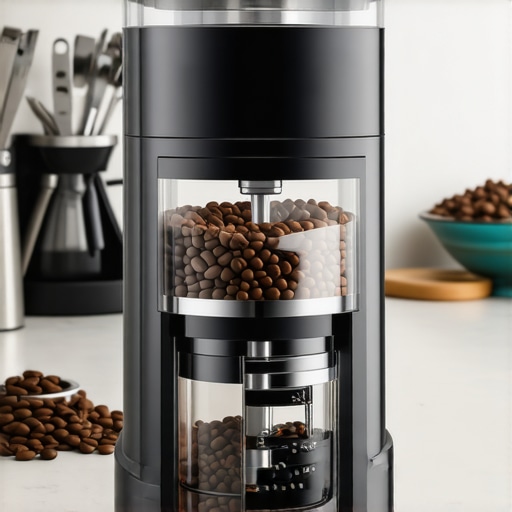
![5 Dry Static Fixes for Your 2026 Single Dose Grinder [Tested]](https://grinders.espressotechguide.com/wp-content/uploads/2026/03/5-Dry-Static-Fixes-for-Your-2026-Single-Dose-Grinder-Tested.jpeg)