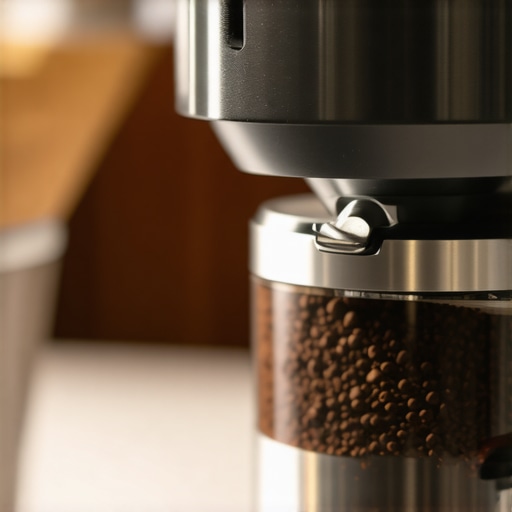
My Journey to Consistent Coffee Grinding: A Personal Tale
As a passionate coffee enthusiast, I remember the days when every cup tasted different, and I struggled to find that perfect grind. My quest for grind consistency started when I noticed how much the flavor depended on the grind size. After numerous experiments and reading expert advice, I finally discovered some practical tips that transformed my brewing experience.
Why Does Grind Consistency Matter So Much?
In my experience, a uniform grind ensures even extraction, leading to a richer, more balanced flavor. Inconsistent grounds can cause over-extraction or under-extraction, making your coffee taste flat or bitter. According to espresso experts, mastering grind uniformity is essential for any serious coffee lover aiming for that barista-quality brew at home.
My Top Tips for Achieving Ultimate Grind Consistency
1. Invest in a Quality Burr Grinder
Initially, I overlooked the importance of grinder quality. Switching to a top-rated burr grinder made a noticeable difference. Burr grinders crush beans uniformly, unlike blade grinders, which can produce uneven grounds. This consistency is key to a perfect extraction every time.
2. Dial in Your Grind Settings Carefully
One mistake I made was not adjusting the grind setting properly. It’s crucial to dial in the right grind size for your brewing method—espresso, pour-over, or French press. Take your time to find that sweet spot, and document your settings to maintain consistency over time.
3. Use a Consistent Dose and Tamping Technique
Consistency isn’t just about the grinder. Measuring your coffee dose precisely and tamping with even pressure helps ensure each shot is uniform. I now weigh my beans before grinding and use a tamper with a consistent pressure, which significantly improves grind consistency.
What About Single Dose Grinders? Are They Worth It?
Absolutely! Single dose grinders allow me to grind only what I need, reducing stale coffee and ensuring freshness. They also help achieve more precise grind size adjustments. If you’re serious about your brew, exploring single dose options might be a game-changer.
How Can I Maintain My Grinder for Long-Term Consistency?
Regular cleaning is vital. Coffee oils and residue can alter the grind quality over time. I schedule monthly cleanings and use appropriate brushes to keep my grinder performing optimally. Trust me, a clean grinder produces more consistent grounds. For detailed maintenance tips, check out this guide.
Feeling inspired to refine your grind? Share your experiences or ask questions in the comments below! And if you’re curious about choosing the perfect grinder, I highly recommend exploring the best tips for grind consistency for more insights.
Can Precision Be Perfected? Exploring the Nuances of Grind Uniformity in Espresso Making
As a seasoned barista and coffee connoisseur, I often ponder how much the tiniest adjustment in grind consistency can influence the final taste of an espresso shot. Achieving that elusive, perfectly uniform grind isn’t just about buying a good grinder; it’s about understanding the intricate dance of burr geometry, grind settings, and operational technique. For instance, flat burrs are renowned for their ability to produce consistent particle sizes, but their performance hinges on precise calibration and maintenance. If you’re serious about elevating your espresso game, exploring the different grinder types and their impact on grind uniformity can be transformative.
How Do Burr Shapes and Material Choices Affect Grind Uniformity?
Different burr shapes, such as conical versus flat, have unique ways of interacting with coffee beans. Flat burrs typically provide more consistent particle sizes, which is crucial for espresso extraction. Meanwhile, burr material, whether ceramic or steel, influences durability and heat generation, both of which affect grind consistency. High-quality burrs minimize uneven grinding caused by burr wear or material imperfections, ensuring your grounds are as uniform as possible. For a comprehensive comparison, check out this detailed guide.
Practical Strategies to Elevate Your Grinding Precision
Are Your Grind Settings Truly Precise? How to Find Your Perfect Spot
Fine-tuning your grinder isn’t just about setting and forget; it’s an ongoing process. Small adjustments can lead to significant improvements in grind uniformity. I recommend always starting with a baseline setting, then making incremental adjustments while observing shot extraction and flavor. Document your optimal settings for each coffee bean type and roast level, as consistency in your grind size is fundamental. For advanced techniques, exploring single dose grinders can offer unparalleled precision and control.
How Does Routine Maintenance Impact Grind Consistency Over Time?
Regular cleaning is often overlooked, yet it’s vital for maintaining consistent particle size. Coffee oils and dust accumulate on burrs, causing them to dull and alter the grind profile. Implementing a cleaning schedule and using appropriate brushes can keep your grinder performing at peak efficiency. Remember, even the slightest build-up can lead to uneven grounds, so adopting a maintenance routine that fits your usage frequency is essential. For expert tips, visit this maintenance guide.
Curious about how other enthusiasts are perfecting their grind consistency? Share your insights or ask questions in the comments below. And if you’re eager to delve deeper into selecting the ideal grinder for your needs, I suggest exploring top single-dose options for ultimate control and precision.
Deepening My Understanding of Grind Nuances: A Personal Reflection
As I delved further into the world of coffee grinding, I realized that achieving a truly consistent grind is an ongoing journey filled with subtle nuances and complex variables. One aspect that profoundly impacted my results was the shape and material of the burrs. Flat burrs, for instance, have the remarkable ability to produce more uniform particle sizes, which is essential for espresso lovers aiming for that perfect shot. However, their effectiveness depends heavily on meticulous calibration and regular maintenance. Exploring the differences between burr and flat burr grinders opened my eyes to how precision engineering can make or break grind uniformity.
Advanced Strategies for Precision: Beyond Basic Settings
What Are the Hidden Factors That Influence Grind Uniformity?
Beyond the obvious, such as grind settings and burr quality, other factors subtly influence the consistency of your grounds. For example, the ambient temperature and humidity can affect bean moisture content and, consequently, grind behavior. I found that storing beans properly and adjusting grind settings based on environmental conditions can significantly enhance uniformity. Additionally, the way I handle and load beans into the grinder makes a difference; avoiding overfilling and ensuring even distribution prevents uneven burr engagement. To master these details, I highly recommend reading this comprehensive guide on mastering grind consistency.
Maintaining Peak Performance: The Art of Grinder Upkeep
Routine maintenance isn’t just about cleanliness; it’s about preserving the integrity of the grinding mechanism. I schedule deep cleanings every few weeks, especially if I notice a change in grind quality. Using specialized brushes and food-safe cleaning products helps remove coffee oils and residues that can dull burrs and alter particle sizes. Regular calibration checks are equally vital—an out-of-tune grinder can subtly shift grind size, leading to inconsistent extraction. For those interested in extending their grinder’s lifespan and performance, I suggest reviewing this detailed maintenance protocol.
Embracing Personal Experience and Community Wisdom
One of the most rewarding aspects of this journey has been connecting with fellow coffee enthusiasts who share their insights and troubleshooting tips. For instance, I learned from a seasoned barista that micro-adjustments, often overlooked, can yield dramatic improvements in flavor and consistency. Sharing my own experiences and listening to others has enriched my understanding, pushing me to experiment further and refine my technique. If you’re passionate about elevating your coffee game, I invite you to join the conversation and share your stories or ask questions in the comments below. For more advanced tips and community insights, explore this ultimate guide on grinder types.
Beyond the Grind: A Continuous Exploration of Coffee Perfection
Ultimately, mastering grind consistency is about embracing the complexity and being open to continuous learning. Every new coffee bean, brewing method, or grinder tweak offers an opportunity for discovery. The pursuit of perfection in coffee is as much about patience and curiosity as it is about technical precision. As I reflect on my journey, I realize that the deeper I go into understanding these nuances, the more I appreciate the artistry behind each cup. I encourage you to keep experimenting, ask questions, and enjoy the process of refining your craft—because in coffee, as in life, there is always something new to learn and savor.
Unlocking the Nuances of Burr Geometry and Material Composition
Delving deeper into the mechanics of grind uniformity, I’ve realized that the shape and material of burrs significantly influence the consistency of coffee grounds. Flat burrs, for example, are celebrated for their ability to produce uniform particle sizes, which is critical for achieving balanced extraction, especially in espresso brewing. Conversely, conical burrs tend to generate a slightly wider particle distribution, offering unique flavor profiles that can be advantageous for pour-over methods. The choice of burr material—ceramic versus steel—also impacts performance. Ceramic burrs, being more heat-resistant, maintain sharpness longer but are more brittle, while steel burrs are more durable and easier to maintain. Regular calibration and meticulous maintenance of burr alignment are essential to harness their full potential. For an in-depth understanding, I recommend reviewing this comprehensive comparison of burr types.
Refining Your Technique: The Art of Incremental Adjustments and Environmental Awareness
Achieving impeccable grind consistency often hinges on subtle adjustments and awareness of environmental factors. Small, incremental changes to grind settings—documented meticulously—can dramatically improve extraction quality. I’ve found that monitoring variables such as ambient temperature and humidity helps to fine-tune my grinder’s performance, as moisture content in beans can alter grind behavior. Proper storage of beans in airtight containers at stable temperatures minimizes moisture fluctuations, ensuring more predictable grinding results. Additionally, handling beans with care—avoiding overfilling and ensuring even distribution—prevents uneven burr engagement. To master these nuances, I suggest exploring this expert guide on grind mastery.
How Do Routine Maintenance and Calibration Elevate Your Coffee Quality?
Consistent performance over time is rooted in diligent maintenance routines. Regular cleaning removes coffee oils and residues that can dull burrs and cause uneven grinding. I schedule deep cleanings every few weeks, using specialized brushes and food-safe cleaning agents, to preserve burr sharpness and alignment. Calibration checks are equally vital; even slight deviations can lead to inconsistent particle sizes, affecting extraction and flavor. Implementing a routine that includes calibration and thorough cleaning not only prolongs the lifespan of your grinder but also ensures each brew is as precise as the first. For detailed maintenance protocols, I recommend consulting this expert maintenance guide.
Can External Variables, Like Bean Origin and Roast Level, Influence Grind Uniformity?
Absolutely. The origin and roast profile of your beans can subtly influence grinding behavior. Beans with higher moisture content or denser structures—common in certain regions or roast levels—may require slight adjustments in grind settings. I’ve learned to experiment with small tweaks when changing bean types and to document these changes for future reference. Additionally, employing consistent bean handling techniques, such as pre-measuring and evenly distributing beans in the hopper, helps maintain uniform engagement with the burrs. Understanding these external variables deepens my appreciation for the craftsmanship behind each cup. For more insights, see this detailed review of grinder types and their effects.
Join the Conversation: Elevate Your Coffee Craftsmanship
If you’ve found these advanced strategies helpful or have your own tips to share, I invite you to join the dialogue. Sharing experiences and troubleshooting common issues can accelerate mastery, transforming everyday brewing into a precise art form. For personalized advice or to explore more about selecting the perfect grinder tailored to your needs, visit our contact page. Remember, ongoing experimentation and community engagement are the cornerstones of truly exceptional coffee craftsmanship. Keep refining, keep learning, and savor the journey towards perfect grind consistency.
Things I Wish I Knew Earlier (or You Might Find Surprising)
The Hidden Power of Burr Shape and Material
Early in my coffee journey, I underestimated how much the shape and material of burrs influenced grind uniformity. Switching from steel to ceramic burrs, for instance, significantly improved my consistency, but I only realized this after some trial and error. Understanding these fine details has transformed my brewing routine and elevated my espresso shots.
The Impact of Environmental Conditions
I used to think that once I dialed in my grinder, I was set. Turns out, ambient temperature and humidity subtly affect bean moisture and grind size. Now, I pay attention to storage and adjust my settings accordingly, which keeps my grind consistent regardless of the weather.
The Value of Routine Maintenance
Keeping my grinder clean and calibrated regularly was a game-changer. Coffee oils and dust can dull burrs and cause uneven grounds, so I schedule monthly deep cleans. This simple habit ensures my grind stays uniform and my coffee tastes fresh and balanced.
The Significance of Precise Measurements
Measuring my coffee dose with a scale and tamping with consistent pressure has made a noticeable difference. It’s not just about the grinder; every step counts for achieving that perfect extraction and flavor profile. Quality equipment paired with meticulous technique truly enhances the final result.
Adjusting for Bean Variability
Different beans, depending on origin and roast level, may require small tweaks in grind size. I always experiment when switching beans and keep notes. This ongoing adjustment helps me maintain a high level of consistency and appreciate the unique characteristics of each coffee.
Resources I’ve Come to Trust Over Time
- Espresso Tech Guide: An invaluable resource for understanding how burr geometries and materials affect grind quality. I’ve learned so much about the science behind my equipment from this site.
- Specialty Coffee Association: Their articles and guidelines helped me grasp the importance of grind calibration and environmental factors. It’s a trustworthy source for deepening my coffee knowledge.
- Barista Hustle: I often turn to their tutorials and expert tips on grind consistency and brewing techniques. Their practical advice is always actionable and reliable.
- Home-Barista Forum: Engaging with fellow enthusiasts here has given me real-world insights and troubleshooting ideas that I couldn’t find elsewhere.
Parting Thoughts from My Perspective
Mastering grind consistency is a blend of science, technique, and patience. From understanding how burr shape and material influence uniformity to adapting for environmental changes, every detail matters in brewing that perfect cup. My journey has shown me that continuous learning and routine maintenance are essential—there’s always more to discover. If this resonated with you, I’d love to hear your thoughts or experiences. Feel free to share your tips or ask questions below. Remember, the pursuit of coffee perfection is ongoing, and every small improvement makes a big difference in flavor and enjoyment. Keep experimenting and savor the process!
![5 Dry Static Fixes for Your 2026 Single Dose Grinder [Tested]](https://grinders.espressotechguide.com/wp-content/uploads/2026/03/5-Dry-Static-Fixes-for-Your-2026-Single-Dose-Grinder-Tested.jpeg)
4 responses to “Best Coffee Grinder Tips for Ultimate Grind Consistency in 2024”
Reading through this detailed journey on achieving grind consistency really resonated with me. When I first started experimenting with different grinders, I underestimated how crucial burr quality and maintenance are. Switching to a good burr grinder and establishing a regular cleaning routine truly transformed my coffee. I also found that keeping detailed notes on grind settings for different beans and climates has helped me significantly. One thing I’ve noticed is that ambient humidity can subtly influence the grind, especially with denser beans from certain regions, which requires slight adjustments. How do others here manage environmental factors that affect grind uniformity? I’d be interested to hear more about your strategies for maintaining consistent results across seasons and different bean varieties.
This post really hits home for me. I’ve been on a similar journey trying to perfect my grind for different brewing methods—from espresso to pour-over—and I agree that consistency makes all the difference in flavor. My recent upgrade to a flat burr grinder made a huge impact, especially when I also started calibrating and cleaning it regularly. I’ve found that storing beans properly and paying attention to local climate fluctuations really helps stabilize my grind results, especially here in humid New Orleans. I also keep detailed notes on my settings, which has saved me from a lot of trial and error when switching beans or seasons. What’s everyone’s biggest challenge when trying to maintain consistency over time? I’d love to hear how others adapt their routines for environmental changes or different beans—any tips are appreciated! This continuous learning process keeps brewing exciting and rewarding.
I really appreciate this detailed recount of your journey toward grind consistency. I’ve found that even with a high-quality burr grinder, environmental factors like humidity and temperature can subtly affect the grind. Recently, I started storing my beans in airtight containers with desiccants, which has helped stabilize my grind even during seasonal weather changes. Also, I’ve begun documenting my grind settings for different bean types and roast levels, which has saved me a lot of guesswork when switching between them. I’m curious—have others noticed a change in grind performance at different times of the year? Do you make environmental adjustments on the fly, or do you rely mainly on your stored data? I believe that mastering these small nuances is what sets apart a good home barista from a great one. Looking forward to hearing everyone’s strategies for managing these subtle but impactful variables.
I really resonated with your story about the importance of consistent grind size in brewing great coffee. I’ve also found that using a high-quality burr grinder and calibrating it regularly makes a huge difference, especially when switching between different brewing methods. One thing I’ve learned over time is that environmental factors like humidity can sometimes subtly affect the grind. I now store my beans in airtight containers with silica gel packets, and I’ve noticed my grind remains more stable throughout the year. It’s fascinating how such small adjustments can have a noticeable impact on flavor and extraction. Do you have any tips for quickly recalibrating or adjusting when environmental conditions change unexpectedly? Also, I’d love to hear how others manage fine-tuning their grind when traveling or in different climates. Continuous learning and sharing such experiences really help refine our craft. Looking forward to hearing more thoughts on managing these variables for perfect consistency!