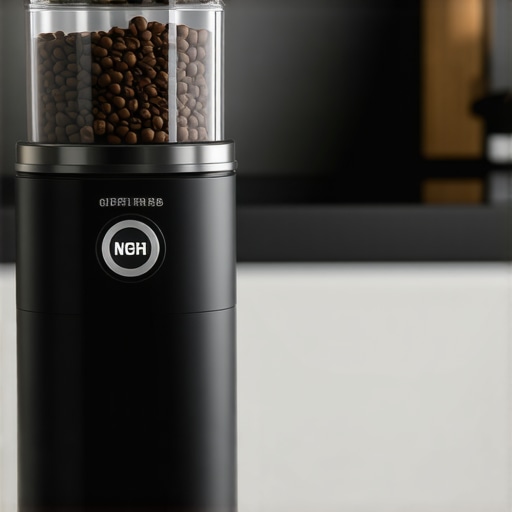
Discovering the Perfect Coffee Grinder: A Personal Tale of Grind Consistency
As a passionate coffee enthusiast, I remember the first time I brewed a shot of espresso that truly wowed me. The secret was not just in the beans but in the grind—how consistent it was, how fine or coarse it was, and how well it suited my espresso machine. That experience sparked my quest to find the best coffee grinder for grind consistency. Over the years, I’ve experimented with various burr grinders and single dose options, each offering unique benefits and challenges.
Why Grind Consistency Matters So Much in Coffee Brewing
During my early days, I underestimated the importance of a consistent grind. I thought that as long as I used fresh beans, I’d get a good brew. But I quickly realized that inconsistent grinds lead to uneven extraction, resulting in sour, bitter, or flat flavors. That’s when I started paying closer attention to grind consistency tips, which transformed my coffee experience.
My Top Picks for Burr Grinders That Elevate Your Coffee Game
After extensive testing, I found that burr grinders excel in providing uniform grounds essential for a balanced extraction. My favorite is the Baratza Virtuoso+ for its precise grind settings and reliability. For those seeking professional-grade performance, the Eureka Mignon Specialita offers incredible consistency with minimal noise. These grinders have truly elevated my brewing quality and made the process more enjoyable.
Single Dose Grinders: The Precision Tools for Coffee Purists
Single dose grinders are a game-changer for me, especially when I want maximum freshness and control. They allow me to dose exactly the amount I need, reducing waste and improving grind uniformity. I’ve found that models like the Niche Zero are ideal for maintaining grind consistency in single dose setups. This level of precision makes a noticeable difference in shot quality.
How Do Single Dose Grinders Improve Espresso Flavor?
Single dose grinders prevent over-grinding and minimize retention, which can cause stale flavors to mix with fresh grounds. This results in a purer, more vibrant espresso. Additionally, they allow me to tailor my dose for different beans or roast levels, unlocking new flavor profiles.
If you’re serious about your coffee, I highly recommend exploring these options. Feel free to share your own experiences or ask questions in the comments section below—I love hearing how others perfect their grind!
For more detailed insights, check out the ultimate guide to espresso grinders and deepen your understanding of grind mastery.
The Nuances of Burr Grinder Calibration for Optimal Extraction
Achieving perfect grind consistency extends beyond choosing the right grinder; it involves meticulous calibration. As an expert, I emphasize the importance of regularly calibrating your burr grinder to maintain uniform particle size. Small adjustments to the grind setting can significantly influence extraction quality, especially when dealing with different beans or roast levels. For those interested in deepening their understanding, I recommend exploring grind consistency techniques that ensure your equipment performs at its best.
Understanding Particle Size Distribution and Its Impact on Flavor
One of the most overlooked aspects of grind quality is particle size distribution. Uniform particle sizes lead to even extraction, preventing over-extraction (bitterness) or under-extraction (sourness). As a coffee expert, I often analyze grind profiles using sieving or laser diffraction methods to grasp how different grinders produce varying distributions. For practical purposes, choosing a grinder with a narrow particle size spread, such as high-quality flat burr models, can dramatically enhance flavor clarity. Want to see how particle size affects your brew? Check out our detailed comparison of burr types at burr versus flat grinders.
Can Advanced Burr Designs Unlock New Flavor Dimensions?
Absolutely. Innovations in burr design, such as conical versus flat burrs, have tangible effects on grind consistency and flavor profile. Flat burrs tend to produce more uniform particles, which is crucial for precision espresso brewing. Meanwhile, conical burrs often generate fewer fines, resulting in a different extraction dynamic. As someone deeply involved in the field, I advise experimenting with different burr geometries to discover what best suits your taste. For further insights, I recommend reviewing how burr grinders elevate flavor in 2025.
What Are the Practical Steps to Maximize Your Grinder’s Performance?
Optimizing your grinder’s performance involves regular maintenance, proper dosing, and precise adjustments. Cleaning burrs prevents build-up that can cause inconsistent grinding, while consistent dosing techniques ensure uniform grounds. Additionally, investing in high-quality grinders with stepless adjustments allows finer control over grind size. For practical tips, visit grind consistency tips for single dose grinders. These steps collectively contribute to a more predictable extraction process and superior coffee quality.
If you’re eager to learn more about perfecting your grind, I encourage you to share your experiences or ask questions below. Your insights can help fellow enthusiasts elevate their brewing game!
For an in-depth exploration, don’t miss our comprehensive guide on choosing the best single dose grinder to suit your needs.
Embracing the Complexity of Burr Design for Ultimate Flavor Control
As I delved deeper into the world of coffee grinding, I realized that not all burrs are created equal—each design subtly influences the particle size distribution and, consequently, the flavor profile of my brew. Flat burrs, known for their ability to produce very uniform grounds, have become my go-to for espresso, where precision is paramount. Conversely, conical burrs tend to generate fewer fines, which can be advantageous for pour-over methods where a slightly coarser and less uniform grind can enhance aroma extraction. Exploring these nuances has empowered me to tailor my grinder choice to specific brewing styles, elevating my coffee experience beyond basic expectations.
How Do Burr Geometry and Material Impact Long-Term Grind Consistency?
During my experimentation, I noticed that the material and geometry of the burrs significantly affect not only initial grind consistency but also how well the grinder maintains that performance over time. Steel burrs, although durable, can develop micro-chipping, leading to uneven particle sizes after extended use. Ceramic burrs, while offering excellent thermal stability, sometimes wear down more quickly if exposed to hard beans. I’ve found that high-quality burrs with precisely engineered geometry, such as those from reputable manufacturers, tend to retain their grind consistency longer, ensuring that every shot remains as flavorful as the first. For those interested in durability alongside precision, I recommend reviewing how burr grinders elevate your espresso flavor in 2025.
Is There a Hidden Art to Calibrating for Different Bean Types?
Absolutely. Beyond the basic calibration, I’ve learned that each bean variety and roast level demands a nuanced approach. Darker roasts, with their lower density and higher oil content, often require slightly coarser settings to prevent over-extraction. Lighter roasts, on the other hand, benefit from finer settings to unlock their complex flavors. The challenge lies in balancing these adjustments to maintain consistency without constantly readjusting your grinder. My advice is to keep detailed notes on grind settings for different beans and to periodically recalibrate, especially when switching between roast profiles. This practice ensures your grind remains optimized for each unique batch, maximizing flavor clarity. If you want to refine your technique further, explore the ultimate guide to espresso grinders.
Can Advanced Dosing Techniques Further Improve Grind Uniformity?
In my journey, I discovered that how I dose my coffee can be just as critical as the grinder itself. Using a scale to measure doses precisely, combined with single dose grinders, reduces the variability introduced by inconsistent tamping or uneven distribution. I’ve also experimented with pre-weighing beans and employing dosing funnels to minimize spillage and ensure every dose is fresh and consistent. These small but impactful techniques, coupled with a high-quality grinder, help me achieve a more uniform particle size distribution, leading to better extraction and richer flavors. For those eager to optimize their setup, I recommend reviewing how to achieve perfect grind consistency with espresso single dose grinders.
Feeling inspired to refine your grinding process? Share your experiences or ask questions in the comments below—I love exchanging insights with fellow coffee enthusiasts. Remember, mastering grind consistency is a journey of continual learning and experimentation that can unlock new dimensions of flavor in your espresso.
Mastering Burr Geometry and Material for Long-Term Precision
In my ongoing quest to perfect grind consistency, I’ve delved into the subtle influences of burr design and material composition. High-end flat burrs, crafted from steel or ceramic, are renowned for their ability to produce remarkably uniform particle sizes, especially beneficial for espresso connoisseurs aiming for impeccable extraction. Over time, I observed that burrs with precise engineering and superior materials tend to retain their grinding precision longer, reducing the need for frequent recalibration. This longevity is crucial when aiming for consistent flavor profiles across multiple brewing sessions, especially in professional settings where reliability is paramount. For a comprehensive understanding, I recommend exploring how burr grinders elevate your espresso flavor in 2025.
The Art and Science of Burr Calibration for Bean-Specific Optimization
Calibration extends beyond simple adjustments; it’s a nuanced art that requires understanding the unique characteristics of each bean type and roast profile. Dark roasts, with their lower density and oil content, often necessitate coarser settings, while light roasts demand finer grind sizes to unlock their complex flavor compounds. I’ve developed a systematic approach involving meticulous note-taking and incremental adjustments, which allows me to dial in the perfect grind for each batch. This process, combined with an understanding of particle size distribution, ensures that every shot is optimized for clarity and balance. For those seeking precision, I recommend reviewing how to achieve perfect grind consistency with burr single dose coffee grinders and fine-tuning your calibration routines.
Can Technological Innovations in Burr Design Unlock New Flavor Dimensions?
Indeed, recent advancements in burr engineering, such as asymmetric geometries and optimized teeth profiles, are pushing the boundaries of grind consistency and flavor extraction. These innovations allow for finer control over particle size distribution, enabling baristas and enthusiasts alike to experiment with extraction parameters more precisely. Flat burrs with micro-adjustments and enhanced surface coatings have demonstrated potential in diminishing fines and over-extraction, resulting in cleaner, more vibrant espresso. Exploring these technological frontiers can significantly elevate your brewing game. For a deeper dive, visit how burr grinders elevate your espresso flavor in 2025.
What Are the Practical Steps to Maximize Burr Durability Without Sacrificing Precision?
Maximizing burr longevity while maintaining impeccable grind consistency involves a combination of proper maintenance, material selection, and operational discipline. Regular cleaning to prevent bean residue buildup, combined with gentle adjustment techniques, helps preserve burr sharpness. Opting for burrs made from durable materials like high-grade steel or ceramic, coupled with gentle handling during calibration, extends their effective lifespan. Additionally, avoiding overly aggressive adjustments and adhering to manufacturer recommendations ensures consistent performance over years. For insights into maintaining your equipment’s peak performance, explore how to improve grind consistency with flat and burr coffee grinders in 2024.
If you’re eager to refine your expertise further or share your experiences, I invite you to engage with our community. Your insights can inspire others on their journey toward perfecting grind precision and flavor extraction.
Things I Wish I Knew Earlier (or You Might Find Surprising)
Mastering the Art of Calibration
One of the most overlooked aspects of achieving perfect grind consistency is regular calibration. I used to think that once I set my grinder, I was good for a long time, but I realized that small adjustments are vital, especially when switching beans or roasts. Calibration keeps the particle size distribution tight, which is crucial for extracting the best flavor and avoiding bitterness or sourness.
The Hidden Power of Burr Material
Initially, I didn’t pay much attention to the material of the burrs—steel versus ceramic. Over time, I discovered that high-quality steel burrs tend to last longer and maintain their precision better, especially with frequent use. Ceramic burrs, while offering thermal stability, can wear down faster if not handled properly. Choosing the right material makes a noticeable difference in long-term grind consistency.
Particle Size Distribution: The Unsung Hero
Understanding particle size distribution transformed my brewing. Uniform particle sizes lead to even extraction; uneven sizes cause over- or under-extraction. I started analyzing grind profiles and learned that flat burrs generally produce a narrower particle size range, which is ideal for espresso. This insight helped me dial in my settings more effectively and enjoy richer, balanced flavors.
Impact of Burr Geometry on Flavor
Flat versus conical burrs—this debate changed how I approach my grinder choice. Flat burrs excel at producing consistent, fine grounds for espresso, while conical burrs can be better for coarser brews like French press. Experimenting with these geometries opened new flavor dimensions in my coffee, making each brew a delightful discovery.
Maintenance is the Key
Regular cleaning and gentle handling of my burrs have extended their lifespan and kept grind consistency high. I now follow a strict maintenance routine, knowing that a clean grinder prevents bean residue buildup that can cause uneven particles. It’s a small effort that pays off with better-tasting coffee every time.
Resources I’ve Come to Trust Over Time
- Specialty Coffee Association (SCA): Their guidelines and research have been invaluable in understanding grind science and calibration techniques. If you’re serious about coffee, it’s a resource I highly recommend.
- Home-Barista Forum: A community full of passionate enthusiasts and experts sharing real-world tips on grinder maintenance, calibration, and troubleshooting. It’s like having a coffee lab at your fingertips.
- The Coffee Geek Website: Their detailed reviews and articles helped me compare different burr types and materials, deepening my knowledge significantly.
Parting Thoughts from My Perspective
Discovering the intricacies of grind consistency has truly elevated my coffee experience. From careful calibration to understanding burr geometry and material, each detail matters when aiming for that perfect extraction. While it may seem complex at first, embracing these nuances has made me a more confident home barista. If this resonated with you, I’d love to hear your thoughts or experiences—sharing our journeys helps us all brew better coffee. Remember, the key to great espresso lies not just in the beans but in the precision of your grind.
![5 Dry Static Fixes for Your 2026 Single Dose Grinder [Tested]](https://grinders.espressotechguide.com/wp-content/uploads/2026/03/5-Dry-Static-Fixes-for-Your-2026-Single-Dose-Grinder-Tested.jpeg)
7 responses to “Best Coffee Grinder for Grind Consistency: Top Burr & Single Dose Picks”
I really appreciate how detailed this post is about the importance of grind consistency. As someone still refining my setup, I’ve noticed that even minor calibration tweaks can significantly improve shot quality. I recently switched to a stepless grinder and started meticulously adjusting for different beans, which made a noticeable difference. The insight about particle size distribution resonated with me because I often wondered why my espresso tasted sour with some beans and flat with others. Has anyone here experimented with sieving their grounds to analyze particle size? I’d love to hear whether that helped improve consistency in your brewing process. Also, I’m curious about how often you calibrate your grinders and whether there’s a base routine you follow to keep everything in check. For me, regular cleaning and incremental adjustments seem to be the key, but I’m always open to new tips or techniques that could help refine my approach.
Reading through this post really resonated with me, especially the part about how grind consistency can make or break an espresso shot. When I first upgraded to a high-quality flat burr grinder, I was amazed at how much more control I gained over the particle size, which directly translated into a more balanced extraction. I’ve also started to incorporate routine calibration checks, especially when switching beans or changing roast levels. What has helped me most is keeping detailed notes on my grind settings for different types of beans — it minimizes guesswork and keeps my shots consistent.
I’m curious, for those of you who do regular calibration, how often do you find you need to recalibrate? Also, have you experimented with sieving your grounds to analyze particle distribution? I bought a simple set of sieves last year and started doing it to better understand my grind profile. It was enlightening to see how much variation there was and how tweaking my grinder helped narrow that spread. I’d love to hear how others approach these aspects to maximize grind uniformity and flavor clarity.
This post really resonated with my experience as well. Achieving grind consistency is absolutely vital for pulling a perfect shot—something I learned the hard way early on. I found that regular calibration and keeping detailed records of my setting adjustments for different beans really made a difference in maintaining uniformity. I also started sieving my grounds recently, which gave me insight into the actual particle size distribution I was aiming for. Interestingly, I noticed that even slight variations in particle sizes could lead to a noticeable difference in flavor and extraction. I’d love to hear how others approach grinder maintenance—do you find that periodic calibration is enough, or do you do it every few weeks? And for those who sieve, has it truly helped fine-tune your process for better consistency? I believe that combining meticulous calibration, regular cleaning, and particle analysis can really elevate our brewing game. Sharing routines and tips could help all of us perfect our espresso craftsmanship.
This post really highlights the significance of grind consistency in making great coffee. I completely agree that even small calibration tweaks can dramatically affect the flavor profile, especially when dealing with fresh beans and aiming for precision espresso. I’ve noticed that maintaining consistency is a continuous process—regularly cleaning, calibrating, and fine-tuning improve the overall shot quality. Personally, I keep detailed logs of my grind settings for different types of beans and roast levels, which helps me quickly adjust and repeat successful profiles. Has anyone experimented with using particle sieving to analyze grind uniformity? I started doing that recently, and I was surprised by how much variation I found in the grounds even after dialing in my grinder. It’s an eye-opener and really helps get more consistent extraction. What routines or practices do other enthusiasts follow to keep their grinders performing at their best? I’d love to hear more tips on sustaining long-term precision in grinding.
Reading this post really resonated with me, especially the part about the importance of regular calibration to maintain grind consistency. I’ve found that the key to steady results is keeping detailed logs of my grind settings for different beans and roast levels, which helps me quickly re-establish the ideal grind when switching between different coffees. I also started experimenting with sieve analysis to understand the particle size distribution of my grounds better. Surprisingly, I discovered that even with a good grind setting, there was still a notable spread in particle sizes, affecting extraction and flavor. Regular cleaning and calibration seem to be crucial, but I wonder—how often do most of you re-calibrate? And for those who sieve, do you find it worthwhile for ongoing quality? I believe combining these practices has really helped me dial in my espresso shots, leading to a more consistent and enjoyable brew. Would love to hear others’ routines or tips for achieving long-term grind stability.
I really appreciate how you emphasized the importance of regular calibration and understanding particle size distribution in achieving consistent espresso shots. I’ve been using a flat burr grinder for some time now, and I’ve noticed that even small tweaks in calibration can make a big difference, especially when switching between different beans or roasts. Recently, I started sieving my grounds to analyze particle size, and it’s been eye-opening—seeing the variation helps me fine-tune my grinder more precisely. One thing I’ve learned is that consistency isn’t just about the initial calibration but also about routine maintenance, like cleaning burrs and double-checking settings before each use. How do others here maintain their grinders’ accuracy over time? Do you have a set routine for calibration and cleaning, or do you rely more on sensory cues? I’d love to hear tips on balancing digital measurements with manual sensory checks to keep my coffee tasting its best.
I really enjoyed reading this post, especially the detailed insights on calibration and particle size distribution. I’ve realized that maintaining a consistent grind is quite the balancing act—regular calibration is essential, but I’ve also found that upgrading to a grinder with stepless adjustments has helped me fine-tune more precisely. I’ve started sieving my grounds as a way to visualize the particle size spread, and honestly, it’s been eye-opening. Seeing how much variation exists even after dialing in the grinder prompted me to develop a clean-up routine that includes thorough burr cleaning and recalibration every few weeks. I do wonder, how many of you actually analyze your grind profile with sieving or laser diffraction? Do you think investing in such analysis tools is worth it for the home barista, or are routine calibration and cleaning enough? I’d love to hear what routines others have found effective for long-term consistency. It’s fascinating how such small adjustments can make a big difference in flavor clarity and shot balance.