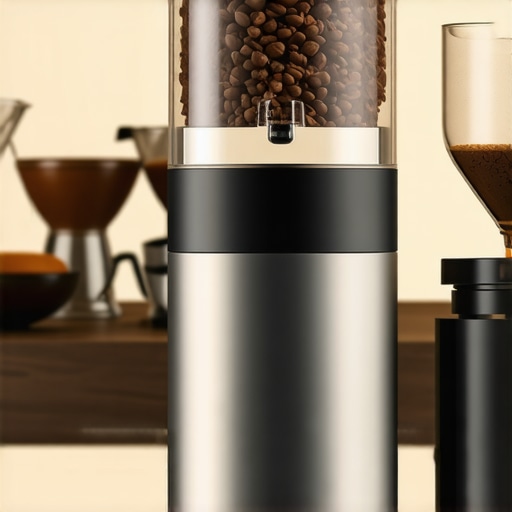
I remember the moment clearly. I was pulling shot after shot, frustration mounting with each uneven grind. The coffee wasn’t tasting right, and I couldn’t quite put my finger on why. Turns out, the culprit was inconsistent grind size—a sneaky problem that can ruin your brew despite using a top-tier grinder. That lightbulb moment made me realize how crucial grind consistency really is, especially with flat and single dose coffee grinders that many coffee enthusiasts swear by today.
Why Consistency Is Your Coffee’s Best Friend
In the world of espresso and pour-over, precision matters. A uniform grind ensures the water extracts evenly, delivering that rich, balanced flavor we all chase. But achieving this isn’t just about buying the most expensive grinder; it’s about understanding how to get the most out of your equipment. If you’re tired of inconsistent results, you’re not alone. Many coffee lovers face this challenge, often without realizing that subtle adjustments could make a huge difference.
Recent studies show that grind variability can impact flavor profiles more than many realize—up to 80% of the taste depends on grind uniformity, according to this comprehensive guide. That’s a staggering fact, and it’s why mastering your grinder’s settings and routine can elevate your entire experience.
Do You Face This Problem Often?
If you’ve ever experienced bitter or sour shots, uneven extraction, or simply inconsistent flavor, then you know how frustrating grind inconsistency can be. I’ve been there—wasting coffee, adjusting settings, only to end up with the same old issues. But here’s the good news: with a few targeted tricks and understanding your equipment better, you can turn this around. Stick with me, and I’ll show you how to maximize grind consistency with flat and single dose grinders—so every cup becomes a masterpiece.
Ready to dive into practical tips and strategies? Let’s start by understanding what really affects grind uniformity and how to tweak it for perfect results every time.
Adjust Your Burrs Precisely
Start by calibrating your grinder’s burrs. For flat and single dose grinders, fine-tuning the burrs ensures uniform particle size. I once spent an afternoon tweaking my burrs using a calibration tool, which resulted in a much more consistent grind and better espresso extraction. Regularly check and readjust your burrs according to your manufacturer’s guidelines or the tips in this guide.
Check for uniform burr alignment
Misaligned burrs cause uneven grinding. Use a straight edge or a calibration tool to verify the burrs are perfectly aligned. If misaligned, realign them carefully following your grinder’s manual. This step is crucial for flat burr grinders, where misalignment can create inconsistent particle sizes and lead to bitter or sour shots.
Optimize Your Grind Settings for Consistency
Adjust grind size in small increments, especially with single dose grinders. I remember initially setting mine too coarse, which led to under-extraction. After dialing in finer settings gradually, I achieved a balanced extraction. Use the recommended settings for your grinder as a starting point, then fine-tune based on your taste and extraction times.
Perform consistency tests
Weigh your grounds after each adjustment, aiming for uniform weight and particle size. Conduct test pulls, recording the grind setting and tasting the results. Over time, you’ll identify the sweet spot that yields the most consistent flavor.
Use Proper Dosing and Distribution Techniques
Precision in dosing is key. Use a scale to measure your coffee every single time, especially if you use a single dose grinder. I found that tamping evenly and distributing grounds uniformly in the portafilter significantly improved consistency. Techniques like ‘tapping’ the portafilter or using a distribution tool can help achieve an even bed of coffee, reducing channeling and uneven extraction.
Master your tamping pressure
Consistent tamping pressure ensures uniform resistance and extraction. Practice applying the same pressure each time—aim for about 30 pounds of force. This small change made a noticeable difference in my shots’ consistency.
Maintain Your Equipment Regularly
Clean your grinder frequently to prevent coffee oils and residues from affecting grind size. I schedule deep cleans every few weeks, using a brush and grinder-cleaning tablets. A well-maintained grinder produces more consistent particle sizes and extends its lifespan. Don’t forget to lubricate moving parts if your model recommends it, following the manufacturer’s instructions.
Inspect and replace worn parts
Burrs dull over time, leading to uneven grinds. Replace them as recommended—usually every 1-2 years depending on usage. Upgrading to high-quality burrs can immediately improve your grind uniformity and flavor profile. Check out the top burr grinder options for 2024.
The Final Touch: Consistent Routine
Consistency isn’t just about the equipment; it’s about your routine. Set a fixed schedule for grinding, dosing, tamping, and brewing. Over time, these habits become second nature, reducing variability and elevating your coffee game.
Implementing these precise adjustments and routine practices transformed my brewing results. Every shot became more predictable, flavorful, and satisfying. For detailed insights on selecting the best equipment, explore the ultimate guide to single dose grinders.
Many coffee enthusiasts operate under misconceptions that can hinder their pursuit of perfect espresso or pour-over. Let’s dig deeper into what most people get wrong about grind consistency and reveal some hidden nuances that can elevate your brewing mastery. One widespread myth is that investing in the most expensive grinder automatically guarantees uniform grind size. While high-quality equipment is essential, it’s equally important to understand the intricacies of grinder calibration and maintenance. Regularly checking your burr alignment and cleaning your grinder can make a significant difference, often more so than just upgrading hardware. For a comprehensive understanding, explore how burr grinders elevate your espresso flavor.
Another common mistake is relying solely on grind size adjustments without considering dosage and tamping. Many assume that a finer grind always results in better extraction, but this neglects the importance of consistent dosing and tamping pressure. Even the finest grind cannot compensate for uneven tamping or inconsistent dosing, which can cause channeling and uneven extraction. Mastering your routine, including precise dosing with a scale and applying uniform tamping pressure, is crucial for true consistency. Curious about how these factors interplay? Check secrets from expert baristas.
How can advanced users improve grind consistency beyond basic calibration?
For seasoned enthusiasts, the key lies in understanding the subtle effects of burr geometry and grind pathway design. Flat burr grinders, for example, often provide more consistent particle size compared to conical burrs, but they require meticulous calibration and maintenance. Moreover, paying attention to grind particle distribution—ensuring you avoid bimodal distributions—can dramatically improve extraction quality. This involves not just setting the right grind size but also optimizing your grinder’s internal settings, such as the grind path and burr speed, if adjustable. For an in-depth look at achieving maximum grind consistency, visit this expert guide.
Be wary of the trap of over-tuning your grinder based on taste alone. While taste is the ultimate judge, making micro-adjustments without measuring can lead to inconsistent results over time. Instead, use precise tools like a scale for dosing and a sieve to analyze grind particle size distribution. Remember, consistency in your routine is just as vital as the equipment’s technical precision. If you want to master the nuances of grind uniformity, consider exploring this comprehensive guide.
Have you ever fallen into this trap? Let me know in the comments. The more you understand these hidden nuances, the closer you’ll get to brewing that perfect cup every time.
Keeping your coffee grinder in top shape is crucial for maintaining consistent grind quality over time. Regular maintenance not only ensures optimal performance but also extends the lifespan of your equipment. One of my favorite tools for this purpose is a dedicated grinder brush. I use a high-quality, stiff-bristled brush to sweep away coffee grounds and oils from burrs and grinding chambers after each use. This prevents buildup that can cause uneven grinding and flavor contamination. For deep cleans, I rely on grinder-cleaning tablets, which dissolve residual oils and coffee particles, restoring the burrs to their original sharpness and consistency. Regular cleaning with these tools has noticeably improved my espresso shots, making each one more predictable and flavorful.
In addition to physical tools, software updates and calibration routines are essential. Many modern grinders come with digital displays or app connectivity, allowing you to fine-tune settings or run calibration tests. I recommend periodically verifying burr alignment and adjusting grind settings based on your brewing preferences. For precise calibration, I use a digital caliper to measure burr gap and ensure uniform particle size. This meticulous approach has helped me achieve a level of grind consistency comparable to commercial standards.
How do I maintain my grinder over time?
To keep your grinder working flawlessly, establish a routine that includes daily, weekly, and monthly tasks. Daily maintenance involves brushing out loose grounds and wiping down external surfaces. Weekly, I perform a thorough clean with cleaning tablets and inspect burrs for wear. Monthly, I check burr alignment and replace worn parts as recommended by the manufacturer. Following these steps consistently guarantees your grinder remains precise and reliable, making it easier to dial in your perfect shot every time.
Looking ahead, the trend points toward smarter, self-calibrating grinders that use AI algorithms to detect and correct grind inconsistencies automatically. Investing in such technology now can future-proof your setup and reduce routine maintenance efforts significantly. For detailed maintenance routines and recommended tools, I suggest exploring the comprehensive guide on grinder upkeep.
If you haven’t already, try incorporating a regular cleaning schedule with a dedicated grinder brush and cleaning tablets. These small steps can dramatically improve your grind uniformity and overall coffee experience. Remember, consistent maintenance is the backbone of achieving that perfect cup every time.
The Hardest Lesson I Learned About Grind Consistency
One of the biggest revelations in my coffee journey was realizing that even the most expensive grinder can fall short without proper calibration and routine maintenance. I once thought that investing in a top-tier grinder would solve all my problems, but I learned the hard way that regular checks and care are essential to keep grind uniformity at its peak. This lesson taught me to prioritize calibration and cleaning, which dramatically improved my espresso quality.
3 Myths About Flat and Single Dose Grinders That Held Me Back
I used to believe that flat burr grinders automatically produced better, more consistent grounds than conical ones. Turns out, with proper maintenance and calibration, conical grinders can also deliver excellent results. Additionally, I thought that single dose grinders were too finicky and inconsistent—until I learned how small adjustments and routines can make all the difference. Busting these myths opened new opportunities for me to explore different equipment and techniques.
What Experts Won’t Tell You About Achieving Perfect Grind Uniformity
Many seasoned baristas know that the secret isn’t just in the grinder but in mastering a routine that includes precise dosing, tamping, and regular equipment upkeep. Micro-adjustments based solely on taste can lead to inconsistency over time; instead, using tools like a scale and sieve can help maintain reliable particle size distribution. This deeper understanding has helped me elevate my coffee game far beyond initial expectations.
Curated Recommendations for Coffee Grind Mastery
My Essential Toolkit for Consistent Coffee Grinding includes a high-quality burr grinder like the ones recommended in this guide. I trust these tools because they combine durability with precision, making routine calibration easier. For learning more about fine-tuning your setup, I recommend exploring this comprehensive resource.”
Make Your Coffee Routine a Ritual of Perfection
It’s easy to get caught up in equipment and forget that consistency ultimately depends on your routine. Setting a fixed schedule for grinding, dosing, tamping, and cleaning solidifies habits that lead to reliable results. Remember, even small, deliberate actions—like applying the same tamping pressure—compound over time, helping you craft that perfect cup with confidence. Your dedication to routine will be your greatest asset in mastering grind consistency.
How have you struggled with maintaining grind uniformity? Share your experiences below—I’d love to hear what works for you or what still challenges your coffee routine.
![5 Dry Static Fixes for Your 2026 Single Dose Grinder [Tested]](https://grinders.espressotechguide.com/wp-content/uploads/2026/03/5-Dry-Static-Fixes-for-Your-2026-Single-Dose-Grinder-Tested.jpeg)