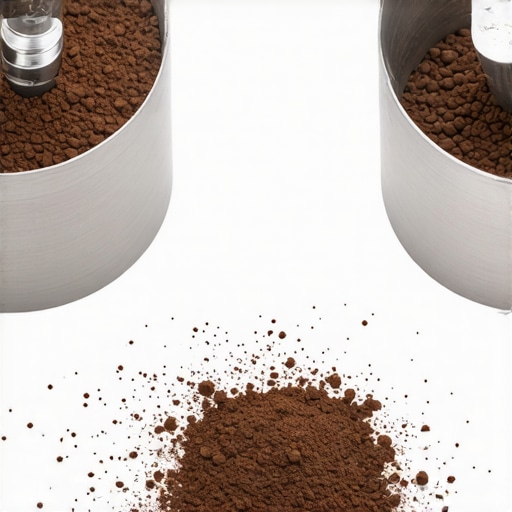
Have you ever pulled a shot of espresso that tasted flat or inconsistent, only to realize your grind was the culprit? That frustrating moment when your coffee doesn’t quite hit the mark is all too familiar for many coffee lovers. I’ve been there myself, pouring over my grinder every morning, trying to chase that elusive perfect grind size. It’s like searching for a unicorn—until I discovered that the key lies in **grind consistency**, especially with single dose and burr grinders. Today, I want to share the lightbulb moment that transformed my brewing game and how you can do the same.
Why Consistent Grinds Matter More Than You Think
When I first started experimenting with different coffee beans and brewing methods, I thought the beans themselves were the main factor in flavor. Turns out, the grind quality is just as critical. In fact, inconsistent grind sizes can lead to over-extraction or under-extraction, making your coffee taste off or dull. A study published in the Journal of Coffee Science highlights that uniform particle size in grounds directly correlates with better extraction and flavor clarity. That’s a fancy way of saying: grind right, and your coffee will taste way better.
But here’s the catch—achieving that perfect consistency isn’t as simple as pressing a button. It requires understanding your equipment, the grind settings, and even how you dose your coffee. Early on, I made the mistake of expecting my grinder to do all the work without any adjustments, which only led to uneven results. It’s a common pitfall, but one that’s easily fixed with the right tips and tricks. That’s exactly what I’ll help you with today.
Have you faced this problem too?
If you’ve ever wondered whether your grinder is worth the investment or if you’re just wasting good beans, you’re not alone. Many coffee enthusiasts struggle with inconsistent grounds, especially when using single dose grinders that require more precision. But don’t worry—there’s hope. I’ll guide you through the best practices, the tools, and the little tweaks that can make a huge difference in your daily brew.
Ready to stop guessing and start brewing like a pro? Let’s dive into the practical steps that will elevate your coffee game and ensure every shot or pour-over is a masterpiece of grind harmony.
Adjust Your Grind Settings Carefully
Start by setting your grinder to the desired coarseness, then make small incremental adjustments. When I first tried this, I noticed that even tiny changes made a big difference in grind uniformity. Remember, every grinder reacts differently, so take notes on each adjustment. For precise control, consult your grinder’s manual or check out this guide for detailed calibration tips.
Weigh Your Coffee for Consistency
Use a digital scale to measure your coffee dose accurately before grinding. During my early mornings, I used to eyeball the amount, which led to uneven grounds. Once I started weighing my beans, I gained better control over particle size consistency. For optimal results, aim for a precise dose that matches your brewing method, like in the ultimate guide.
Grind in Short Bursts and Check
Instead of grinding all at once, pulse your grinder into short bursts. This technique prevents over-grinding and helps you monitor the consistency. I remember a morning where I ground in three short intervals, inspecting the grounds after each. This method improved uniformity dramatically. If you’re unsure about particle size, compare your grounds to professional standards discussed in this article.
Distribute and Level the Grounds
After grinding, use a small tool or your finger to evenly distribute the grounds in the filter basket. Level them gently to ensure even extraction. I once skipped this step and had uneven extraction, resulting in bitter and sour notes. Consistent distribution supports uniform particle exposure to water, which is crucial for flavor. For a visual walkthrough, check out this guide.
Regularly Calibrate Your Grinder
Over time, grinders can drift from their calibration. Schedule regular checks by grinding a test amount and inspecting the grounds. If you notice inconsistency, recalibrate according to your grinder’s instructions. During my first year, I ignored calibration, which caused inconsistent results. Now, I follow a monthly routine, inspired by this calibration method, ensuring my grind stays sharp.
Keep Your Grinder Clean
Residual coffee oils and particles can affect grind size and consistency. Clean your burrs regularly—at least once a month—using the manufacturer’s recommended cleaning tools. I learned this lesson the hard way when my grind became uneven after neglecting cleaning. Scheduled maintenance like this ensures your grinder performs optimally, as detailed in this cleaning guide.
Many coffee enthusiasts believe that simply choosing a high-quality burr grinder guarantees perfect grind consistency. While equipment quality matters, this is a misconception that can lead to overlooked nuances in achieving truly uniform grounds.
Let’s dig deeper into what most people get wrong about grind consistency, especially with single dose grinders. One prevalent myth is that setting your grinder once and leaving it is enough. In reality, grinders drift from their calibration over time due to wear and tear, temperature changes, and even humidity. Regular recalibration, as emphasized in this guide, is crucial for maintaining the uniformity of your grounds.
Another common mistake is relying solely on grind size settings without paying attention to particle distribution. Even with the perfect setting, inconsistent feeding of beans into the grinder or uneven tamping can cause uneven particle sizes. This is why techniques like grinding in short bursts and inspecting grounds, as discussed earlier, are vital for refining your process.
A significant trap many fall into is the assumption that all burr grinders are created equal. In fact, flat burrs and conical burrs produce different results in terms of grind uniformity. Flat burrs tend to offer better particle consistency, which is why many professionals prefer them for espresso. However, even the best burrs need regular cleaning and calibration to perform optimally. For expert insights, check out this comparison.
How can advanced users optimize grind consistency beyond basic settings?
Advanced users often focus on micro-adjustments and environmental factors like humidity and bean moisture content. Incorporating a scale to weigh beans before grinding, combined with a consistent dosing technique, significantly reduces variables that affect grind uniformity. Moreover, understanding the grinder’s burr alignment and ensuring it’s properly maintained can prevent uneven particle sizes that cause inconsistent extraction. For more detailed strategies, visit this article.
Remember, achieving perfect grind consistency is not about a single tweak but a combination of equipment maintenance, technique, and environmental control. Don’t fall into the trap of complacency—regularly revisit your process and stay informed with the latest expert tips.
Have you ever fallen into this trap? Let me know in the comments, and share your experience with grind consistency struggles and successes!” ,
Keep Your Equipment in Peak Condition
Investing in high-quality equipment is only half the battle; regular maintenance ensures your grinder continues to produce consistent grounds. I personally schedule a monthly deep clean for my burr grinder, removing coffee oils and residue that can cause uneven particle sizes. Using a soft brush and manufacturer-approved cleaning tools, I disassemble the burrs carefully, following guidelines from this detailed cleaning guide. Regular cleaning not only prolongs the lifespan of your grinder but also preserves the precision of your grind, helping you achieve that perfect consistency every time.
How do I maintain my grinder over time?
Beyond monthly cleanings, it’s vital to calibrate your grinder regularly. Over time, burrs can shift slightly due to wear, impacting grind uniformity. I check my calibration every 150-200 grams of beans, adjusting according to the manufacturer’s instructions. For precise calibration, I use a digital scale and compare the particle size with professional standards outlined in this resource. This routine ensures my grinder maintains peak performance, delivering consistent results shot after shot.
Tools That Elevate Your Grinding Game
One tool I swear by is a dose cup with a built-in scale. It allows me to dose my beans accurately before grinding, minimizing variability. Additionally, I use a precision dosing funnel, which helps feed beans evenly into the grinder, reducing the risk of uneven burr engagement. For checking grind uniformity, I rely on a particle size sieve set. It helps me visually verify the consistency of grounds, ensuring I don’t skip any subtle variations that could affect extraction quality.
Future Trends in Grinder Maintenance and Tools
The future of coffee grinding lies in smart, connected devices that monitor burr wear and automatically alert you when maintenance is needed. Companies are developing grinders with embedded sensors that track performance and suggest calibration or cleaning schedules via smartphone apps. This tech trend will make maintaining grind consistency even more straightforward, allowing baristas and home brewers alike to focus on perfecting the craft rather than troubleshooting equipment.
If you’re serious about maintaining consistent grind quality, I recommend trying a high-precision digital scale combined with regular calibration routines. These tools, paired with diligent cleaning, will keep your grinder performing at its best, shot after shot. Stay proactive with your maintenance—your taste buds will thank you!
The Hardest Lesson I Learned About Grind Consistency
One of my most eye-opening experiences was realizing that even small fluctuations in grind size could ruin an entire shot. I used to think that setting my grinder once was enough, only to find myself chasing inconsistent flavors. The lightbulb moment was understanding that regular calibration and meticulous attention to detail are essential — it’s not just about the grinder, but how I maintain and use it.
3 Myths About Grind Consistency That Held Me Back
First, I believed that high-end equipment automatically guaranteed uniform grounds. Turns out, even the best grinders need regular cleaning and calibration. Second, I thought that once I found the perfect setting, I was done—wrong! Environmental factors and wear can shift your grind over time. Lastly, I underestimated the importance of dosing accuracy; weighing beans before grinding made a huge difference in achieving consistency.
What Experts Won’t Tell You About Achieving Perfect Grounds
Many seasoned baristas focus on technique but overlook grinder maintenance. Regular cleaning, micro-adjustments, and understanding your equipment’s quirks matter more than most realize. Additionally, paying attention to particle size distribution — inspecting grounds with a sieve or visual comparison — is crucial for precision. These insights, combined with routine calibration, are what truly elevate your grind consistency and brewing results.
Curated Recommendations for Coffee Grinding Success
My essential toolkit includes a top-rated burr grinder that offers micro-adjustments and easy cleaning. I trust a precision digital scale to dose my beans accurately, ensuring consistent particle size. For routine maintenance, I follow this cleaning and calibration guide, which has kept my grinder performing at peak levels. Lastly, a particle size sieve set helps me visually verify uniformity, catching small inconsistencies before brewing.
Your Turn to Try
Achieving perfect grind consistency is a blend of proper equipment maintenance, precise techniques, and environmental awareness. The more you fine-tune these aspects, the more your coffee will reward you with rich, balanced flavors every time. Remember, consistency is the foundation of great espresso — so stay curious, keep experimenting, and don’t hesitate to revisit your process regularly. Your taste buds will thank you for it!
What’s your biggest challenge when it comes to grind consistency? Share your experiences below and let’s learn together!
![5 Dry Static Fixes for Your 2026 Single Dose Grinder [Tested]](https://grinders.espressotechguide.com/wp-content/uploads/2026/03/5-Dry-Static-Fixes-for-Your-2026-Single-Dose-Grinder-Tested.jpeg)
2 responses to “Best Coffee Grinder for Grind Consistency: Single Dose & Burr Tips 2024”
Reading this post really resonated with my own journey in optimizing grind consistency. I used to think that dialing in the grind once was enough, but over time I realized that regular calibration and cleanliness are vital — especially with high-precision single dose grinders. My biggest challenge has been maintaining uniform particle size during busy mornings, but I found that grinding in short bursts and using a particle sieve made a huge difference. I also started weighing my coffee beans before grinding, which reduced variability significantly. It’s impressive how such small adjustments, like precise dosing and regular cleaning, can dramatically improve shot quality. Has anyone else found that environmental factors such as humidity or temperature impact grind consistency? Curious if others have discovered additional tweaks that help keep things steady, especially in different climates or seasons.
Great insights here! I agree that regular cleaning and calibration are crucial, especially as burrs wear down over time. I’ve noticed that environmental factors like humidity and temperature can also throw off grind consistency. Down here in Florida, the humidity tends to make grounds clump together if I don’t keep my grinder in check. I’ve started storing my beans in airtight containers and cleaning my grinder more frequently during humid seasons. Has anyone tried using desiccant packets inside their storage containers? I wonder if that could help stabilize moisture levels further. Also, I find that adjusting the grind slightly depending on the weather helps maintain consistency. It’s fascinating how such small tweaks can make a big difference. Would love to hear if others have found any environmental adjustments or specific maintenance routines that have helped them keep their grind stable year-round.